
How long does it take to build a website? The build isn’t the slow part.
The honest website timeline: what a competent shop assembles in weeks, what stretches it to months, and the four habits that compress your calendar.
John "Holliday" Mahlow
Founder, Cursive Media
Ask how long a website takes and the industry answer is “two weeks to six months,” which is another way of saying nobody is telling you what moves the number. So here is what moves the number.
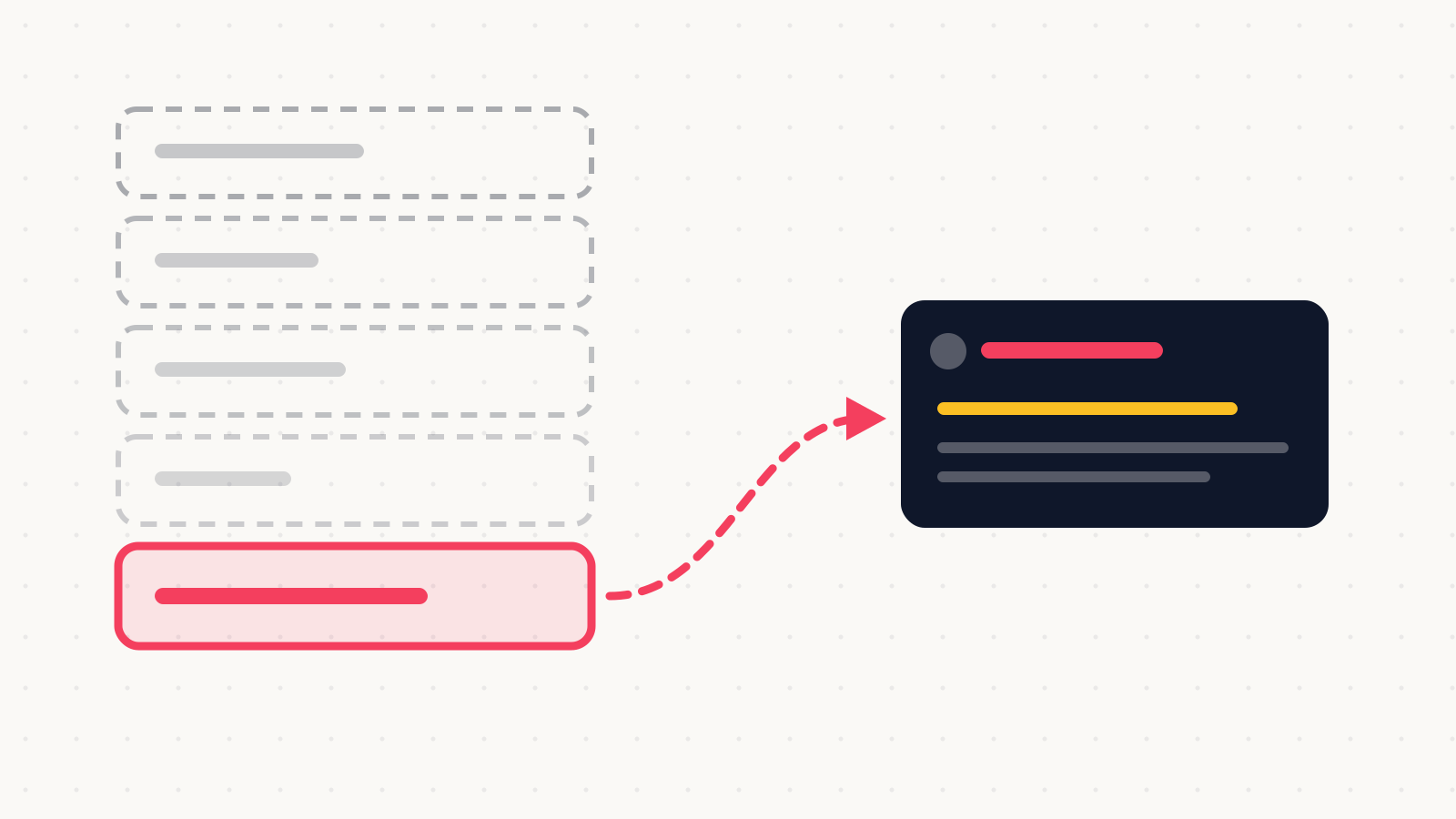
A website runs on two clocks. Working time, the hours a builder actually spends on design and assembly, is the small predictable one: a competent shop puts a five-page marketing site together in two to four working weeks, and template tools compress that further. Calendar time is the clock that blows out to months, and most of the calendar isn’t build. It’s waiting. Mostly, it’s waiting on you.
Where the calendar actually goes
Content collection: the long pole
The single biggest variable in any site build is whether the words and pictures exist. Logo files in usable resolution, a real service list, photos that aren’t stock, proof (jobs, results, reviews), and the About paragraph. Especially the About paragraph. Sites sit parked for weeks waiting on two hundred words the owner keeps meaning to write.
If the content exists at kickoff, the timeline behaves. If the plan is “we’ll write it as we go,” double every estimate you’ve been given, because the builder can’t design around copy that doesn’t exist and can’t launch pages that say lorem ipsum.
Decision latency: rounds times response time
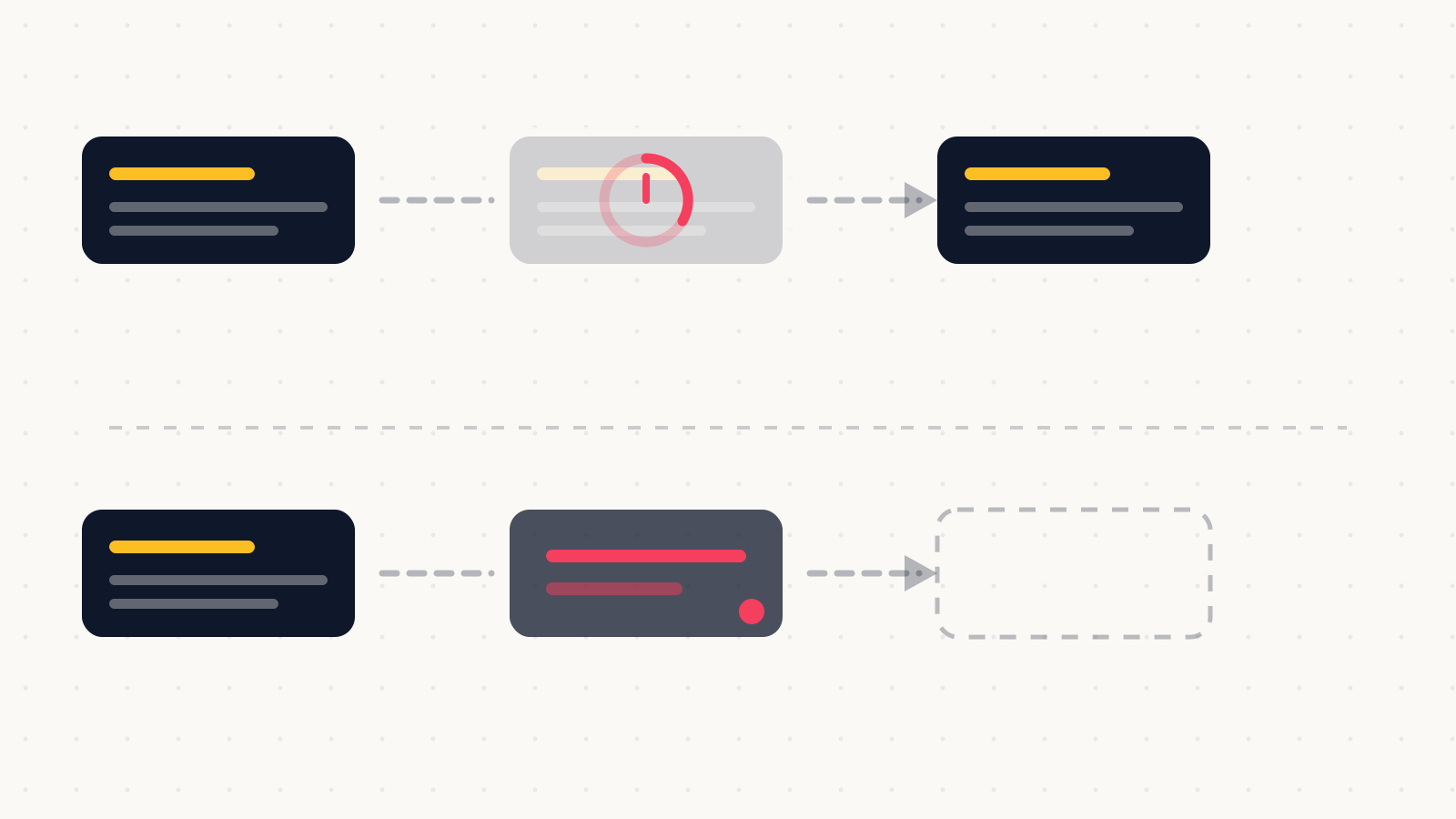
Revision math is brutally simple: rounds multiplied by your response time. Three feedback rounds with five business days of “I’ll look this weekend” between them is a month of calendar from feedback alone, on a site whose build took ten days. The fix isn’t fewer opinions. It’s a fixed feedback window, agreed before kickoff, with one named decision-maker instead of a committee reply-all.
Access archaeology
The domain is registered to an email nobody checks. DNS lives with a hosting company from 2016. The Google Business Profile belongs to a former employee, which is its own recovery process. Untangling access runs from a day to several weeks, and it always surfaces at launch week unless someone asks for every login on day one. This is the most preventable delay on the list and the one we see most.
Scope drift
Mid-build additions each sound small. Can we also add online booking, a careers page, a Spanish version? Any one is fine; the sum quietly resets design and rebreaks the schedule. The disciplined move is a parking lot: phase-two items get written down, not wedged in, and the site ships on the scope it was priced on.
The shop can be the problem too
Fairness requires the other column. Agencies stretch timelines with their own habits: your project queued behind bigger retainers, silent weeks with no scheduled check-in, the big-reveal waterfall where you see nothing until week five and then hate the direction, and unbounded “unlimited revisions” offers that invite the drift they pretend to absorb.
Two questions expose a shop’s real timeline before you sign: what exactly do you need from me before you start, and what happens in week two if I go quiet? A shop with crisp answers to both runs real schedules. A shop that says “don’t worry, we’re flexible” is quoting you the six-month version.
| Stage | Whose clock | Typical duration |
|---|---|---|
| Content and access collection | Yours | The variable: a day if it exists, weeks if it doesn’t |
| Design direction | Shared | About a week, including one review round |
| Build | The shop’s | One to two weeks for a marketing site |
| Revisions | Shared | Rounds × your response time |
| Launch: DNS, redirects, analytics | Shared | A day or two, if access was solved in week one |
What AI changes, and what it can’t
AI collapsed the working-time clock. Code and first-draft copy that took days now take hours, which is why ChatGPT can genuinely build a website and why that was never the hard part. The calendar clock didn’t move, because a tool that writes a homepage in minutes still can’t approve it, photograph your crew, or remember the GoDaddy password. Faster generation with the same decision latency just means you wait on yourself sooner.
Websites aren’t built late. They’re approved late.
How to compress the timeline
Four habits, all yours to control. Assemble one folder before kickoff: logo, photos, service list, proof, and the paragraph. Name one decision-maker. Agree a 48-hour feedback window and keep it. Hand over every login in week one, not launch week. Do those four and a two-week build ships in about three weeks. Skip them and the identical build eats a quarter.
Timeline and price are the same conversation in the end: both are functions of decisions, not divs. Our build process front-loads yours for exactly that reason. The site ships when the folder does.
John "Holliday" Mahlow
Founder, Cursive Media