What you're actually paying for in a website (and what it costs).
Small-business website costs run $200 a year to $35,000+. The spread isn't random: here's the anatomy of what the money buys, and what actually moves the number.
Founder, Cursive Media
- Read time
- 6 min read
- Written
Ask what a small-business website costs and the honest answer is a spread so wide it looks like a dodge: current guides put DIY builders around $200–$600 a year, freelancers at roughly $1,500–$8,000, and agencies anywhere from $6,000 to $35,000 and up, plus $1,000–$6,000 a year to keep any of it running.
A 100x spread isn't a pricing mystery. It means the word "website" is hiding several different products. Here in Houston we quote against the same spread, so instead of adding another price menu to the internet, let's take the thing apart. Once you see the parts, every quote you get becomes legible.
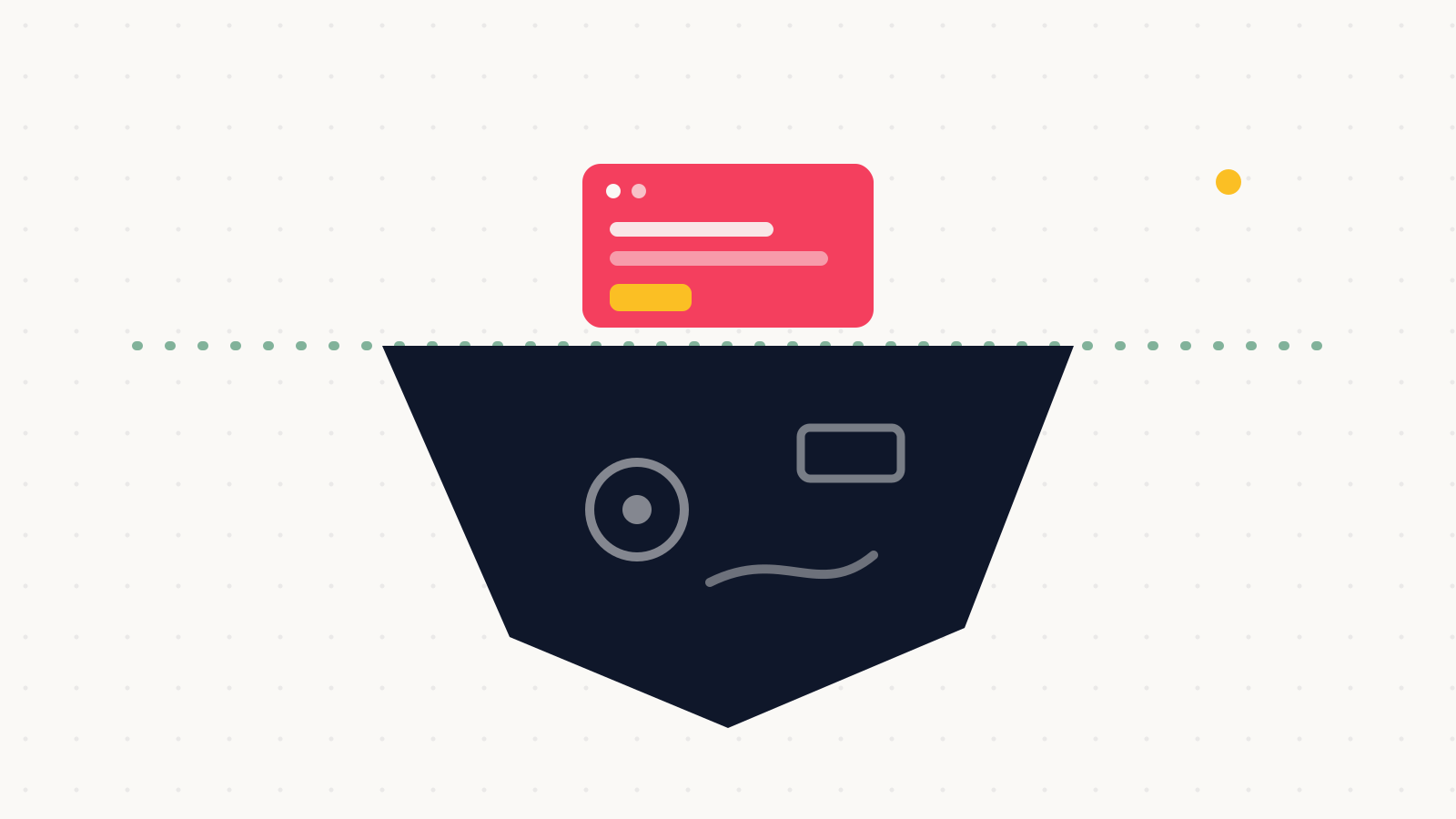
The part you can see: maybe a fifth of the work
The visible site (the design, the pages, the words) is the part every price tier delivers in some form. It's also the part that has gotten radically cheaper: templates are good now, and AI can generate a respectable page in an afternoon. When a quote is low, this is usually all it covers. When a quote is high, you're paying for everything below the waterline.
The part you're actually buying
You're not buying pages. You're buying the machine behind them.
Strategy and copy
Someone deciding what the site is for, which customers it speaks to, and writing words that sell rather than describe. This is where cheap sites die politely; a beautiful page with nothing to say converts nobody.
Plumbing
Hosting that stays up, a domain and SSL that renew themselves, and forms that actually deliver: stored somewhere safe, surviving spam filters, and triggering a notification fast enough to matter. A form that quietly swallows leads looks identical to one that works, which is why this line item is invisible until it costs you a customer.
Wiring into your business
New inquiries landing in a CRM, kicking off an instant reply, feeding the follow-up sequence. This is the difference between a site that exists and a site that produces, and it's the layer most automation projects skip. No template includes it, because it doesn't live on the page.
Search foundations and accessibility
An architecture that matches how people search, speed on a mid-range phone, and markup a screen reader and a keyboard can navigate. Skipping this doesn't make a site cheaper; it makes it invisible and, increasingly, a legal exposure.
Maintenance
Websites rot. Dependencies age, integrations get deprecated, something breaks on a Friday night. The yearly $1,000–$6,000 in the guides is really the answer to one question: when it breaks, whose phone rings?
What actually moves the number
Not page count; pages are cheap. The number moves with integrations (calendar, payments, CRM, review collection), custom functionality (calculators, portals, booking flows), who writes the content, and how fast you need it. A five-page site wired into your operations costs more than a twenty-page brochure, and it should, because it does a job the brochure can't.
So is a professional build still worth it in 2026?
If you need an online business card, no. A builder and an afternoon beat any invoice, and we'll tell you that on a call. The professional build earns its price when revenue depends on the machine: leads that can't be dropped, follow-up that can't be forgotten, rankings that have to be won against competitors who are investing. That's a different product that happens to share a name with the cheap one.
It's also why we don't publish a price list: quoting a "website" without knowing which parts you need is how the 100x spread got so wide in the first place. Our web and app work starts by scoping which layers your business actually needs, and for local companies that scoping is the first step of our Houston website design. Book a strategy call and you'll leave with that list, whether or not we build it.
Founder, Cursive Media