Marketing automation for small businesses: the pitfalls that kill it.
The common pitfalls of marketing automation for small businesses (the failure modes that waste the subscription) and the fix for each one.
Founder, Cursive Media
- Read time
- 6 min read
- Written
Most small-business automation projects don't fail loudly. They fail like a gym membership: bought with conviction, used for three weeks, then quietly billing a card while nothing happens. The software rarely deserves the blame. The same handful of pitfalls kill most projects, and every one of them is avoidable if you see it coming.
These are the ones we find over and over in audits, with the fix for each.
Pitfall 1: buying software instead of building a system
A subscription is capability, not outcome. A blank GoHighLevel account does nothing, and the same is true of every platform: someone still has to map the customer journey and write the messages, then build and test the workflows against real edge cases. The fix is to budget the build as its own project, with real hours attached, before you buy anything. If the plan is "we'll figure it out after we subscribe," the plan is the pitfall.
Pitfall 2: automating a process that was already broken
Automation doesn't fix a process. It multiplies it.
If your follow-up is inconsistent because nobody agreed on what it should say, automating it produces consistent messages nobody agreed on, faster and at scale. Fix the process on paper first: what happens when a lead arrives, who is supposed to do what, and what "handled" means. A lead-generation audit is exactly this exercise, and it's the reason the audit comes before the wiring.
Pitfall 3: importing your data mess
Duplicate contacts, dead numbers, customers filed as leads, and one field that means three different things depending on who typed it. Import that into an automation platform and the machine now acts on it: the old customer gets the new-lead sequence, the duplicate gets two of everything. Clean before you import, and decide which system is the source of truth while you're at it.
Pitfall 4: messaging like a machine because you have one
The moment sending gets cheap, over-sending gets tempting. Every additional drip email and "just checking in" text spends goodwill, and by the time unsubscribes and spam complaints show up in a report, the list is burned. Carriers also police business texting; volume without consent management is how a number gets flagged. The fix is a rule: every automated message must be one a good employee would have sent by hand at that moment. Automate the timing, not the appetite.
Pitfall 5: failures nobody hears
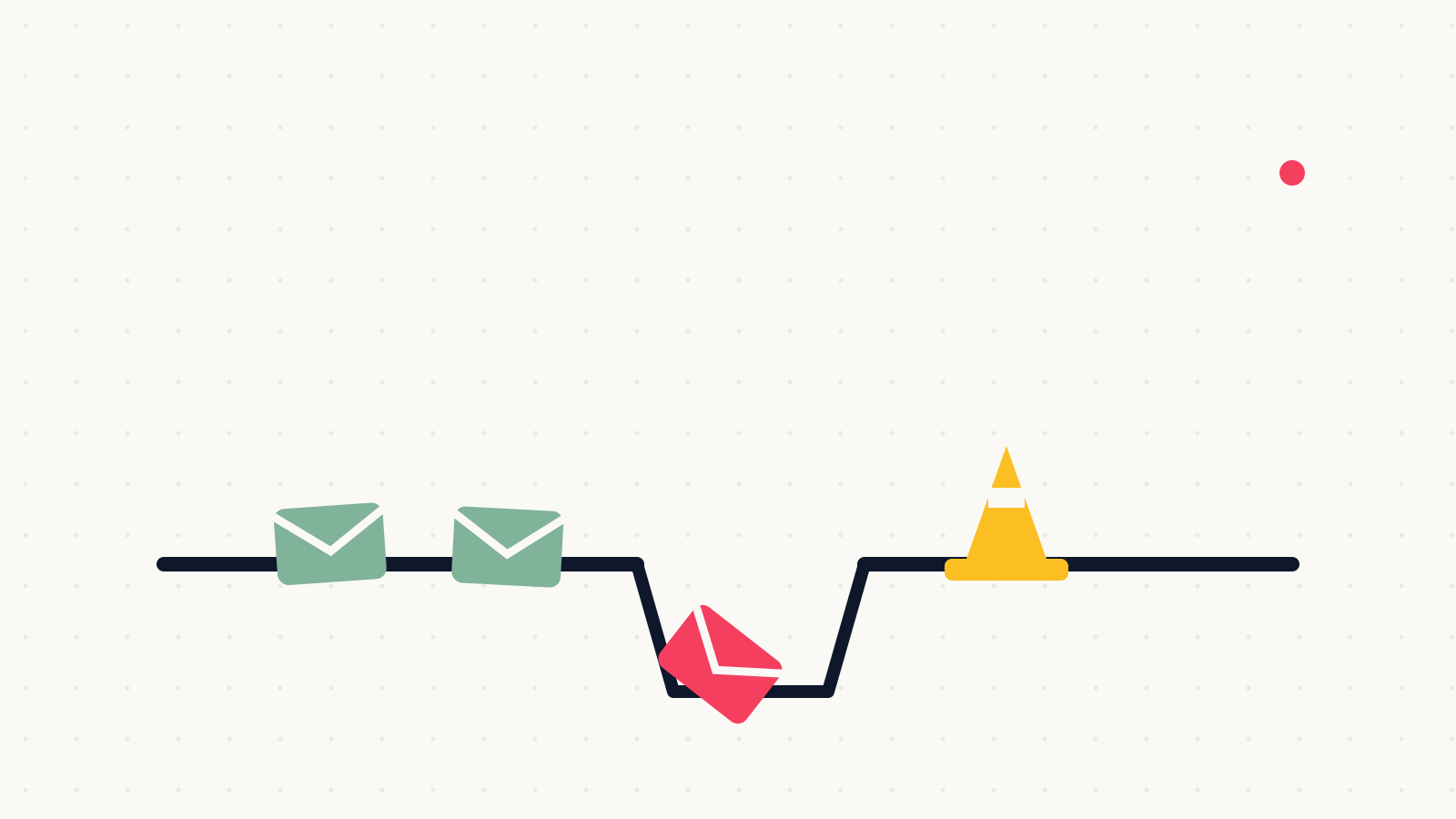
An integration disconnects, a form changes, a workflow stalls, and the leads keep arriving into a void. Silent failure is the most expensive pitfall on this list because it runs for weeks. Every important workflow needs an alert when it breaks and a human who receives it. That is the plumbing standard that separates professional automation from a pile of connected apps.
Pitfall 6: no owner after launch week
The consultant leaves, the excited employee changes jobs, and eighteen months later nobody can say what fires when. An automation system is infrastructure; infrastructure gets an owner by name, a written map of what exists, and a monthly half-hour of review. If no one owns it, you don't have a system. You have a countdown.
The order that avoids all six
Process on paper, then data cleanup, then one workflow live and monitored, then the next. That sequencing is the whole logic of the 30-day roadmap, and the shortlist of what to automate first is in 10 things every local business should be automating.
Or hand us the audit: our automation practice starts every engagement by finding which of these six is already happening to you. Book a strategy call; bringing your messiest workflow is encouraged.
Founder, Cursive Media