When your automations collide: the customer view.
Every sequence was designed alone, tested alone and reports alone. The person receiving all of them at once is the only one seeing the whole thing, and nobody has asked them.
John "Holliday" Mahlow
Founder, Cursive Media
- Read time
- 5 min read
- Written
One customer. Booked on Monday, reminded on Tuesday, job done Wednesday, asked for a review on Thursday, sent a we-miss-you email on Friday because a different system had not noticed she was a customer at all.
Every one of those messages was a good idea when somebody built it.
Why this happens to everyone
Automations arrive one at a time. Somebody solves the no-show problem in March, the review problem in July, the quiet-quarter problem the following spring.
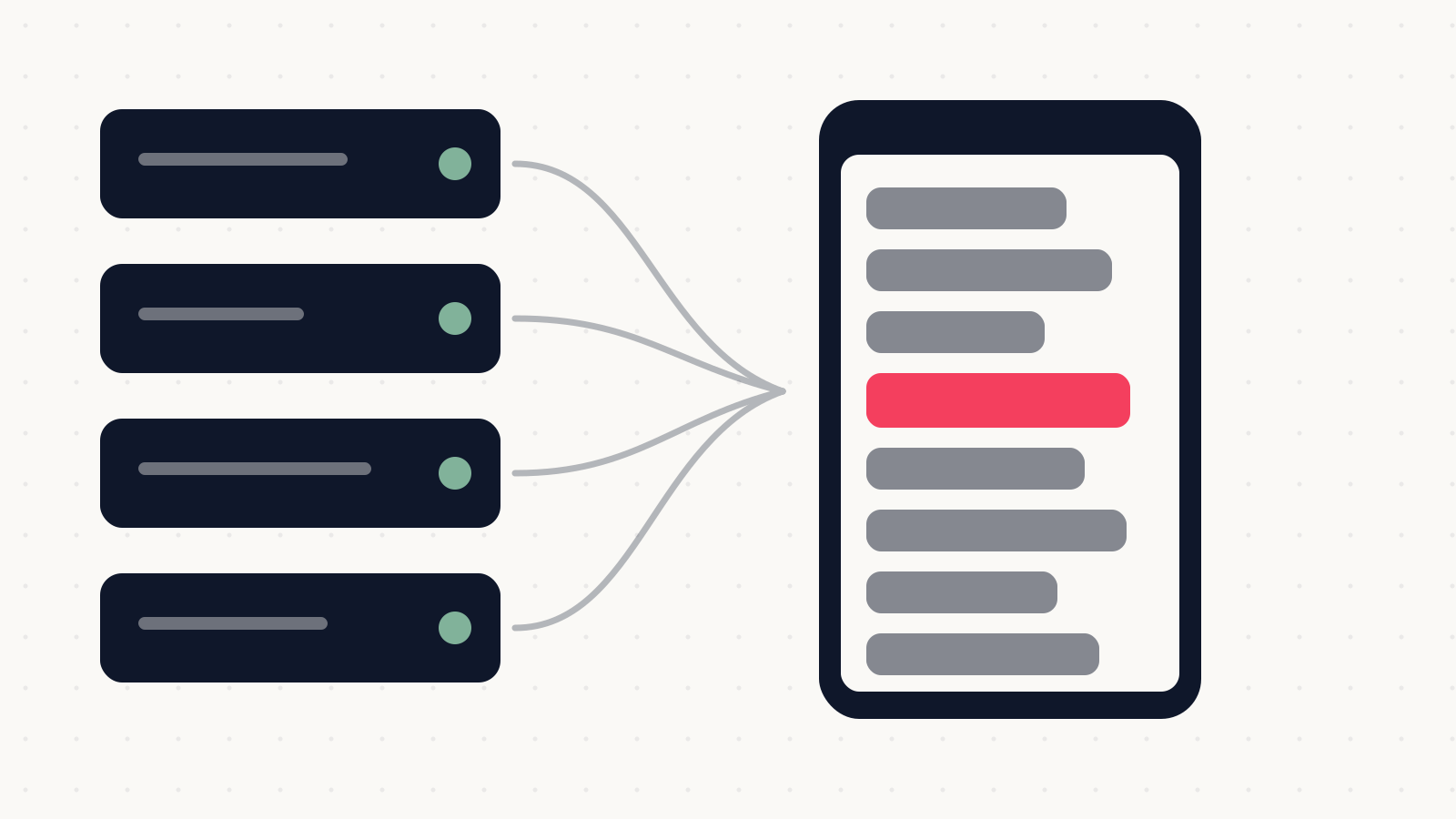
Each one is built alone, tested alone against a test contact, and reported alone in its own little dashboard. So there are four systems and four sets of statistics, all of them performing well by their own account. The thing none of them measures is the person on the other end, because no automation is aware that the others exist.
Your customer does not experience your systems. She experiences a phone.
The collisions that keep recurring
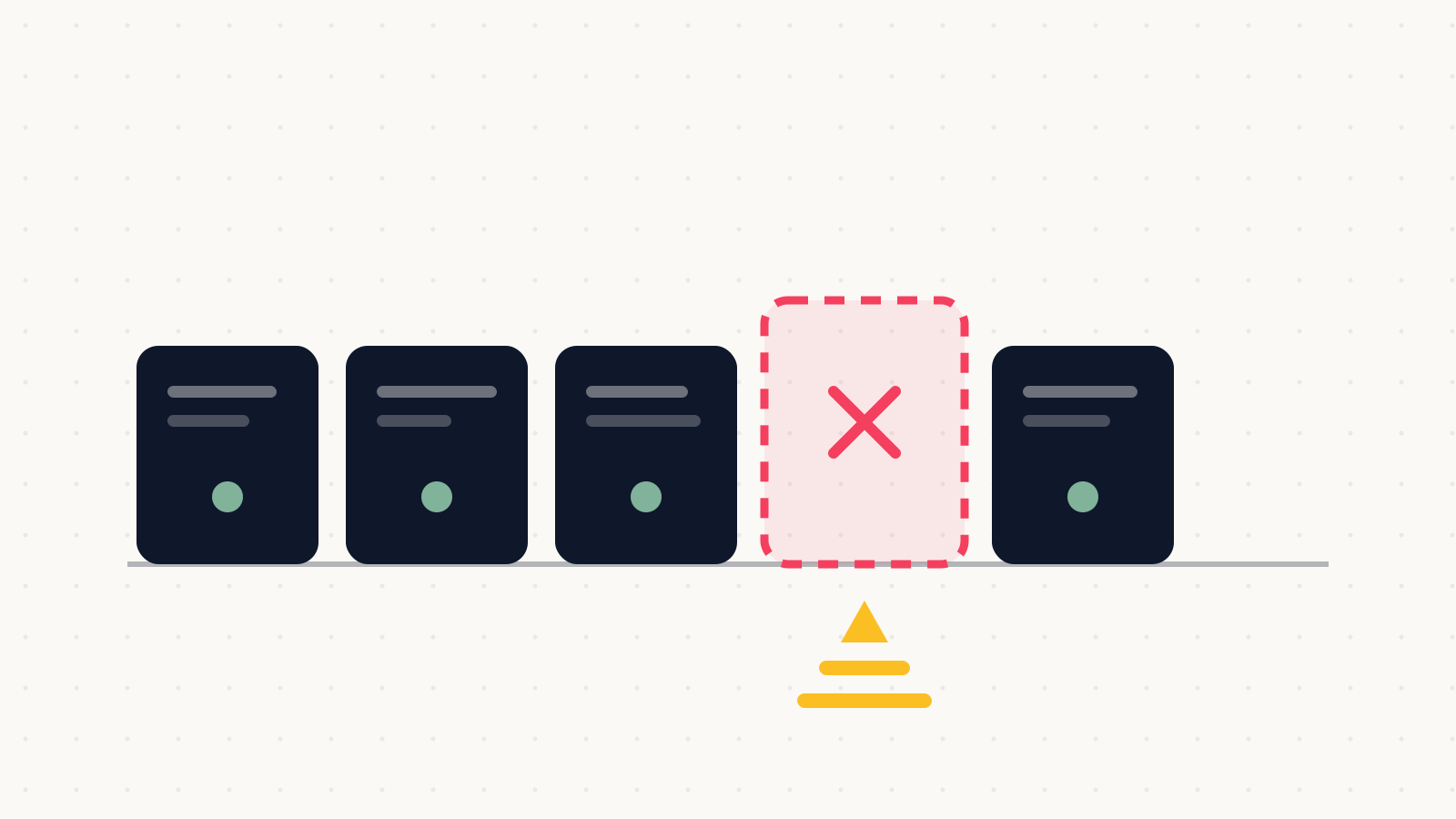
The worst one first. A review request going out while a complaint is open.
Somebody called on Tuesday to say the job was not right, the office is dealing with it, and on Thursday your automation cheerfully asks her to rate her experience. She now has an invitation to write down exactly what she is feeling, which she was not otherwise going to do. That single collision has produced more one-star reviews than any amount of bad workmanship.
Then the reactivation campaign that treats an active customer as lapsed, because it counts from the last invoice and she is on a maintenance plan. The reminder for an appointment that was moved by phone and never updated in the system that sends reminders. And two tools texting from two different numbers, so your customer now holds two conversations with the same business and replies to whichever is nearer the top of her screen.
Read the transcript
Here is the exercise, and it takes an afternoon.
Put your own phone number through the whole thing as a customer.
Book a real job, let it run, resist every urge to tidy something up as you go, and then sit down and read every message you received in order, including the emails.
People find things in the first ten minutes that had been running for two years. Almost nobody does this, because each system was tested when it was built and it worked, which is true and is not the same as the whole thing working.
The fix is a rule about silence
What is missing is not a better sequence. It is a rule that says when this is happening, that does not send.
An open complaint suppresses the review ask. An active plan suppresses the win-back. A rescheduled job cancels the original reminder rather than adding to it. None of that is technically difficult, and it is skipped almost universally, because writing those rules means somebody has to hold the whole system in their head at once and no single automation project ever requires that.
One number and one thread is the other half of it. If two tools are texting your customers, the thread they see is already broken before anybody writes a word.
There is a floor under all this
Volume is not only a manners problem.
Carriers and the consent rules decide whether your messages arrive at all, and Texas has its own restrictions on soliciting by text. A business quietly sending one person five automated messages a week is not just irritating somebody. It is spending deliverability it will want later, on a customer who was already booked.
Why nothing flags it
This never shows up in reporting, and the reason is structural.
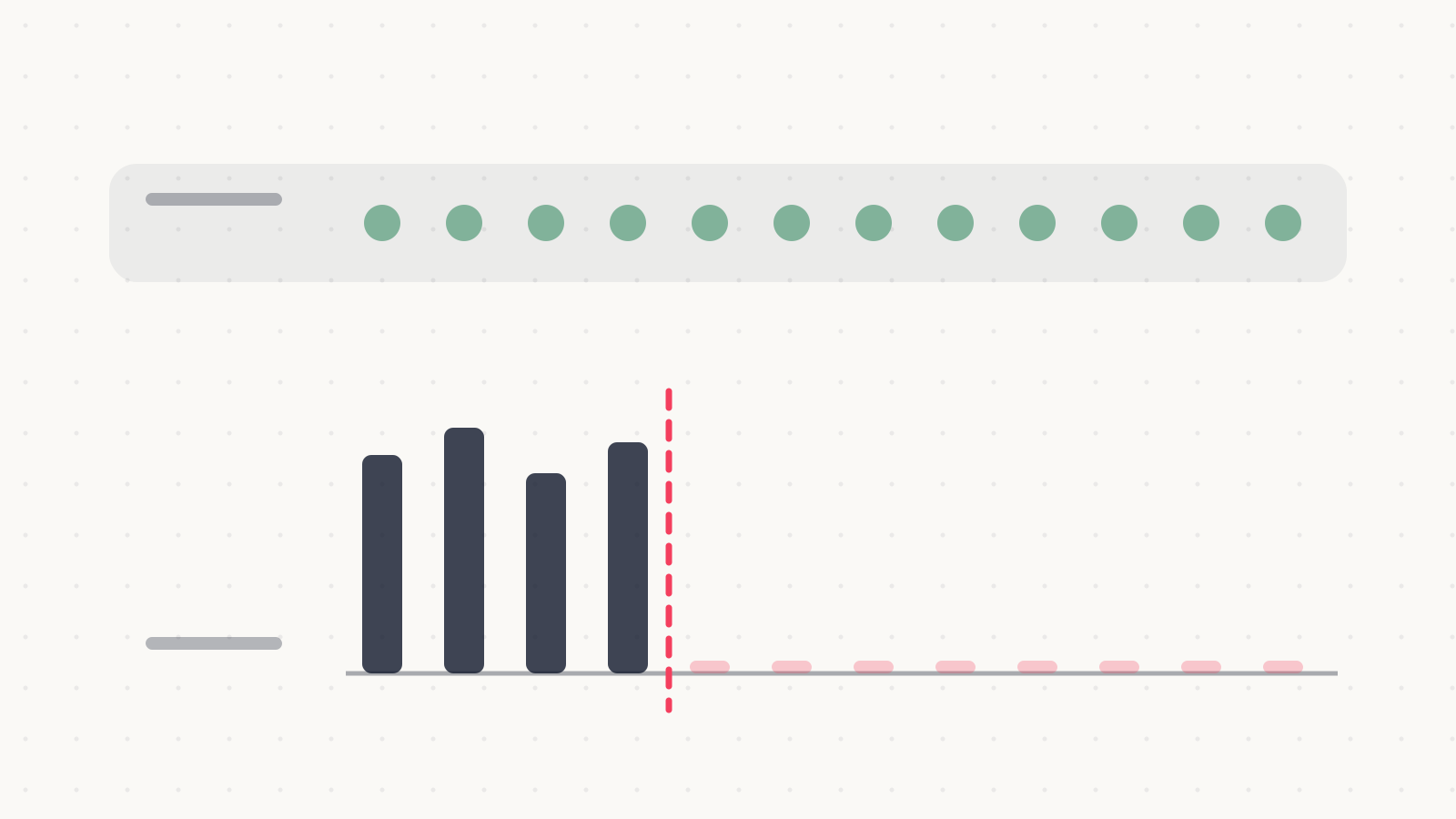
Every campaign reports its own sends and its own opens, all of them green, which is precisely the blindness that lets an automation stop working without anybody noticing. Success measured per system cannot describe an experience that happens across systems. The only instrument that sees it is a person reading the thread.
Suppression rules across systems are exactly the automation work we do, because no single sequence can see the others. If you have more than two automations running and have never read one customer's week end to end, book a strategy call. We will map what fires when, and the suppression rules usually write themselves once everything is on one page.
John "Holliday" Mahlow
Founder, Cursive Media