Google killed Business Profile websites. What replaces yours?
Google shut off Business Profile websites in March 2024 and ended the redirects that June. If your business leaned on a business.site page, here’s what actually replaces it — and what doesn’t.
John "Holliday" Mahlow
Founder, Cursive Media
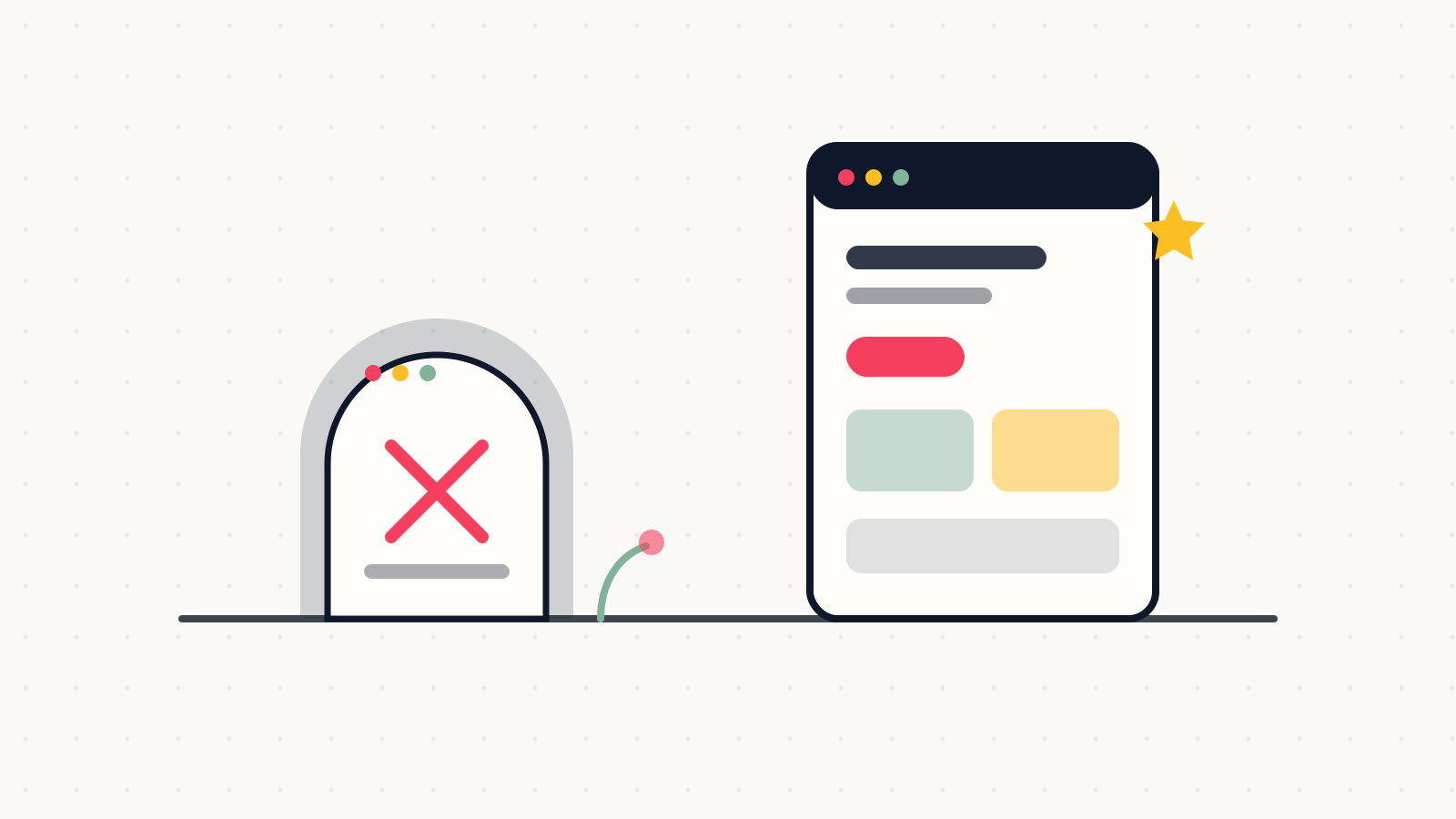
For years, Google Business Profile included a free one-page website builder — those business.site addresses you’d see for barbershops and taquerias. Google turned them off in March 2024. Visitors were redirected to the Business Profile for a grace period, and on June 10, 2024 the redirects stopped too: anyone hitting a business.site link since then gets a page-not-found. The domains were stripped from the profile’s website field on the way out.
Two years on, businesses still land here confused — old links on invoices, truck decals, and directory listings pointing at a dead address. If that’s you, here’s the triage, and the honest version of what replaces it.
First, stop the bleeding
- Check what your profile’s website field points at now. Empty is common — the removal left many profiles linking nowhere.
- Hunt the dead link everywhere it lives: directories, social bios, invoices, email signatures, vehicle wraps at the next repaint.
- If you had the site’s content (menu, prices, hours prose), reconstruct it from memory or the Wayback Machine now, while someone still remembers.
The uncomfortable truth Google’s shutdown exposed
The free site died because for most businesses it barely mattered — a thin page Google itself outranked with your own profile. Which points at the real lesson: your Google rating is your homepage. Customers meet your profile — the rating, the reviews, the photos — before any website. A business that lost its business.site and felt nothing just learned where its customers actually were.
But "the profile is the first impression" doesn’t mean "the profile is enough." You don’t own it, Google changes it (this shutdown being exhibit A), it can’t rank for your services across a metro, and it converts browsers with exactly one page. The profile is rented ground. The website is the land you own — and the two feed each other, since a complete profile links out to a real site and a real site gives the profile somewhere to send people.
What actually replaces it
Google’s own farewell note pointed businesses at site builders like Wix, WordPress, and Shopify — fine tools, and for a business with time and taste, a DIY page beats a dead link. The honest fork looks like this: if the old one-pager genuinely served you, a simple builder page restores the status quo for the cost of a weekend. If the shutdown made you notice the website was supposed to be doing more — ranking for your services, booking jobs while you work, feeding your CRM — that’s not a weekend page, that’s a build, and if there’s an aging site in the picture, a redesign done without torching your rankings.
What a real one costs and how long it takes are the two questions everyone actually has, so we wrote both down in plain numbers: what a website actually costs and how long a website takes.
If your business.site died and the replacement plan is still "we’ll get to it," book a strategy call — bring the profile, and we’ll map the shortest honest path from dead link to something that earns.
John "Holliday" Mahlow
Founder, Cursive Media