
How to create a Google Business Profile that actually shows up.
Creating a Google Business Profile takes ten minutes. Creating one that surfaces for the right searches is category and services discipline — here’s the setup, in the order that matters.
John "Holliday" Mahlow
Founder, Cursive Media
Creating a Google Business Profile is free and takes about ten minutes at google.com/business: sign in, enter the business name, pick a category, add your location or service area, add contact info, then verify. The form is not the hard part. The hard part is that three of those ten minutes — the category, the name, and the services — quietly decide which searches you’ll ever appear for, and most businesses blow through them on defaults.
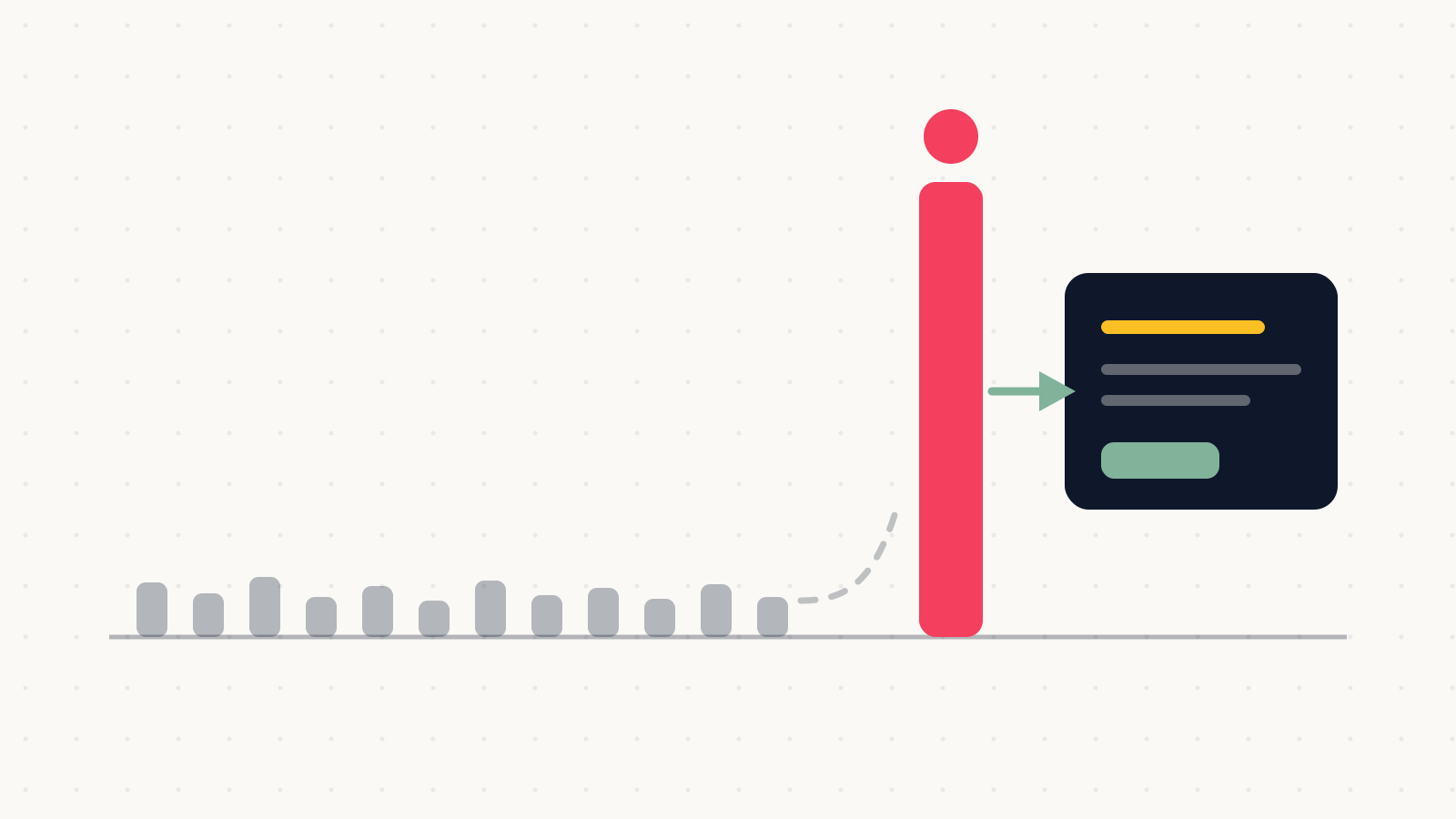
We manage profiles across enough businesses to see the pattern: profiles almost never fail from missing fields. They fail from the seven mistakes at the end of this post, and five of the seven get baked in on day one. So here’s setup in the order that actually matters.
Your name field is your name. Stop.
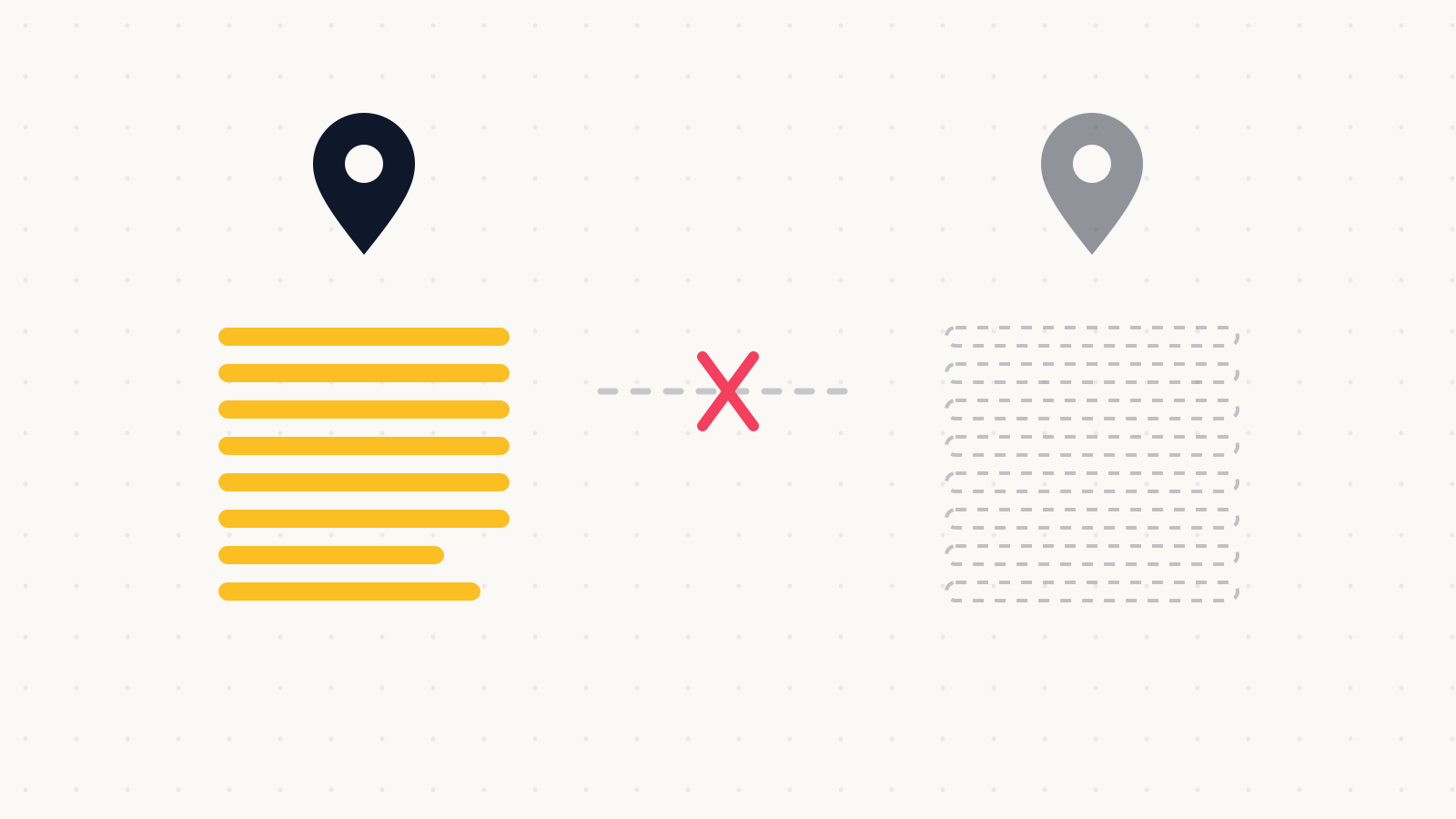
Enter the real-world name of the business — the one on your signage and invoices. The temptation, and the single most common rookie move, is stuffing it: "Summit Roofing" becomes "Summit Roofing – Roof Repair & Replacement Houston TX." That violates Google’s naming guidelines, and profiles get suspended for it every day, sometimes months later when a competitor reports it. The keywords you’re tempted to cram belong in categories and services, where Google actually wants them.
The primary category is the biggest lever you have
Google matches profiles to searches largely through categories, and your primary category outweighs everything else on the form. Pick the most specific one that describes what you are: "Roofing contractor," not "Contractor." "Family law attorney," not "Lawyer." Then add secondary categories for real lines of business — real being the operative word. Every category you add is a promise about what you do; categories you can’t back up with actual services dilute the ones that matter.
This is also where thin profiles die. The businesses that set a primary category and walk away are invisible for half of what they sell. The plumber who never added "Water heater installation" as a service doesn’t surface for water heater searches — not because Google is broken, because nobody told it.
Address, service area, and the fear of being findable
Storefronts list the address customers visit. Service-area businesses — plumbers, cleaners, mobile anything — can hide the address and define the areas they serve instead. Pick honestly: listing a home address as a fake storefront is another suspension trigger, and defining a service area the size of Texas doesn’t make you rank in all of it. Google’s local results weigh distance to the searcher; your service area should be where you genuinely take jobs.
Hours, phone, website: the trust fields
Real hours (with holidays updated — "open" profiles that don’t answer at 2pm Tuesday teach Google and customers the same lesson), a phone number someone answers, and your website link. If calls go unanswered more than you’d like, that’s a solvable problem — missed call text back exists for exactly this, and it pairs beautifully with a new profile.
Photos before launch, not someday
Profiles with no photos read as ghost towns to both Google and customers. Before you consider setup done: the storefront or trucks, the team, real work. Phone photos of real things beat stock photography every time — customers can smell stock from the thumbnail.
Then verify it, carefully
Google will offer video, phone, email, or postcard verification — its choice, not yours — and the process has teeth now. The walkthrough, including the edits that get fresh profiles un-verified, is in how to verify your Google Business Profile. Short version: verify, then resist the urge to change everything at once. Bulk edits right after verification are how new profiles end up back in review.
The seven ways profiles actually fail
From years of managing these: set up once and never touched again. Reviews ignored entirely. Wrong or thin categories. No posts or photos, ever. Updating too much at once. Keyword-stuffing the name. And buying fake reviews — the one that can end the profile outright. Notice that only two of the seven are setup mistakes; the rest are what happens after week one. An eighth belongs on the list for anyone who has ever used a vendor: letting someone else claim the profile under their own account, which turns a five-minute edit into a request-access process.
Which is the honest pitch for treating the profile as a running system instead of a form you filled out. Reviews arriving steadily and getting answers is the loudest signal a profile sends — your Google rating is your homepage makes that case, and automating the review ask is how it happens without anyone remembering to do it. That running system is literally what we sell as reputation management; if you’d rather set the profile up right once and have the loop run itself, book a strategy call.
John "Holliday" Mahlow
Founder, Cursive Media