
Call tracking on Google Business Profile: the real rules.
Google publishes real requirements for the phone number on your profile. Call tracking is not one of the things it addresses, which is worth knowing before you accept advice about it.
John "Holliday" Mahlow
Founder, Cursive Media
- Read time
- 5 min read
- Written
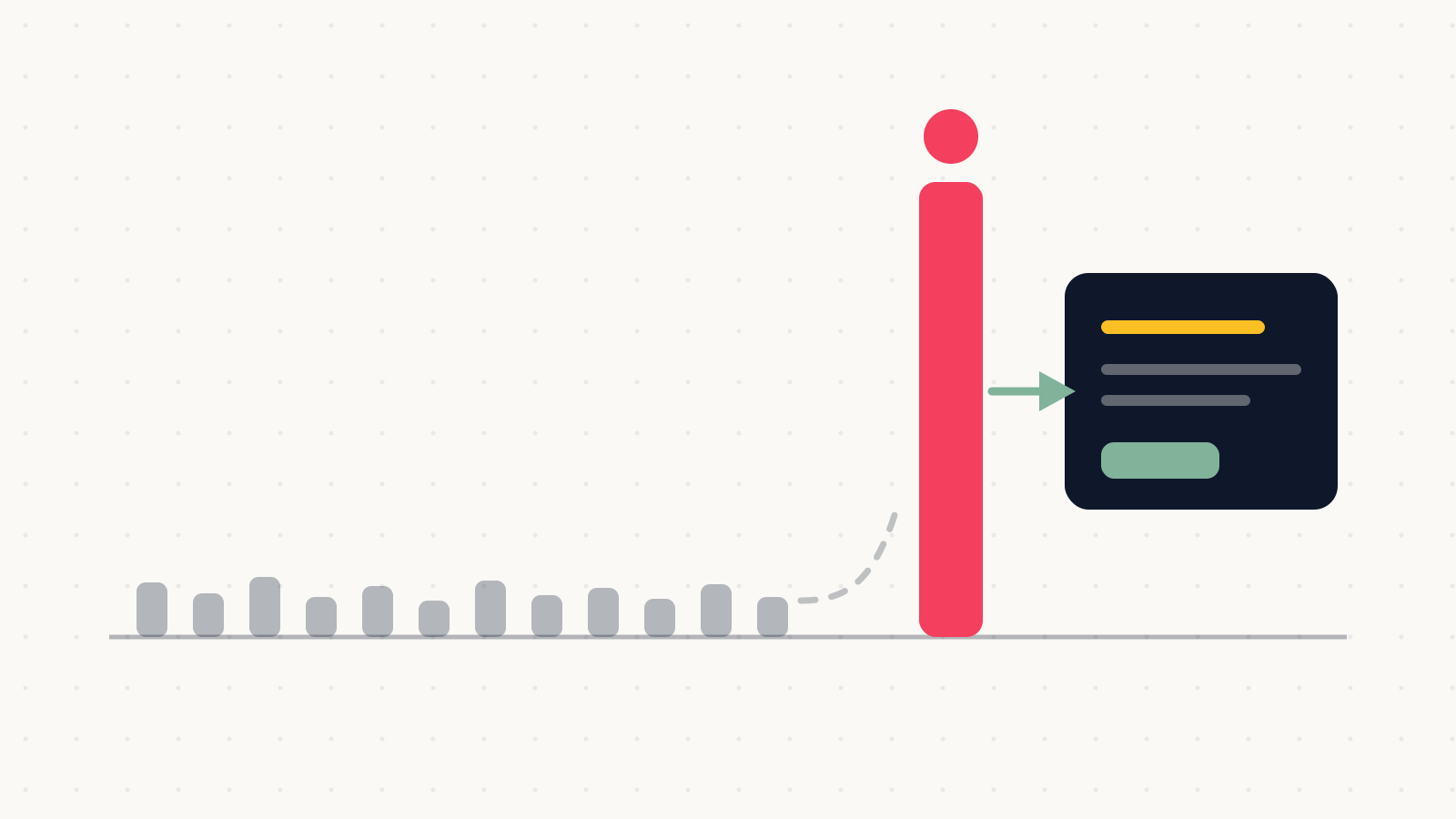
Your marketing company swapped the phone number on your Google listing for one you do not recognize, so calls can be attributed properly. Reasonable enough as a goal. Worth ten minutes to know what Google actually asks of that number, because the profile is the thing sending you work.
What Google does require
The guidelines are specific in a few places. The number should connect to your individual business location rather than a central call centre, and Google says to use a local number instead of a helpline number wherever possible. It must be under the direct control of the business. Premium-rate numbers are out regardless of what the caller pays.
You are also allowed up to two additional numbers beyond the primary one. They can be mobile or landline, not fax, and Google notes they can be used on Business Profile websites and other local surfaces.
That "direct control" line is the one to hold onto. If the number belongs to an agency account and the relationship ends, the number can leave with them, which is the same category of problem as a vendor holding the profile itself.
What Google does not say
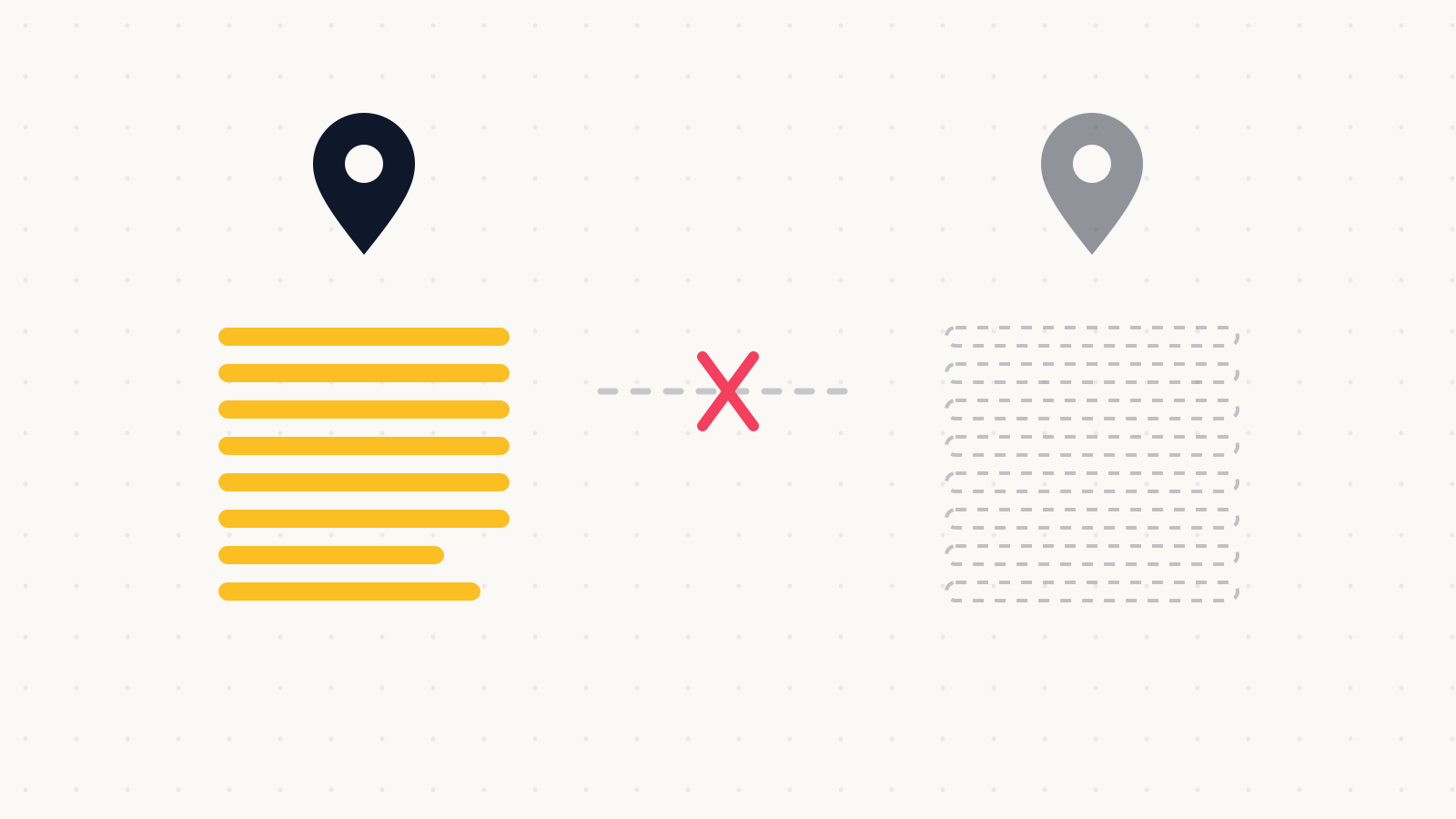
Call tracking is not mentioned in the guidelines. Not permitted, not prohibited, not named.
This matters because the industry has a confident answer anyway. You will be told the correct approach is a tracking number as your primary and your real number as an additional, and you will be told it in the tone of settled policy. It is not policy. It is a community convention built to fill a gap Google left, and it may well be sensible, but anyone presenting it as Google's rule is telling you something they cannot show you.
Ask to see the documentation. The reaction tells you a lot about who you are working with.
The rule that could bite
There is one guideline in this neighborhood with teeth. Google says not to provide phone numbers or URLs that redirect or refer users to landing pages or phone numbers other than those of the actual business.
Whether a tracking number that forwards straight to your shop counts as redirecting to a number "other than the actual business" is exactly the question Google has not answered. A number that rings your phone, under your account, with your name on the bill sits about as comfortably as it can. A number owned by a third party, pointing at a queue, that you cannot administer and cannot keep, sits considerably less comfortably.
That is reasoning, not policy, and it is better labeled that way than dressed up as a rule.
The quieter cost nobody mentions
Your phone number is not just on Google. It is on directories you joined years ago, on the chamber of commerce page, on your invoices, on old Facebook posts, in the footer of a supplier's site, on a truck.
Introduce a second number into that ecosystem and you have started an inconsistency you will be maintaining for years. Local search leans on your details agreeing with themselves across the web, and a tracking number that appears in three places and not the other thirty is noise in a signal you were trying to strengthen. If you are also doing the unglamorous work of getting your profile to rank, this quietly works against it.
None of which means never use tracking. It means the number is a decision with a tail, and it should be made once, deliberately, rather than by a vendor logging in and swapping a field.
The question worth more than any of this
Whatever number is on the listing: does anyone answer it?
Attribution tells you where a call came from. It does nothing about the call that rang out at 4pm because both trucks were on jobs, and Google counts that as a call either way, since the metric records the tap rather than the conversation. Tracking a lead you then miss is an expensive way to document your own problem, and catching those is worth more than knowing which campaign produced them.
Getting the number right, and keeping tracking from breaking it, is part of the reputation work. If a number appeared on your listing and you are not sure who owns it, book a strategy call. Sorting out whose name the line is in takes one conversation, and it is a much better time to find out than the week you change agencies.
John "Holliday" Mahlow
Founder, Cursive Media