What your Google Business Profile metrics actually count.
Views, searches, calls and directions, defined the way Google defines them, plus the documented detail that puts your Google Ads traffic inside the same chart.
John "Holliday" Mahlow
Founder, Cursive Media
- Read time
- 7 min read
- Updated
The performance tab hands you a number in the thousands and a green arrow, and it feels like progress. Then you look at the calendar and the phone rang the same number of times it rang last month.
The dashboard is not lying to you. It is answering a different question than the one you are asking, and a few of its counting rules are strange enough that comparisons you make in good faith come out wrong.
Read the dashboard from the bottom up
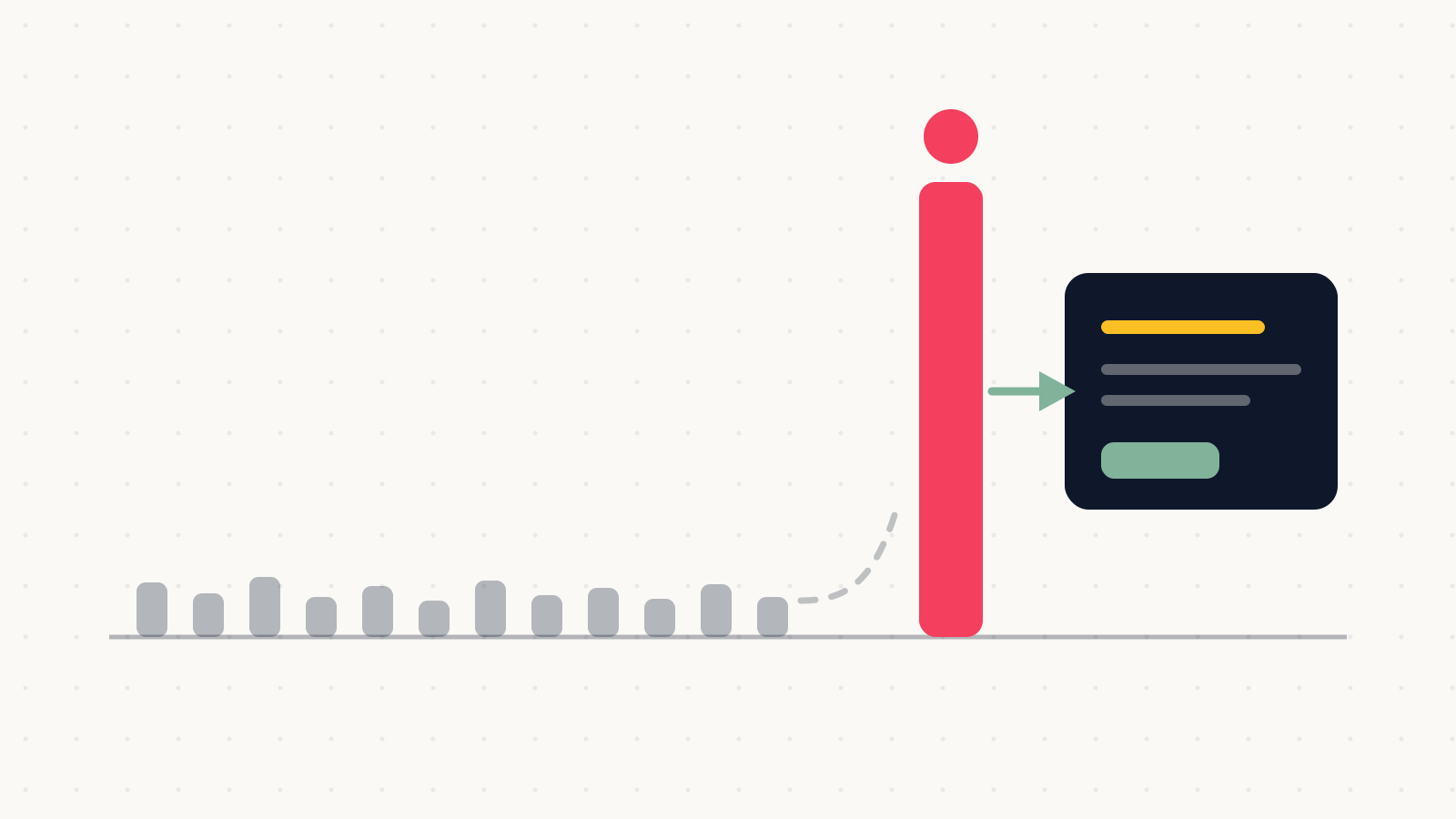
Google leads with views because views is the biggest number. Start at the other end, with the actions that only happen when somebody has decided to do business with you: calls, direction requests, website clicks, messages, bookings. Those are the ones with a plausible line to revenue.
For a service business the call count is the closest thing on the screen to money. For anyone with a storefront, direction requests matter almost as much, since nobody asks for driving directions casually. Views belong at the bottom of the read, as context for the actions rather than a score in their own right.
What each number actually counts
Views are people, not impressions
This is the one that trips up almost everyone. Google counts views as unique visitors, and per breakdown of device and platform a user is only counted once a day. Someone who checks your hours three times on Tuesday from the same phone is one view, not three.
Two consequences follow. Your view count is closer to "how many people looked" than "how many times we appeared", so it will always look small next to an impressions number from Ads or Search Console, and comparing the two is meaningless. Google also notes this figure is not the same as total business views across Google, so it is not a measure of your entire visibility either. Where it earns its keep is as a denominator: views alongside calls tells you what share of the people who found you did anything about it, and that ratio is far more stable than either number on its own.
The API splits the underlying impressions four ways: Maps and Search, each on desktop and mobile. That split is the genuinely useful cut. A business drowning in mobile Maps impressions while starving on desktop Search is being found by people already nearby, which is a completely different problem from being invisible, and it points at a different fix.
Searches runs on its own clock
The searches breakdown shows the terms people used to find you. It updates at the beginning of each month, and Google says updates may take five days to appear. When somebody tells you their search data has stopped working, it is usually the third of the month.
Read those terms as a category audit rather than a keyword list. If the queries bringing you up are all your brand name, you are being found by people who already knew you existed, which is a relevance problem in the profile rather than a reason to celebrate.
The action metrics, and one that is quietly cleaned
Calls counts clicks on the call button, and it only exists if there is a phone number on the profile. Website clicks counts taps on your website link. Bookings counts reservations people completed, and only reports anything if your bookings run through a booking provider.
Google's documentation also still lists a Messages metric, defined as the number of different conversations. Treat that as a fossil. Google shut the chat feature down in July 2024, and its own developer notes record message reception ending on 15 July and the service closing on the 31st, with the Maps chat inbox deprecated after that. The metric documentation was never updated to say so. If you have been waiting for messages to start arriving, that is why they never did.
Directions is the interesting one. Google adjusts it for repeat taps, cancellations, and spam, which makes it the most defensible number on the page.
Weight it accordingly, whatever the layout implies.
One caveat on calls that no dashboard will tell you: it counts the click, not the conversation. A missed call is a call click. If that gap matters to you, the fix is not analytics, it is answering the ones you miss.
The line that breaks a lot of reporting
Buried in Google's documentation is a sentence worth reading twice: performance data includes views, searches, and actions from both organic search results and Google Ads.
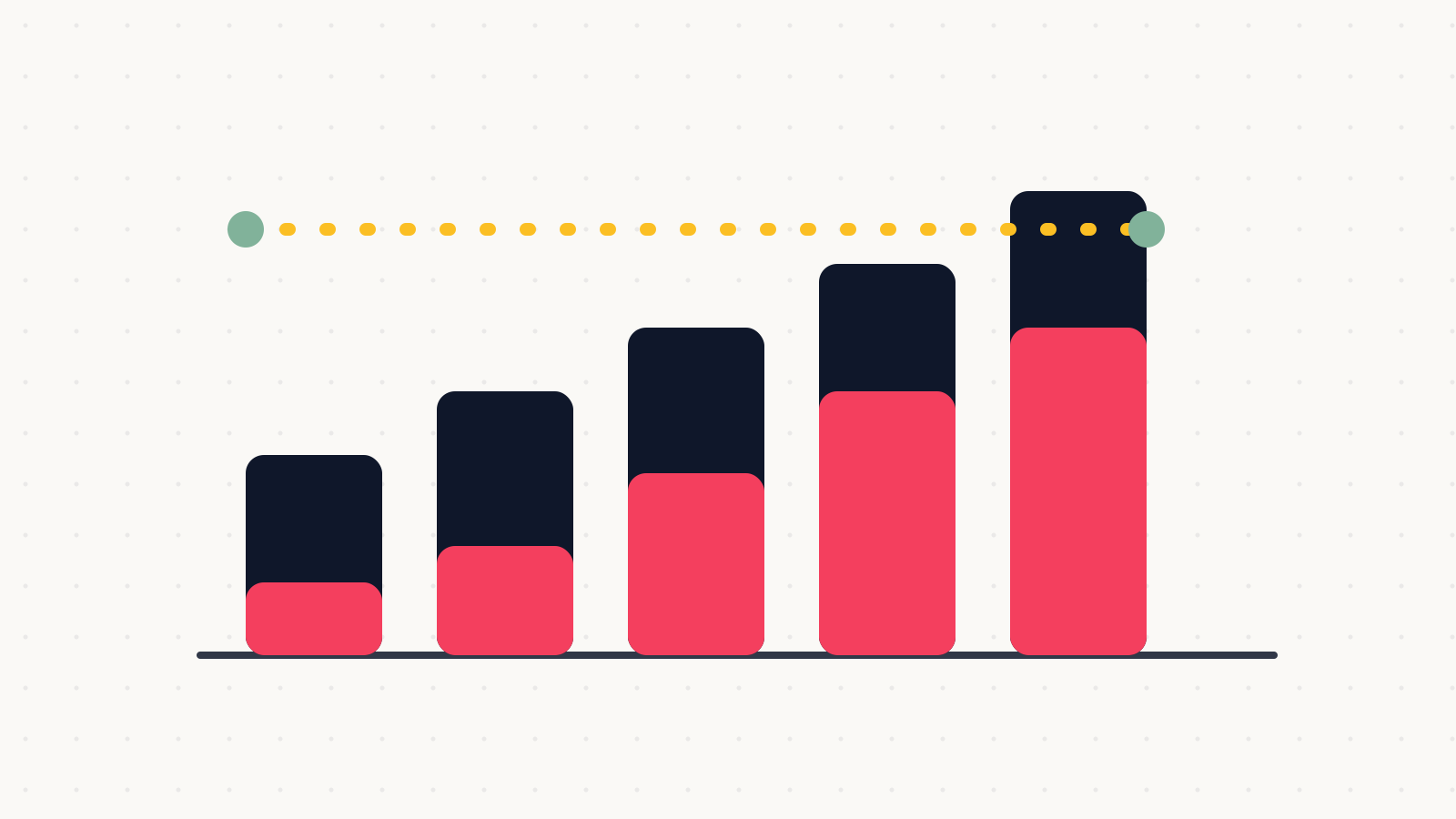
Your paid traffic is in the same chart as your unpaid traffic.
Launch a local campaign on the first of the month and the profile's views and calls will climb, because ad-driven interactions are being counted alongside the organic ones. Nothing about the local SEO has changed. If somebody hands you a report that shows profile performance rising through a period when ad spend also rose, and presents it as evidence the SEO is working, they are either not aware of this or hoping you are not.
The searches breakdown is the exception, since Google describes those terms as reflecting organic results. Which makes it, awkwardly, the most honest panel in a tool most people use to judge organic performance.
If you run ads, the only clean comparison is against a period with comparable spend. Failing that, use the searches panel and your call log rather than the headline chart.
A monthly read that takes ten minutes
Resist the urge to find an industry benchmark. Nobody's published average accounts for your city, your category, your ad spend, or how long the profile has existed, and the number you actually need is your own baseline from three months ago.
Write down calls, direction requests, and website clicks each month, next to two things the dashboard does not know: how much you spent on ads, and how many reviews arrived. Most unexplained swings resolve against one of those two columns. A month where actions fell and reviews stopped arriving is not a mystery, it is the review engine stalling, and a month where everything rose alongside a new campaign is a media buy rather than a milestone.
Then check the split between Maps and Search, and between mobile and desktop, once a quarter rather than monthly. It moves slowly, and it tells you which half of the profile deserves the next hour of optimisation work.
None of this is visible on a profile you do not administer, incidentally. If your dashboard is empty because a former vendor still holds the keys, that is a different problem to solve first.
If you would rather have someone read these numbers with you and say plainly which ones are moving for real, book a strategy call. Reporting that separates the paid from the earned is table stakes in our reputation practice, and it is the difference between knowing your profile works and hoping it does.
John "Holliday" Mahlow
Founder, Cursive Media