Google Business Profile local SEO: what actually moves the map.
Google ranks local results on relevance, distance, and prominence. What each one actually responds to, what you can’t change, and why half of what audit tools flag doesn’t matter.
John "Holliday" Mahlow
Founder, Cursive Media
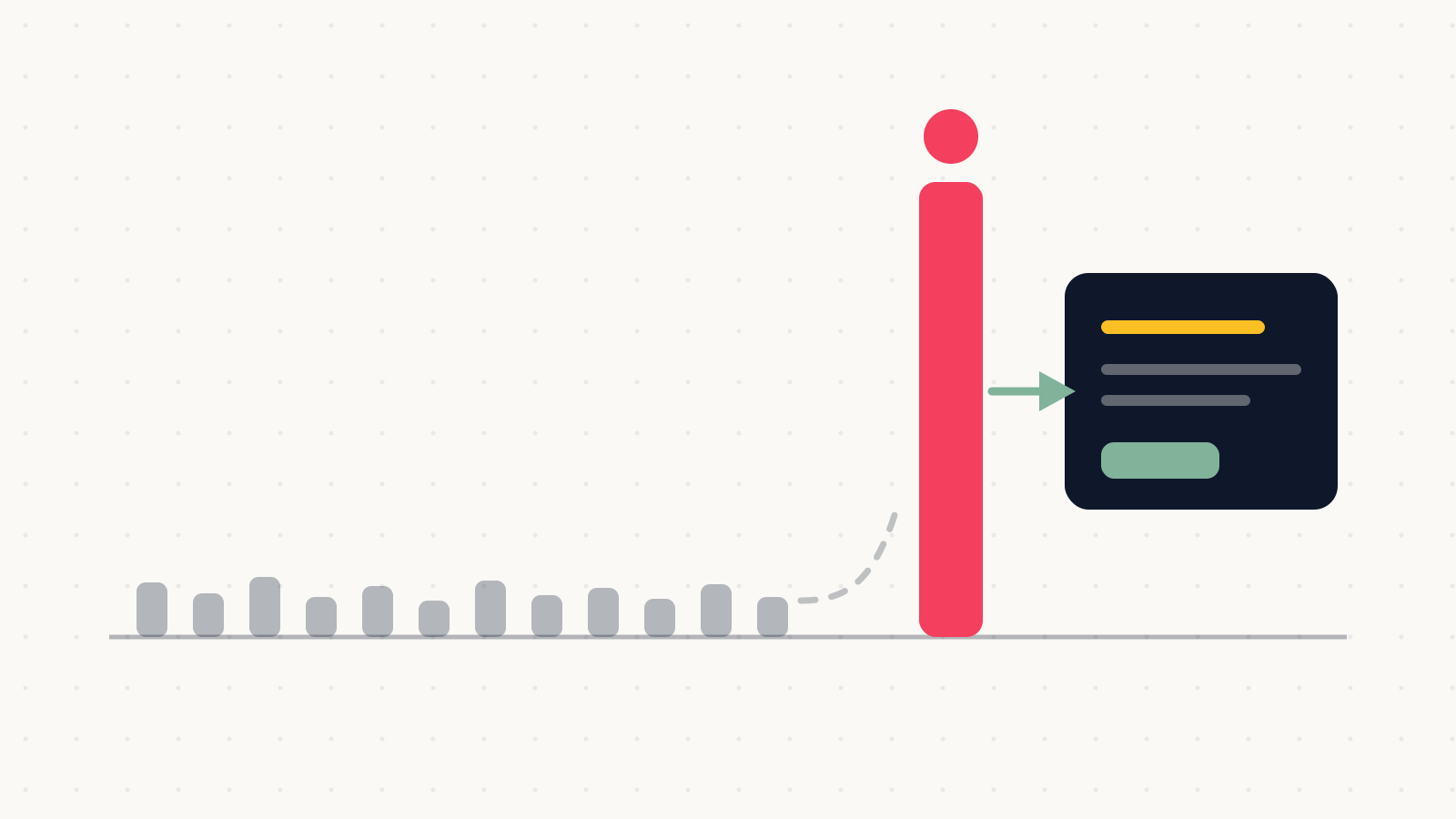
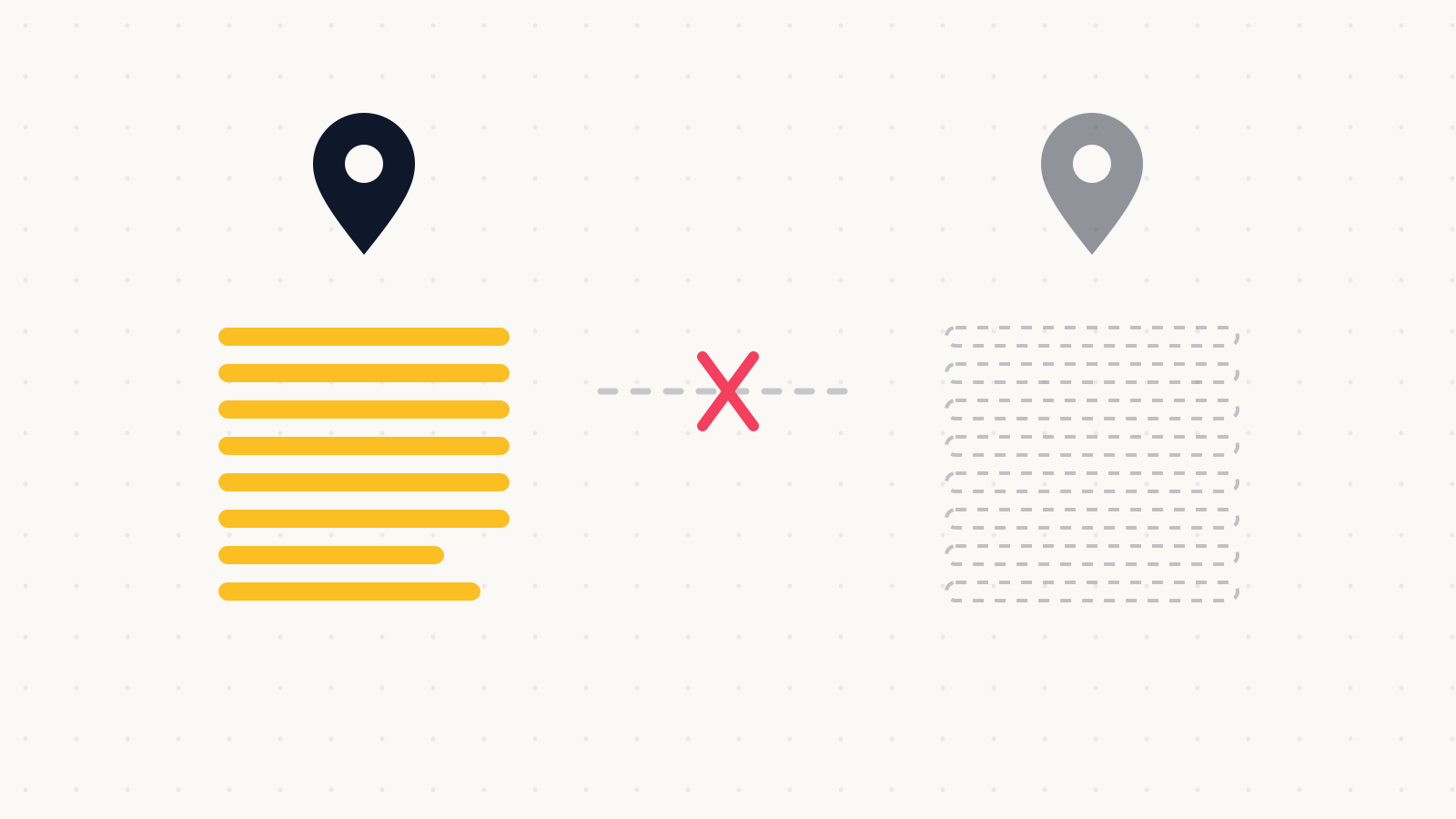
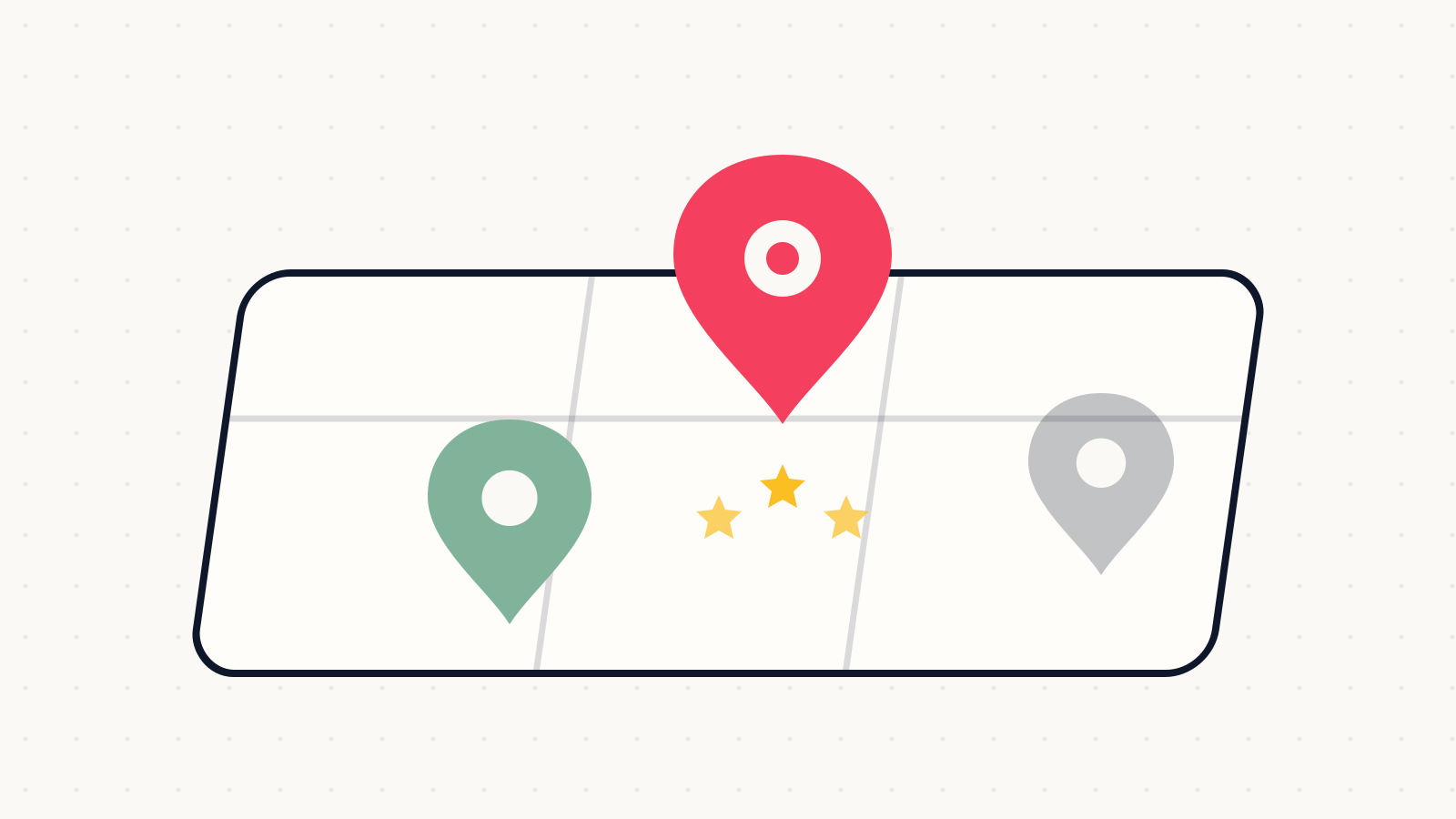
Google publishes exactly three factors for local ranking: relevance (how well your profile matches the search), distance (how far you are from the searcher), and prominence (how well-known the business is). Everything a local SEO consultant has ever sold you is an attempt to move one of those three — and one of them barely moves at all.
That framing, straight from Google’s own documentation, is worth keeping in front of you because it cuts through most of the noise in this industry. Google is equally blunt about the other thing: there is no way to request or pay for a better local ranking. Anyone on the phone telling you otherwise is selling the thing Google says doesn’t exist.
Distance: the factor you don’t control
Start with the one you can’t buy. A searcher two blocks from your competitor sees your competitor first for near-me searches, and no optimization changes the geometry. What you can control is honesty about your service area and, for multi-location businesses, having a real, verified, maintained profile for each location — each one competes in its own geography. Ranking poorly in a suburb you don’t serve isn’t a problem; it’s the system working.
Relevance: where nearly all the fixable problems live
Relevance is Google matching your profile to a search, and it can only match what you told it. The levers, in the order we set them on every profile we manage: the most specific primary category that describes the business, secondary categories for real lines of work, a services list that names what you actually sell, and business info that’s complete and current. The full setup order is in how to create a profile that shows up — and if the profile isn’t verified yet, start there, because nothing else counts until it is.
The mistake at this layer isn’t usually missing fields. It’s the plumber whose services list stops at "plumbing" and wonders why water-heater searches skip him. Google’s matching is literal-minded: name the service, get considered for the service. Don’t name it, don’t.
Prominence: reviews are the part you can actually run
Prominence is how well-known the business is — Google folds in review count and rating, mentions across the web, links, and general online footprint. Most of that accrues slowly. The piece that responds to effort this month is reviews: steady new ones, a healthy rating, and responses that show someone’s home. We manage profiles for a multi-location operation, and the review loop is the single mechanism that keeps every location’s profile earning its position — not posting hacks, not weekly fiddling. Reviews arriving and getting answered, every week, forever.
That loop shouldn’t depend on anyone’s memory. Automate the ask, send it by link or QR at the moment of goodwill, and respond to what arrives. Photos and posts help the profile look alive — do them when there’s something real to show — but if you have one hour a week for the profile, spend it on the review loop.
The audit-tool false alarm problem
Now the stance that will annoy some of our industry: a lot of "GBP optimization" is mostly scam, and some of the rest is honest people misled by their own tools. Third-party audit tools grade every profile against a generic checklist, and they flag "problems" that aren’t problems — a missing attribute that doesn’t apply to you, a category you "should" add for a service you don’t sell, a keyword you "lost" that was never your business. A company can rank for a keyword and it doesn’t mean they wanted to, or that it’s their business. The same misreading happens with the profile's own dashboard, where the numbers count stranger things than people assume.
An audit score isn’t a strategy. Rank for what you sell, to the people close enough to buy it, and let the rest of the checklist go.
So when the cold call says your listing has seventeen critical errors: the test is whether fixing any of them would put you in front of a customer you actually serve. Usually two would, and you can do both yourself in an afternoon with the posts linked above. The daily grind — the review loop, the responses, the freshness — is the part worth paying for, and it’s the part we run as reputation management. If you want the honest version of that seventeen-error audit, book a strategy call; we’ll tell you which two matter.
John "Holliday" Mahlow
Founder, Cursive Media