Appointment reminder texts: the cadence and templates we deploy.
The three-text appointment reminder cadence we set up for clients — copy-paste templates included — plus the manual layer for high-ticket calls and the rules that keep reminders from annoying anyone.
John "Holliday" Mahlow
Founder, Cursive Media
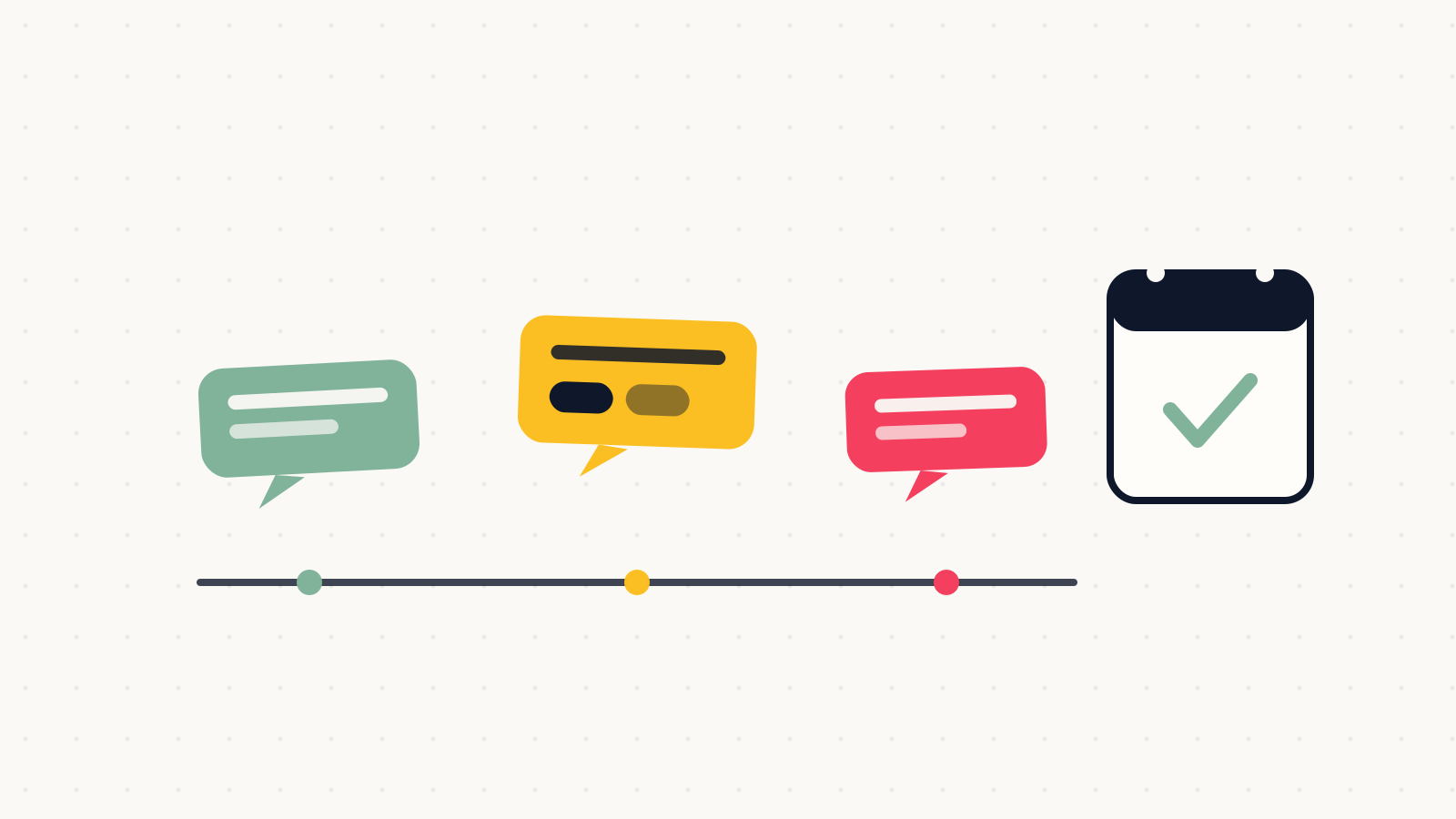
No-shows aren’t a character flaw in your customers. They’re what happens when a booking made Tuesday has to survive until Friday inside a brain juggling forty other things. Reminder texts are the cheapest fix in the entire automation catalog, and after setting them up for client after client, the pattern that works is boringly consistent: three automated texts, each with one job.
Here’s the exact cadence we deploy, the templates to steal, and the part most guides skip — how to remind people without making them feel processed.
The three-text cadence
One: instant confirmation, the moment they book. It confirms date, time, timezone, and how the appointment happens — and it should name the number the call will come from. That one detail bumps pickup rates, because a call from a number you’re expecting gets answered and a mystery number gets voicemail.
Two: the decision reminder, 24 hours out. This is the one that actually prevents no-shows, because it forces a small decision while there’s still time to rebook the slot: confirm or reschedule, one tap either way.
Three: the life-happens catch-all, 2–3 hours before. Short, warm, with the link or address again so nobody’s digging through old texts in the parking lot.
Templates to steal
- Confirmation (instant): "You’re booked! [Service] on [date] at [time] [timezone]. We’ll call you from [number]. Need to change it? [link]"
- Decision reminder (24h): "You’re on for tomorrow at [time]. Reply C to confirm or R to reschedule."
- Catch-all (2–3h): "You’re up in a couple hours — same link: [link]. Need to move it? [reschedule link]"
- After-hours booking bonus: "Got your booking for [date]! We’re closed right now, but you’re confirmed — details coming in the morning."
Every template obeys the same law: one job per message. Confirm, decide, or inform — never all three, never an essay. If a reminder text needs a scroll bar, it’s doing marketing, and reminder threads are the wrong place for marketing.
The high-ticket layer
For appointments that really matter — sales calls, consults where a no-show costs hundreds — we stack a manual layer on top of the automation: a short text from a real phone the night before around 6pm, another the morning of, and one an hour out. Typed by a human, reading like a human. A barber doesn’t need this. A business whose average booked call is worth four figures absolutely does, and the asymmetry is the point: automate the routine, spend human minutes where a saved appointment pays for the effort a hundred times over.
How to not be annoying
People don’t hate reminders. They hate being tricked, and they hate being trapped. (There’s a compliance floor under all of this too — carriers and the consent rules decide whether these texts deliver at all.) So: be honest about which texts are automated — the same disclosure rule we push for AI receptionists applies to a reminder thread. Always include an easy out ("Need to cancel or change? Tap here"); an escape hatch is what makes the rest feel respectful instead of naggy. Send in the customer’s timezone during human hours. And for low-stakes appointments, resist the urge to add touches — three automated texts is the whole system.
A reminder system works when the customer feels looked after, not chased.
Wiring it up
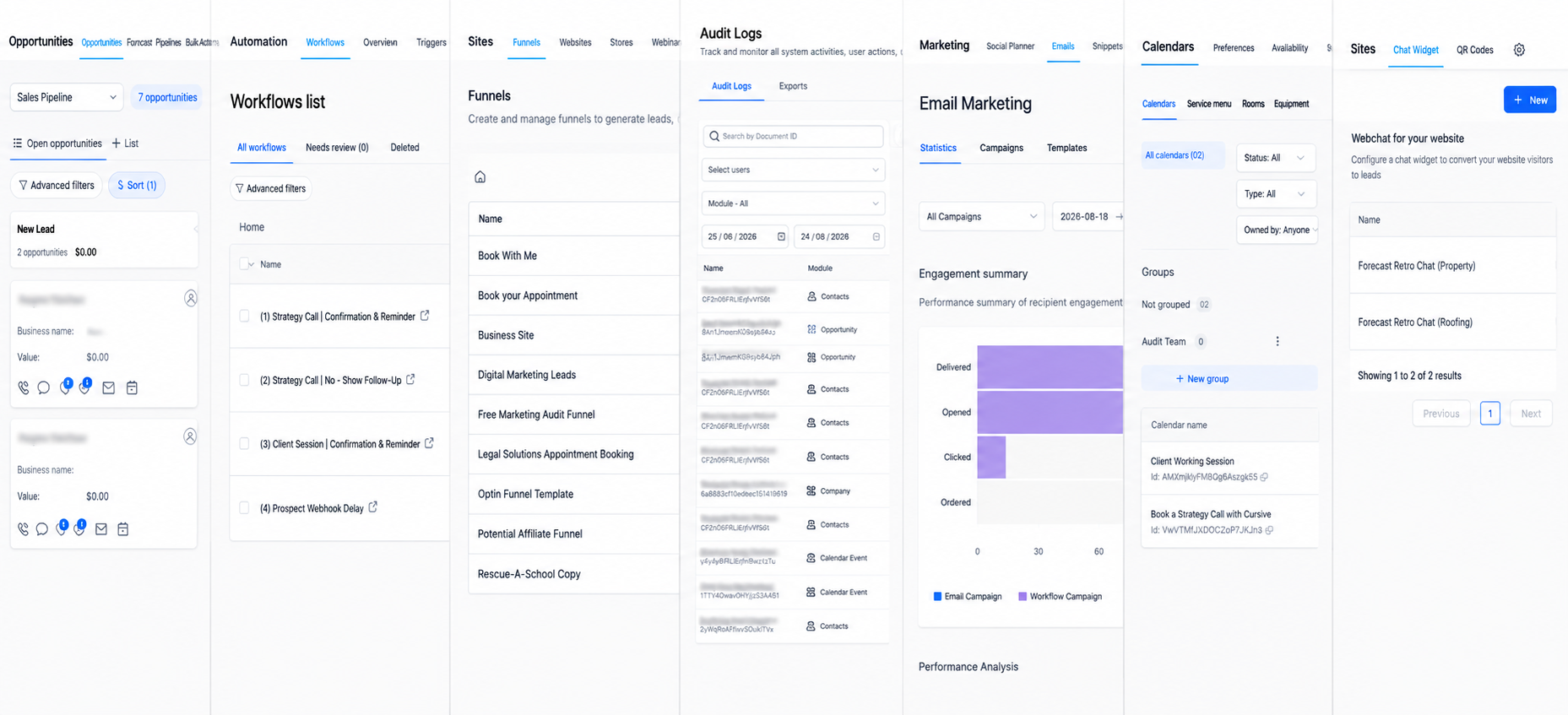
Any decent platform can run this. We build it in GoHighLevel because the calendar, the SMS thread, and the contact record already live together — a booking triggers the workflow, replies land where your team works, and a "R" reply can kick off rescheduling without a human in the loop. It’s the same native-workflow argument as missed call text back, and the two share a phone number and a conversation view when you set them up together.
Reminder sequences are a standard piece of the automation we build, and they are usually the first thing to switch on because no-shows cost money immediately. Reminders are one block of the larger machine — lead response, follow-up, review asks — that we map in the 30-day automation roadmap. If no-shows are costing you real money and nobody’s texting your customers tomorrow at 24 hours out, book a strategy call; this is an afternoon of wiring on the tools you probably already have.
John "Holliday" Mahlow
Founder, Cursive Media