What an AI receptionist actually does, and when you need one.
An AI receptionist answers your business phone with a conversational voice, books appointments, and routes calls. Here’s what it does well, where it hurts, and who shouldn’t buy one.
John "Holliday" Mahlow
Founder, Cursive Media
An AI receptionist is software that answers your business phone with a conversational voice: it greets the caller, answers common questions, books appointments, takes messages, and routes anything it can’t handle to a human. The pitch writes itself — every call answered, nights and weekends included, for less than a part-time hire.
The pitch is also where most buying mistakes start. So before the how-it-works: don’t ever adopt AI because you think you’re supposed to. Start from the problem you’re actually dealing with, then check whether an AI receptionist is the cheapest thing that solves it. Often it is. Sometimes a $50 automation beats a $300 subscription, and we’ll get to that one too.
What it does on a real call
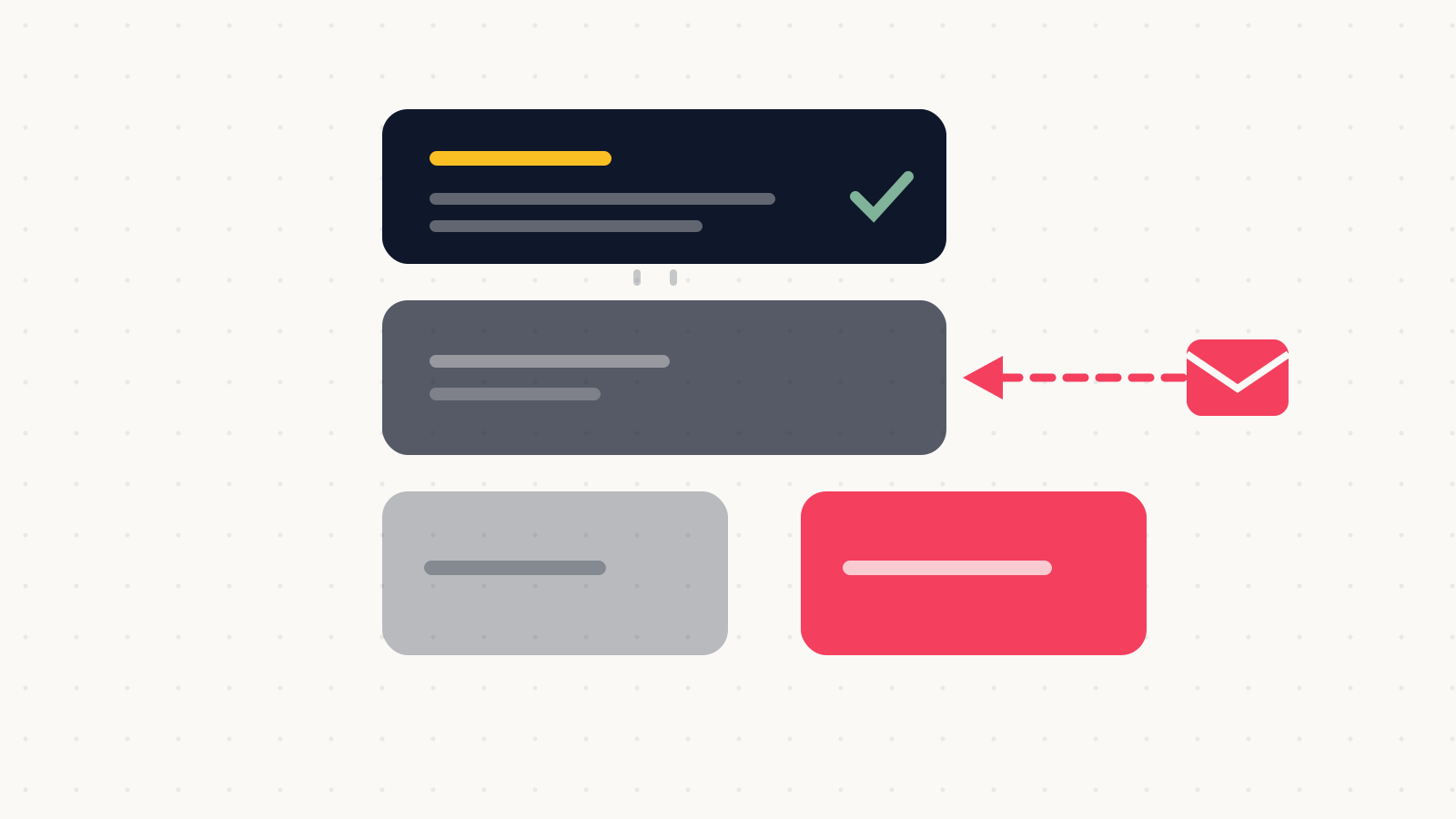
When a call comes in, the AI picks up in a couple of rings and holds an actual conversation, not a "press 2 for hours" menu. The current generation handles the front-desk basics: hours, service area, rough pricing ranges, directions. Connected to your calendar, it offers open slots and books the appointment during the call. Connected to your CRM, it logs the caller, what they wanted, and a transcript. Anything outside its script (an angry customer, a complicated quote, an emergency) it transfers to a person or takes a message with the details a person would need.
That last part is the load-bearing part. An AI receptionist is a filter, not a replacement for judgment. The good setups route 20% of calls to humans and handle the repetitive 80%. The bad setups try to script everything, and callers end up arguing with a robot about something the robot was never going to solve.
The use cases where it helps more than it hurts
That phrase, helps more than it potentially hurts, is the whole evaluation. A live human answering is still the best caller experience there is. The AI earns its place in the gaps where the realistic alternative isn’t a human, it’s voicemail:
- After-hours. This is the clearest one. A plumbing call at 9pm, a dental inquiry on Sunday — those callers were never reaching your front desk. The AI competes with voicemail, and it beats voicemail every time.
- Overflow. You have staff, but the third simultaneous call rings out. The AI catches what would have been a missed call, not what would have been a human conversation.
- One-person operations. If you’re on a roof or under a sink all day, every daytime call is effectively after-hours. Booking while you work is a real, measurable win.
- High-repetition front desks. When most calls are "are you open" and "can I book Tuesday," automating the repetition frees your human for the calls that need one.
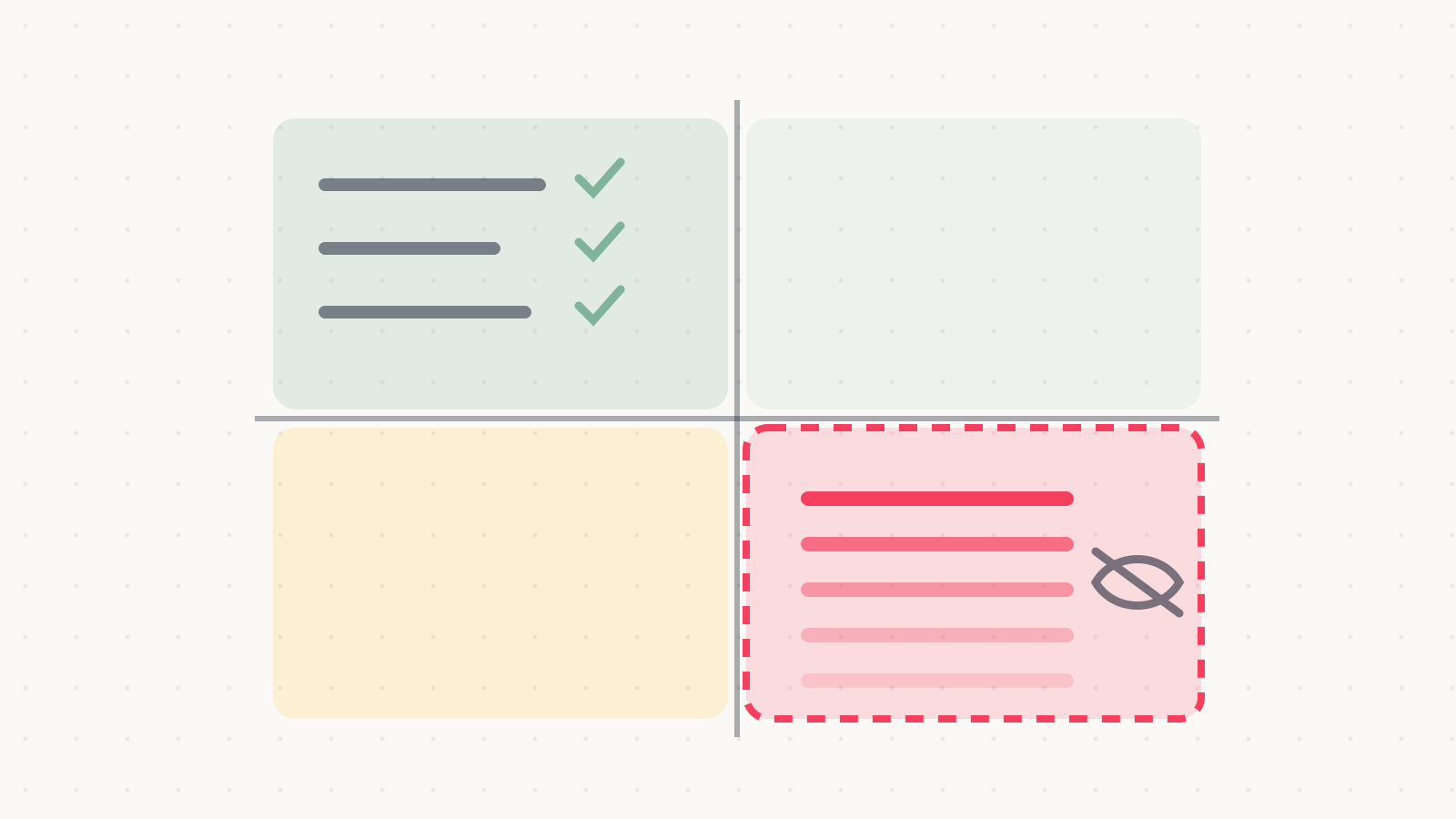
Notice what’s not on the list: replacing a good receptionist who currently answers your phone well during business hours. If that’s your situation, you don’t have the problem this tool solves, and swapping a person your customers like for software they tolerate is a downgrade you paid for.
The trap nobody warns you about
Here’s the thing the vendor demos skip, and the reason some AI receptionist rollouts quietly cost more than they save: how the caller feels.
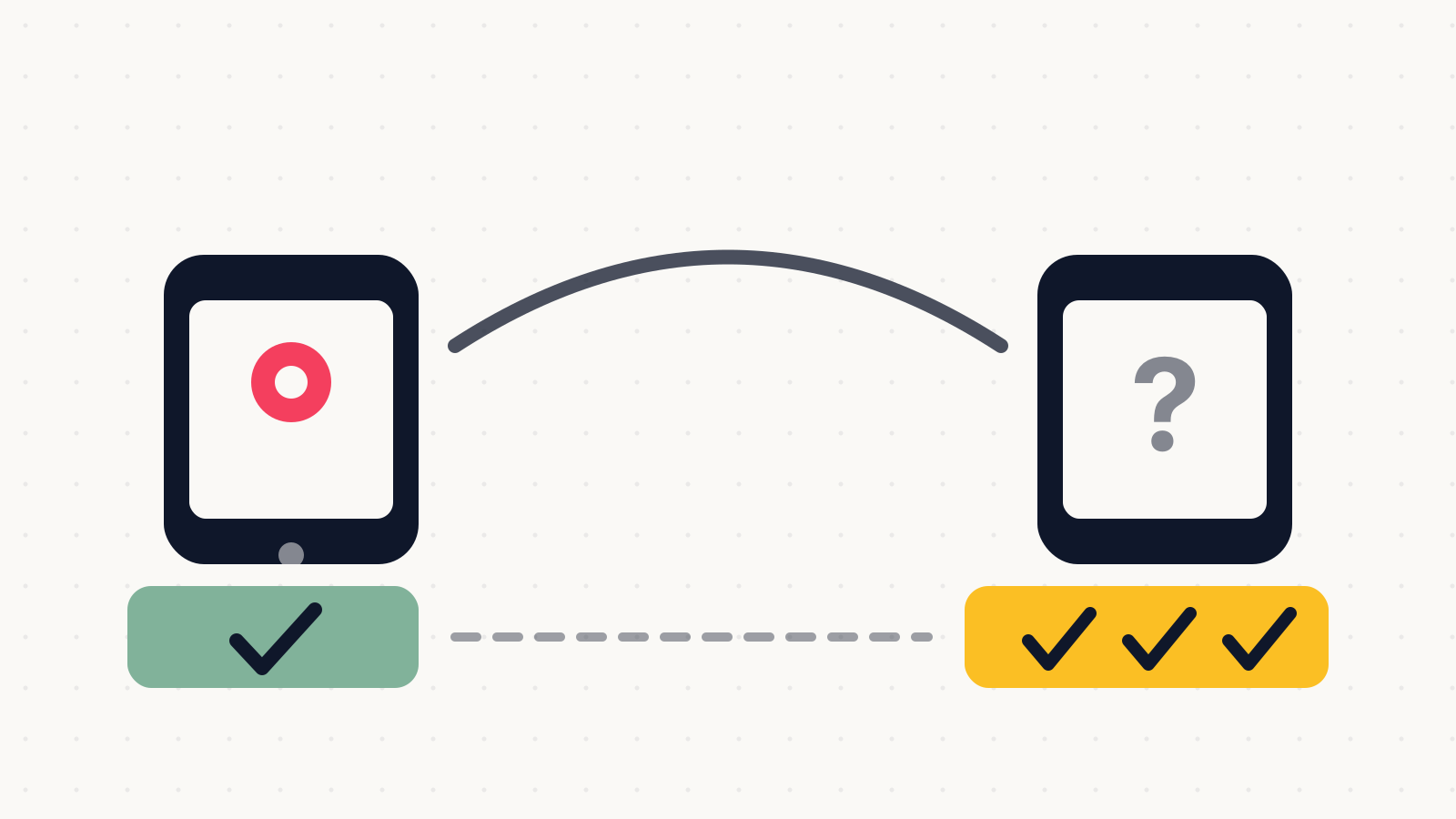
It’s one thing to know you’re talking to an AI. It’s another to feel like the business thinks you can’t tell. Modern AI voices are good. Good enough that a caller spends the first ten seconds wondering, and the moment they realize it’s a machine pretending otherwise, something shifts. That leads to mistrust the caller couldn’t even articulate. They just come away feeling slightly handled, and they carry that feeling into everything that follows, from your quote to your reviews.
Callers forgive a machine for being a machine. They don’t forgive a business for hoping they wouldn’t notice.
The fix costs nothing: let the AI say what it is. A one-line intro (an automated assistant that can book you in or grab a message) sets the contract honestly, and callers work with it. Most implementations skip this because the vendor’s demo sounds more impressive without it. That’s lazy implementation, it’s everywhere, and it’s the single biggest reason to treat setup as carefully as the software choice.
What it costs
Prices verified July 2026, and they move often enough that you should re-check before buying. The market splits into three shapes: AI-only software like Nextiva’s AI receptionist at $99/month for 100 interactions (then $0.99 each); AI-plus-human services like Smith.ai, where live agents back up the AI, billed per call at $300/month for 30 calls on the entry plan; and platform-bundled AI like GoHighLevel’s, a $50–97/month add-on to a $97/month platform that already includes the CRM and calendar it plugs into. The full vendor-by-vendor breakdown is in our comparison of the best AI receptionists.
Against those numbers, the do-nothing option isn’t free: every missed call from a new customer was worth whatever your average job is worth, times however many of them called a competitor next.
Start smaller than you think
Full disclosure, since our whole take on AI is that honesty beats impressive: we implement AI chat and phone automation for clients, and the thing almost all of them actually run isn’t a voice AI at all. It’s missed call text back — when a call rings out, the caller instantly gets a text: sorry we missed you, how can we help? No voice to get right, no disclosure problem, a fraction of the cost, and it catches the same lost lead. For a lot of small businesses that’s the right first move, and some never need the voice layer at all.
The escalation path that’s worked for our clients: text-back first, then AI chat on the website for after-hours questions, then a voice receptionist only once the call volume proves you need one. Each step is cheap enough to test and reversible if your customers hate it.
The honest checklist before you buy
- Count your actual missed calls for two weeks. Under ten? A text-back automation probably solves it.
- Listen to what those callers wanted. Bookings and hours → AI handles it. Quotes and judgment calls → you need routing to a human, so buy a tool that transfers well.
- Decide the disclosure line before the demo. If a vendor discourages you from letting the AI identify itself, that tells you what they optimize for.
- Check what it plugs into. A receptionist that can’t reach your calendar or CRM is a very expensive message-taker.
Deciding whether you need one, and building it so it hands off to a human at the right moment, is what our AI integration work covers. If you want a second opinion on whether your missed calls justify the spend, or whether a cheaper automation gets you there, that’s the kind of thing we map out in a strategy call. We’ll tell you if the answer is "don’t buy anything yet." It often is.
John "Holliday" Mahlow
Founder, Cursive Media