How to show up in AI search, according to the companies that run it.
Google says there is no special optimization for AI Overviews. The real lever is which bots you let read your site, and most businesses got that decision by accident.
John "Holliday" Mahlow
Founder, Cursive Media
Somebody has offered to optimise your site for AI search. The pitch usually involves a new acronym, a file you have never heard of, and a monthly retainer.
The demand behind the pitch is real enough. BrightLocal's 2026 survey found the share of people using ChatGPT and similar tools for local business recommendations went from 6% to 45% in a year. What is not real is most of what is being sold against it, and the companies running these systems have published enough documentation to prove it.
Google's own answer is inconveniently short
From Google's documentation on AI features: "There are no additional requirements to appear in AI Overviews or AI Mode, nor other special optimizations necessary." The same page adds that you do not need to create new machine readable files, AI text files, or markup, and that there is no special schema.org structured data to add.
That sentence invalidates a fair share of an emerging industry.
It is worth being precise about what it does not say. It does not say AI search is unimportant, and it does not say your content is fine as it is. It says the mechanism for appearing is the mechanism you already know, so anybody selling a separate AI optimisation product is selling you the same work twice, or selling you a file that nothing reads.

The lever that is real: who you let read the site
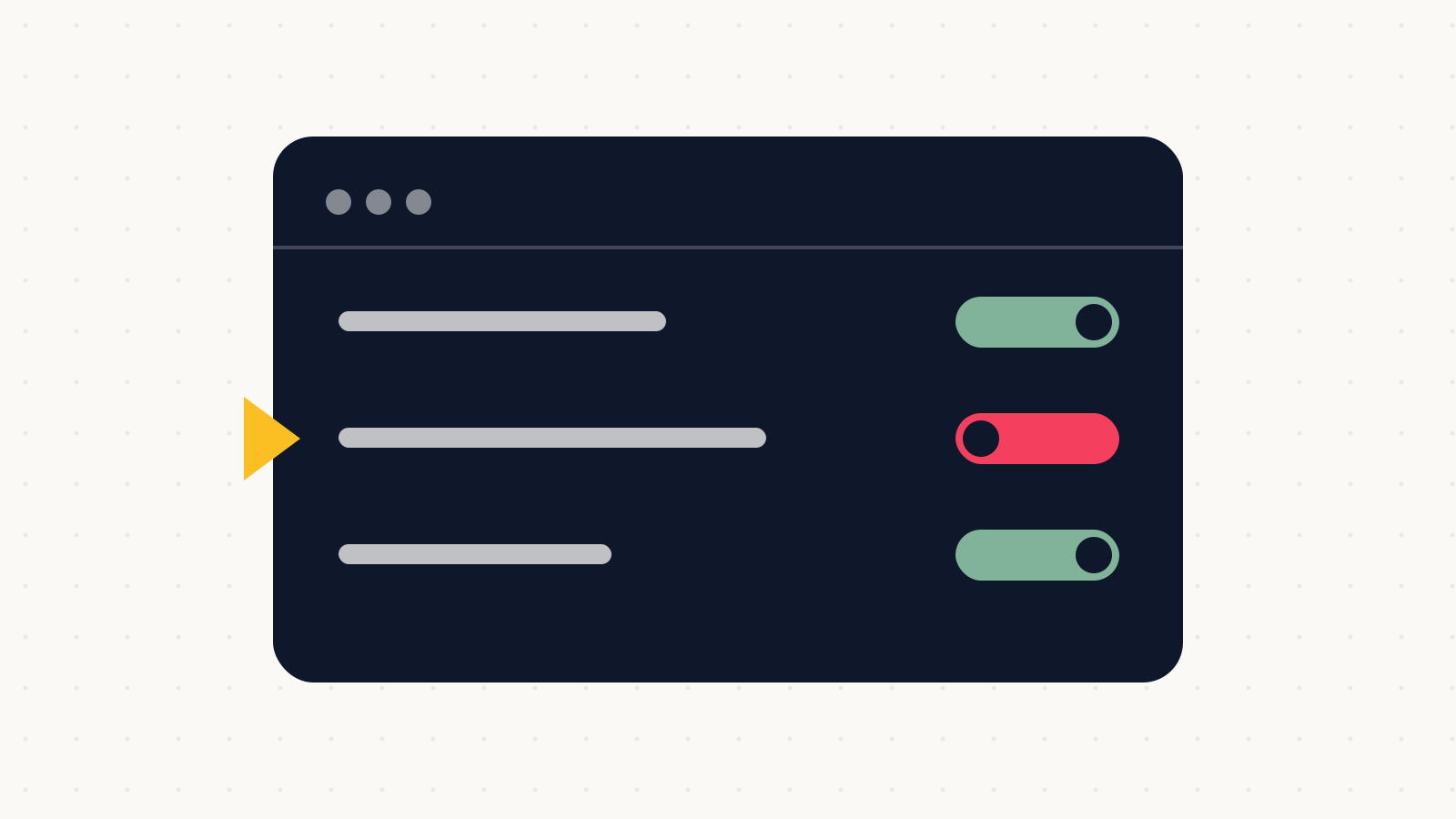
Appearing in a generated answer requires a system to have read your pages. That is a permissions question, it lives in your robots.txt, and it is the one place where a decision made in a hurry can quietly remove you from the results everyone is now worried about.
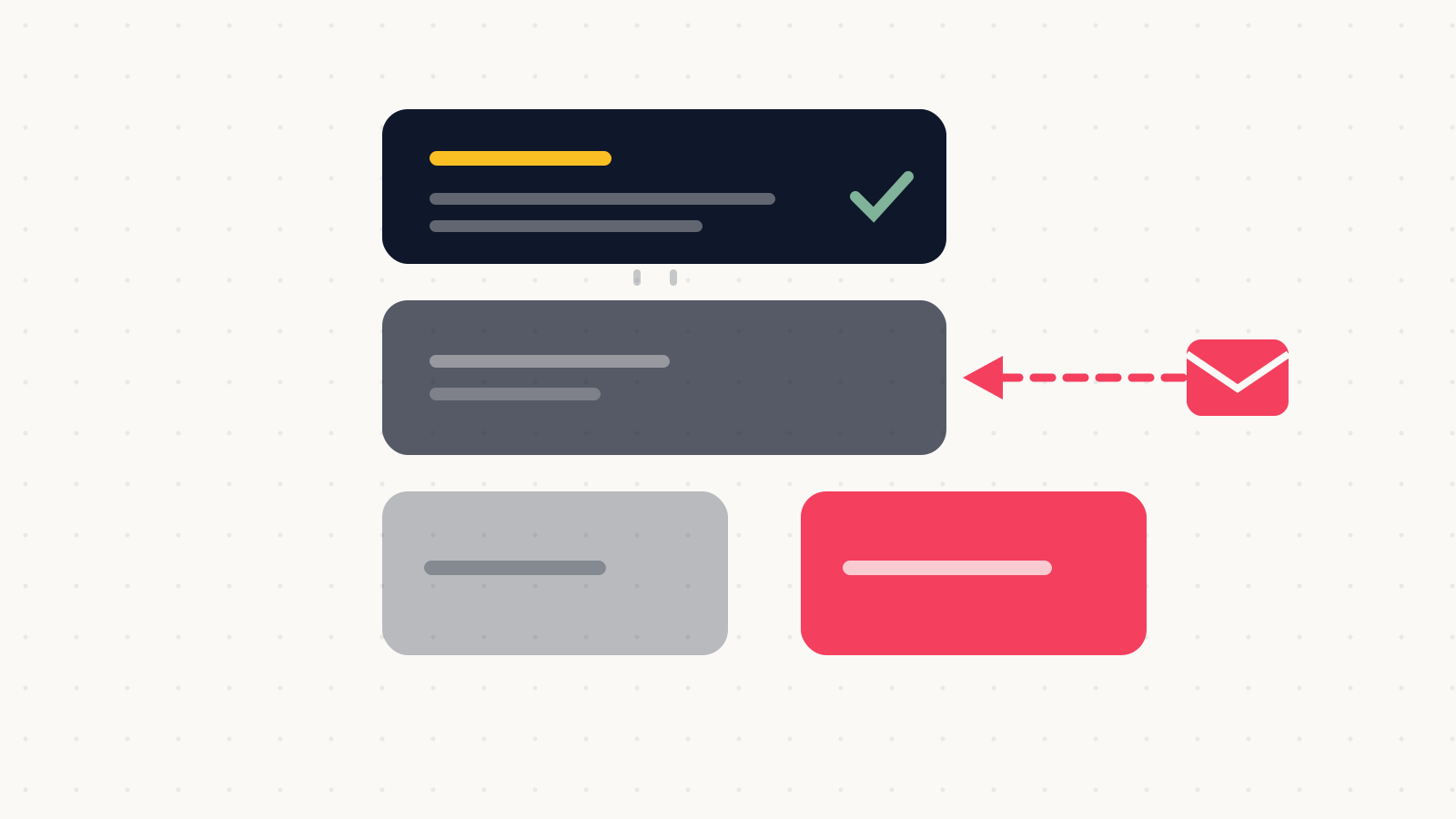
OpenAI runs three bots and they do different jobs
This is the detail that matters most, and OpenAI documents it plainly.
GPTBot is the training crawler, described as being used to make OpenAI's foundation models more useful and safe. Block it and your content is not used for training. Nothing about your visibility changes.
OAI-SearchBot is a different agent entirely. OpenAI describes it as surfacing websites in search results in ChatGPT's search features, and states that blocking it means your site will not appear in ChatGPT search answers, though it may still show as a navigational link. This is the citation switch.
ChatGPT-User covers fetches a person triggers by asking. OpenAI notes robots rules may not apply to it, and that it does not determine your search visibility.
Read those two together and the important distinction falls out. Opting out of training and opting out of being cited are separate decisions, controlled by separate tokens, and you can hold either position without the other.
Plenty of businesses have accidentally taken both.
Google-Extended is not the AI Overviews switch
Google-Extended is documented as being used by Gemini apps and the Vertex AI API for Gemini. AI Overviews and AI Mode, by contrast, are surfaces inside Search, and the controls Google names for them are the ordinary Search ones: noindex to stay out entirely, and nosnippet, data-nosnippet and max-snippet to limit what can be shown.
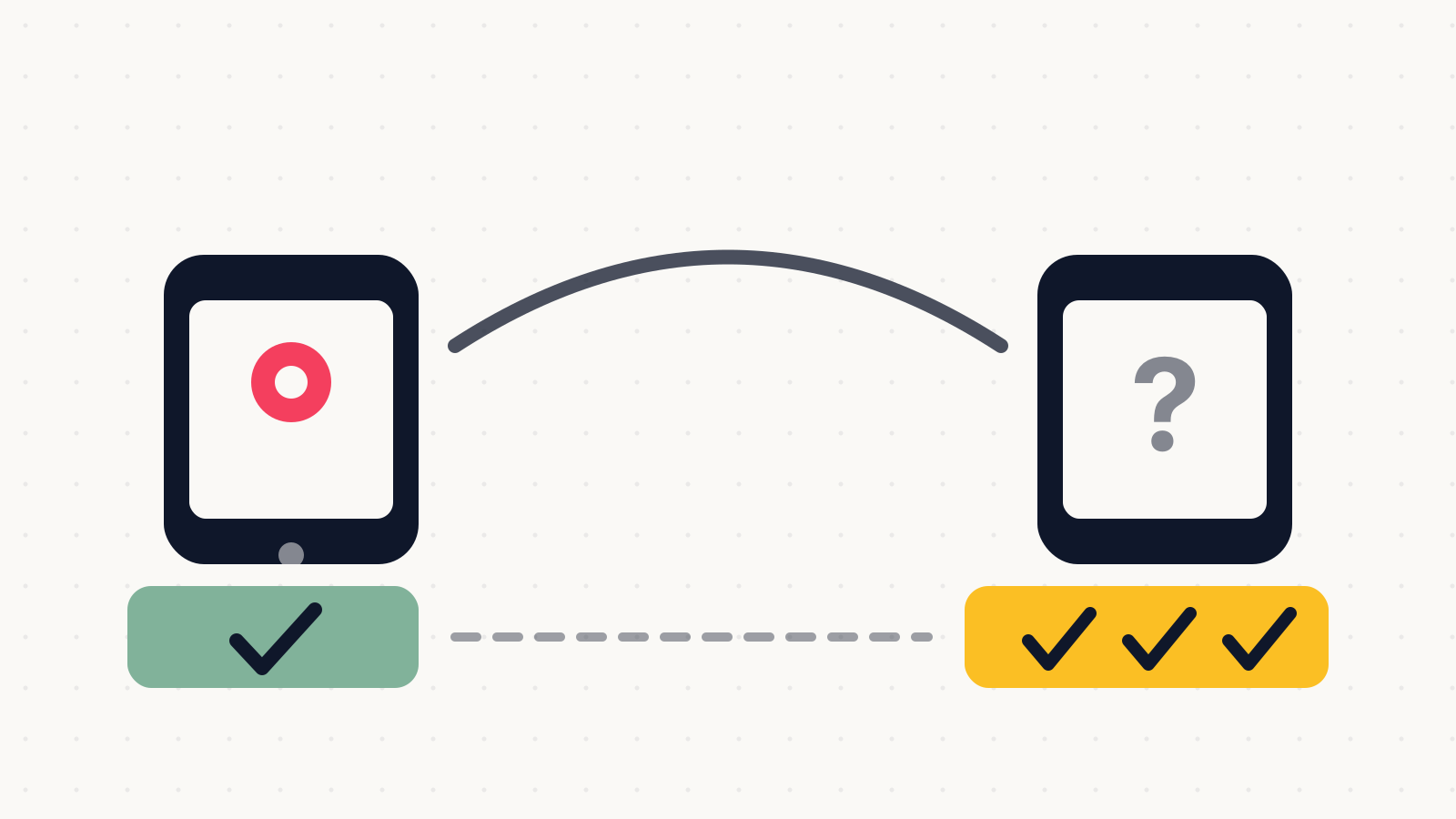
What Google has not published is a plain sentence spelling out how those two interact, and we are not going to invent one for you. Treat the documented scope as the boundary of what anyone actually knows, and be skeptical of confident claims past it, including from us.
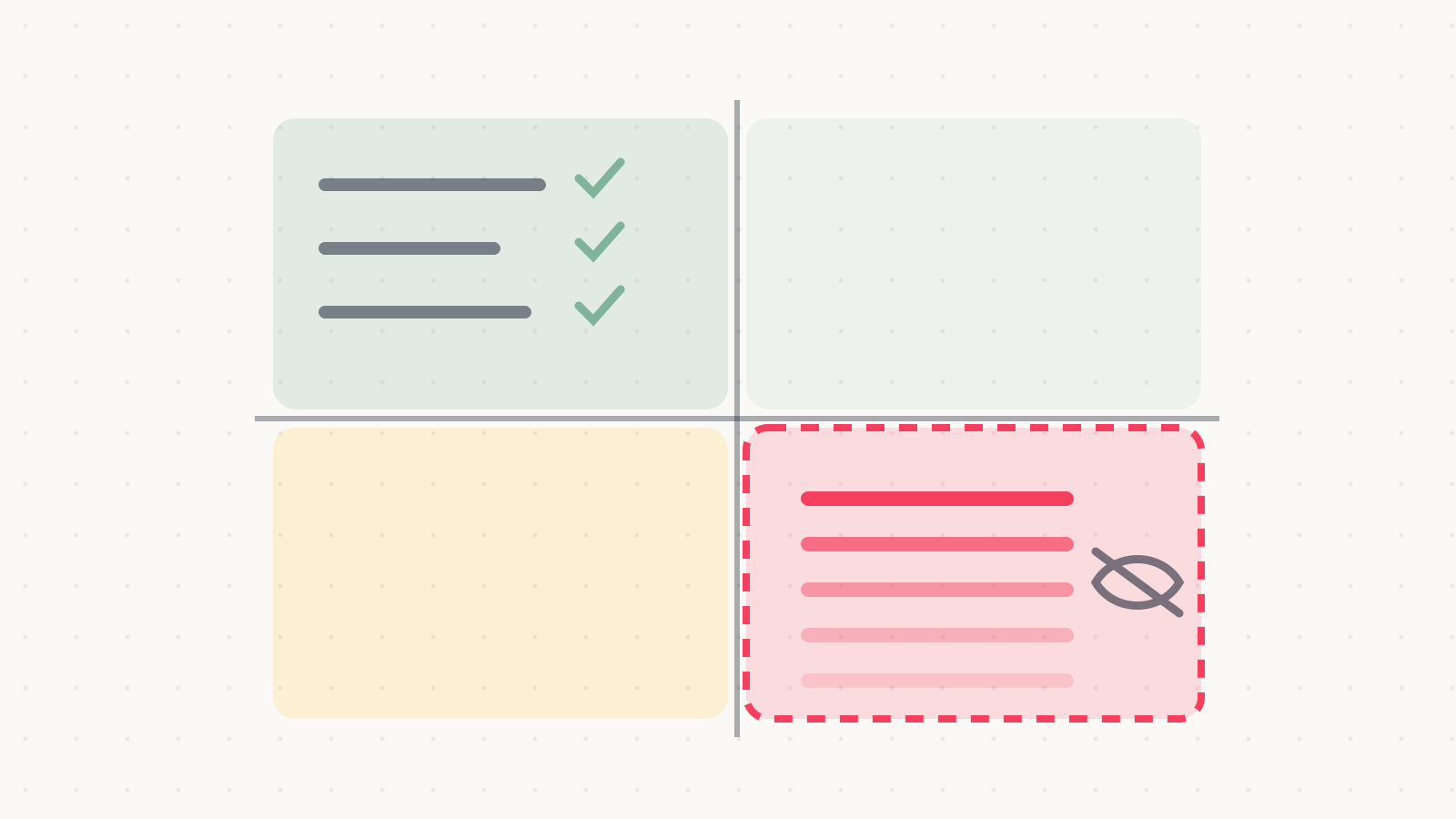
The snippet controls cut in both directions
If a previous developer added nosnippet or a tight max-snippet limit to stop other sites lifting your copy, understand what that now costs. Those controls affect how content appears in Search including its AI features, so the same setting that protects a paragraph from being quoted also removes it from the answer where you might have been the source.
How most businesses opted out without deciding to
Around 2023 the advice to block AI scrapers went everywhere at once. Plugins shipped a toggle for it, agencies pasted a block of user-agent rules into robots.txt, hosting companies added the option to a settings screen nobody has opened since. Almost none of it distinguished between a training crawler and a search crawler, because at the time the distinction barely existed.
The result is a lot of sites carrying a two-year-old rule that nobody has revisited, written when the concern was models eating your content and before the same companies started sending referral traffic.
Go and read the file. It takes a minute: open yourdomain.com/robots.txt and look for the user-agent names above. If they are there, decide deliberately this time, because the honest position for most local businesses is that they want no part of training and every part of citation.
What actually helps, once the doors are open
The work is ordinary, which is why it does not sell well. (If the pitch you are weighing is a monthly volume of AI-written posts, Google's actual rule on that is worth reading first.) Answer real questions in plain language on pages that are crawlable, be specific about what you do and where you do it, and keep the facts about your business consistent everywhere they appear, because a system assembling an answer about a plumber in Katy is reconciling your site, your profile, and every directory that lists you.
Consistency is the piece most businesses underrate, and it is the same discipline that makes a Google Business Profile rank. If your hours differ across three listings and your services page contradicts your profile, you are a low-confidence source, and low-confidence sources do not get quoted.
Being genuinely quotable helps too. Generated answers reach for specifics: a price range you will commit to, a documented process, a straight answer to the question everyone asks and nobody publishes. Pages of adjectives about passion and excellence give a model nothing to lift.
What nobody can promise you
There is no rank tracking for a generated answer. Two people asking the same question get different responses, the systems change without notice, and no tool can tell you your position because there is no position to hold.
Being retrievable by the things that answer questions now is the same discipline as ordinary SEO, done on purpose. So treat anyone guaranteeing AI visibility the way you would treat a guaranteed number one on Google, and judge this work by whether inquiries arrive, not by a dashboard invented to sell the service. If you want someone to check which bots your site is currently turning away and fix the ones you did not mean to block, book a strategy call. It is a short job, and it is a strange thing to be paying for as a monthly retainer.
John "Holliday" Mahlow
Founder, Cursive Media