
How to request a Google review: the moment matters more than the words.
How to request a Google review: ask once, at the emotional peak of the win, with a one-tap link. The timing rule, scripts for in-person and remote, and the five mistakes that kill the ask.
John "Holliday" Mahlow
Founder, Cursive Media
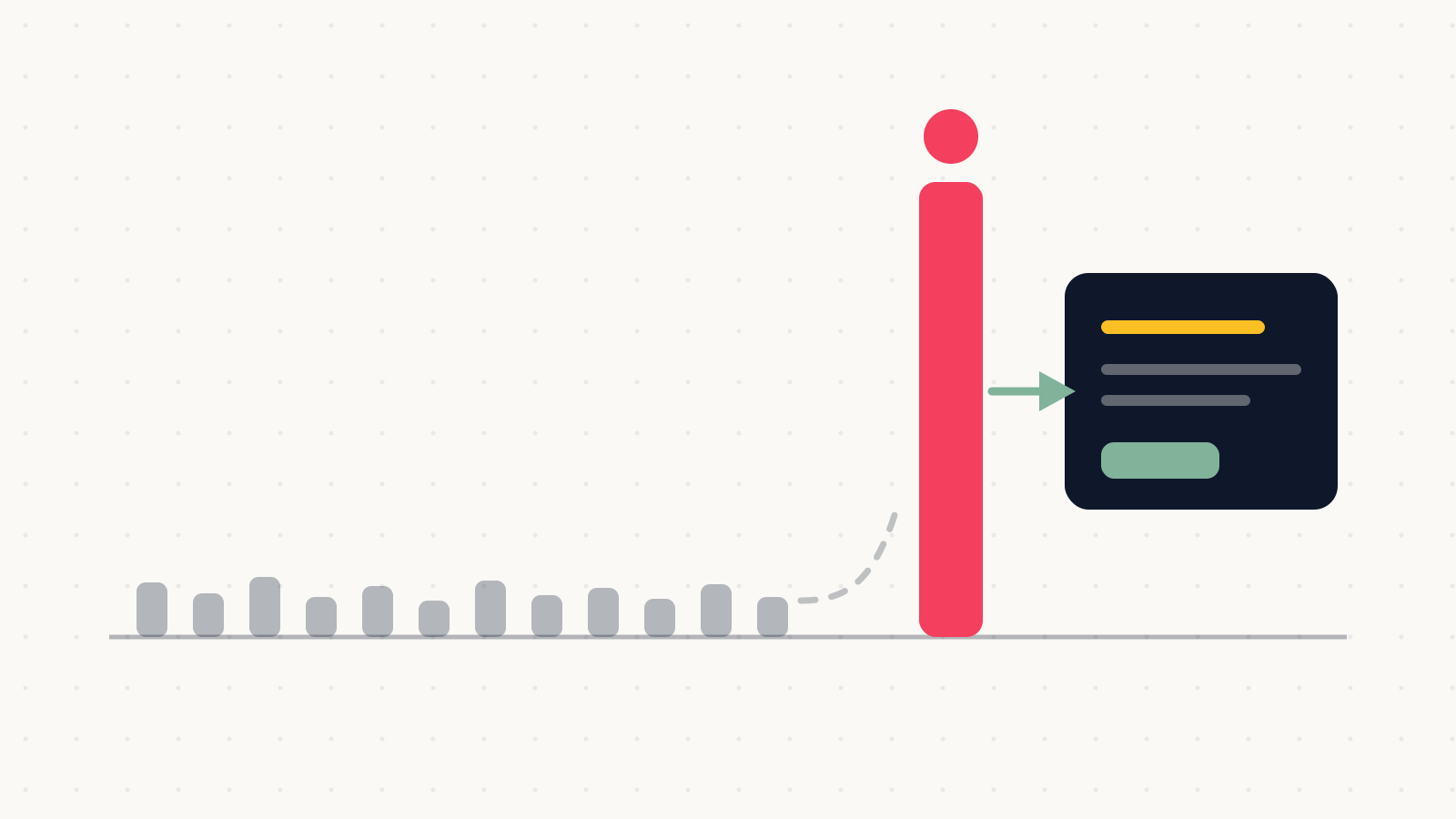
Most review-request advice obsesses over the wording. Wrong lever. The businesses that pile up reviews and the ones stuck at eleven use roughly the same sentences — what separates them is when the ask happens and how many taps it takes. The rule we build every client’s system around: ask once, at the emotional peak of the win, with a one-tap link, and never turn it into a nag.
Ask at emotional completion, not job completion
"Ask when the job is done" is close but misses. The moment is emotional completion — the "wow, thank you, this is such a relief" beat, which sometimes lands minutes after the technical work and sometimes doesn’t arrive at all that day. The water heater replaced is job completion; the hot shower reaction is emotional completion. Ask at the second one.
In person, that means the tech or front desk hears the thank-you and answers it: "Would you mind sharing that in a quick Google review? It really helps us." Then — while they’re still standing there — the text with the direct link goes out, so the review happens on the spot instead of joining tonight’s to-do list. On a call or a remote project, same window, different medium: the last two minutes, after the win is clear, then the link lands in SMS before the goodbye finishes.
One tap. Literally one.
Every step between "sure, happy to" and the open review box taxes the conversion: search for the business, pick the right location, find the button — each one sheds people who genuinely meant to help. The fix is your direct review link, which opens the rating box pre-aimed at your profile, or the QR version for counters and leave-behinds. If your ask currently says "just Google us," that’s the first thing to fix.
Scripts that work (because they’re short)
- The text, after a verbal yes: "Thanks again, [name]! Here’s that review link: [link]. Two sentences about what we fixed helps the next person a ton."
- The standalone ask, right after the win: "So glad it worked out! If you’ve got 60 seconds, a quick Google review would mean a lot: [link]"
- The single follow-up — only if they clicked but didn’t post, 24–48h later: "No pressure at all — here’s that link again if you still wanted to leave a review: [link]"
The five ways businesses kill the ask
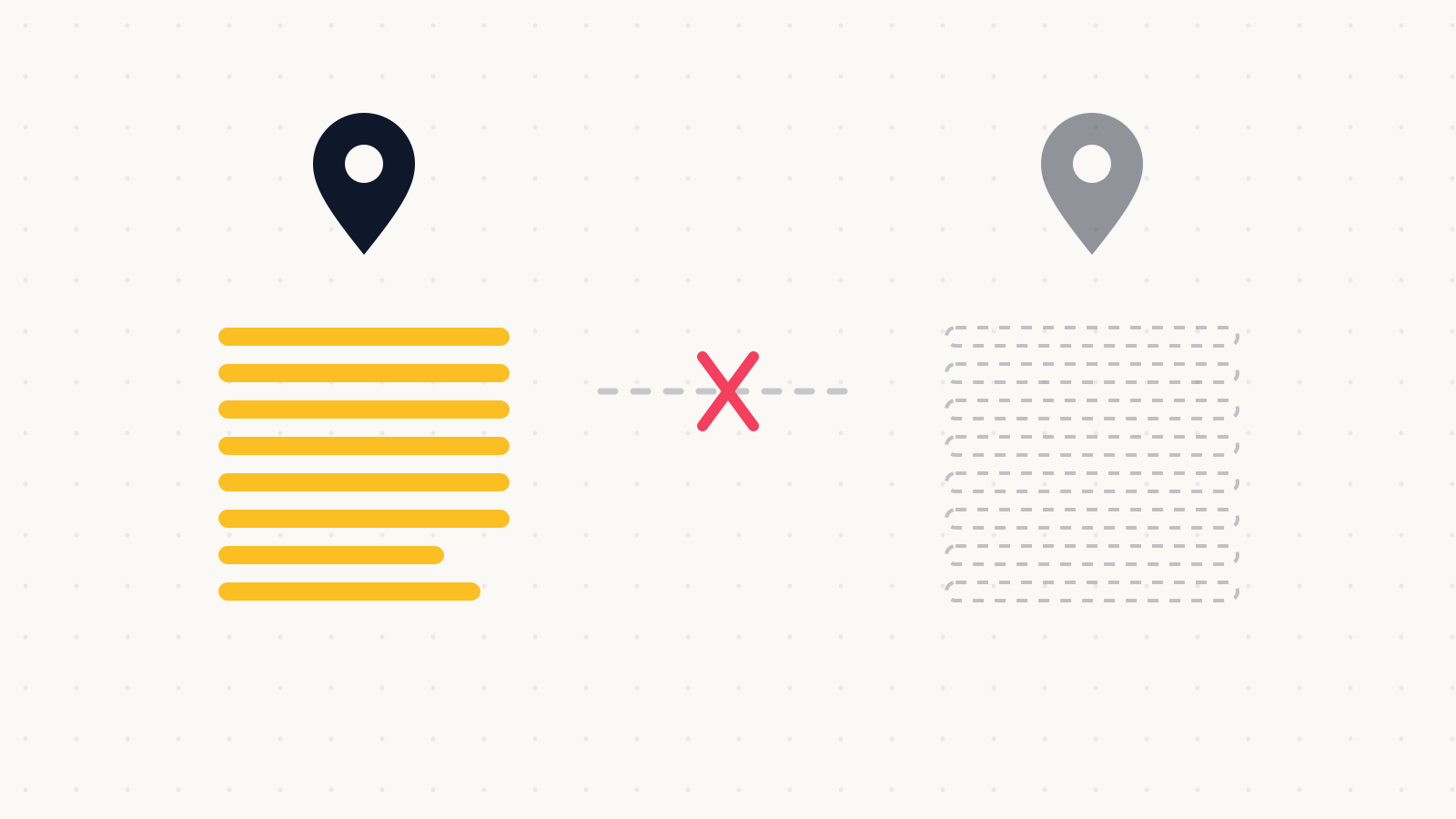
Delay is the big one: ask three days later and the emotion has been buried under everything else in their week, and the response rate shows it. Friction is second. Then the laundry-list message — a paragraph of gratitude, a story, three links; one request, one link, done. Fourth, doubling back: they saw the ask and didn’t act, and asking again converts goodwill into irritation — one clean shot, one soft follow-up only in the clicked-but-didn’t-post case, then let it go. And fifth, asking before the win is real: if the issue isn’t fully resolved, the review you’re requesting isn’t the one you want. Fix first, confirm they’re happy, then ask.
One well-timed ask beats five reminders — because the sixth message costs you the relationship the first five were pretending to build.
Make the moment automatic
None of this survives on memory. The businesses whose reviews compound are the ones where "job marked complete" fires the ask automatically — right message, direct link, wired into the same system that runs their appointment reminders. The volume playbook lives in how to get more Google reviews, and answering what arrives is the other half of the loop.
Building that trigger — the ask that fires itself at the right moment, every job, forever — is a standard piece of our reputation management setup. If your review count doesn’t match the quality of your work, book a strategy call; the gap is almost always the ask, not the work.
John "Holliday" Mahlow
Founder, Cursive Media