Google review QR codes: the free official one, and where it works.
Google now generates your review QR code free inside Business Profile. The four-click path, why QR-generator subscriptions backfire, and placements that earn scans.
John "Holliday" Mahlow
Founder, Cursive Media
Somewhere between the table tent and the van wrap, the QR code became the default answer to “how do we get more Google reviews.” Half of those codes point through a paid generator service that will outlive its subscription; the other half hang where no customer will ever scan. Both problems are fixable in an afternoon, and the fix starts with a feature Google added quietly: your Business Profile now generates the review QR code itself. Free, no watermark, no middleman.
The official QR code, four clicks
You’ll need a computer for this. Google’s own quirk: the QR code can’t be generated from the mobile app, only from a desktop browser.
- Sign in to the Google account that manages your Business Profile and pull up the profile (searching your business name while signed in works).
- Select “Read Reviews,” then “Get more reviews.”
- The dialog shows your review QR code alongside your share link.
- Right-click the QR code and choose “Save image as…” That PNG is print-ready.
The same dialog holds the URL version of your review ask. That link is the workhorse everywhere digital (we’ve covered where it comes from and where to put it), while the QR code is the print half of the system.
Why skip the QR-generator sites
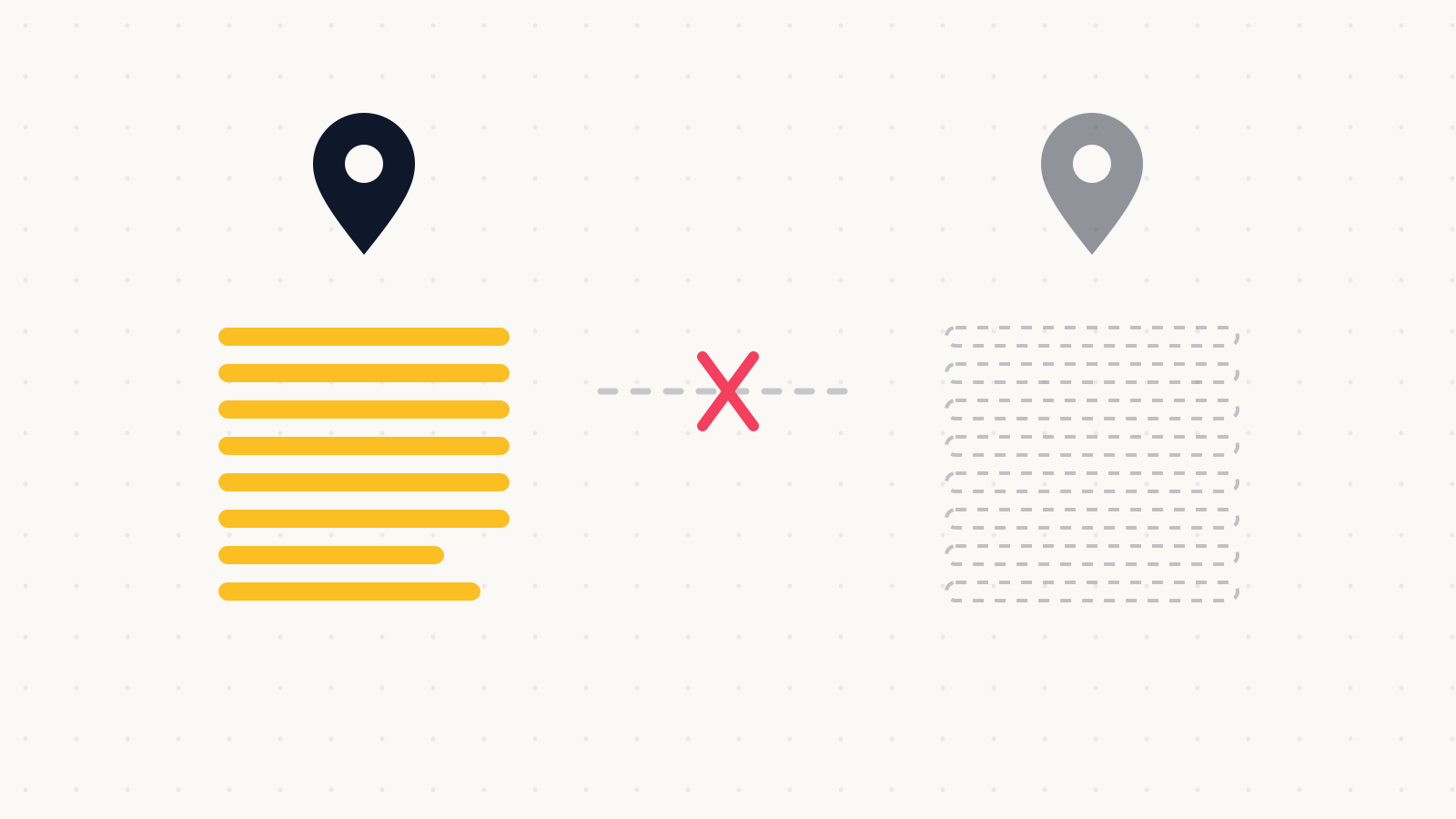
Search “Google review QR code” and the results are mostly generator tools, because there’s a subscription to sell. Here’s the mechanism those pages don’t explain. Most “free” generator codes are dynamic: the code doesn’t point at Google, it points at the vendor’s redirect domain, which forwards to Google. Cancel the plan or watch the vendor fold, and every card and sticker you printed now opens a dead link. A code on 500 counter cards is only as durable as a middleman’s billing relationship with you.
Google’s code is static and points at Google. It can’t die of subscription failure.
The honest exception: paid dynamic QR services buy you scan analytics and the ability to re-point a printed code without reprinting. A multi-location business testing placements against each other can justify that; you’re buying the analytics, not the code. A single-location shop almost never needs it.
Placement decides the scan rate
A QR code earns a scan when three things line up: the phone is already in hand, the customer just had a good experience, and there’s a beat of idle time. Judge every placement against those three and most of the popular ones fail.
| Touchpoint | QR or link? | Why |
|---|---|---|
| Counter card at payment | QR | Phone’s out, goodwill peaks at handoff, ten idle seconds while the card runs |
| Job-completion leave-behind | QR plus a spoken ask | The final walkthrough is the highest-intent window a service business gets |
| Invoice or receipt footer | QR | Gets a second life every time the paper resurfaces |
| Table tent | QR | Dwell time is the whole point of a table |
| Van, window decal, billboard | Neither | Nobody scans a moving vehicle; this is decoration, not collection |
| Your website | Link button | The visitor is already on a device, and a tap beats a scan |
| Follow-up text or email | Link | A QR inside a phone screen can’t be scanned by that phone |
That last row is the mistake we see most: a QR image dropped into a text blast or embedded on a website. The customer is holding the screen the code is on. Everywhere digital, send the link. The QR code is a print device, full stop.
The code doesn’t do the asking
A QR code converts an ask into an action. It doesn’t replace the ask. The counter card works when the person behind the counter says one sentence: “If we did a good job today, the card has a code. Takes about a minute.” Print without the sentence and you’ve bought signage.
One rule while you train that sentence into the team: no discounts, freebies, or entries-to-win attached to it. Google’s fake-engagement policy prohibits offering incentives for reviews, and enforcement lands on the profile you spent years building. The ask can be warm. It can’t be paid.
The print layer also shouldn’t be the whole system. The businesses that climb past a review a week pair the card with an automated ask, a text carrying the link triggered by the completed job, so collection happens whether or not anyone remembered. The volume playbook is in how to get more Google reviews.
One desktop session to save the official code, one counter card printed this week, one sentence the team actually says, and the automated text behind it. That’s the whole machine, and it’s most of what reputation management means for a local business. The code is free. The scan is earned at the counter.
John "Holliday" Mahlow
Founder, Cursive Media