Deleted page still showing in Google: what actually removes it.
The Removals tool temporarily blocks a page and expires after about six months. The thing that actually removes it is a status code your server is probably not returning.
John "Holliday" Mahlow
Founder, Cursive Media
- Read time
- 5 min read
- Written
Somebody calls asking for the service you stopped offering two years ago, quoting a price you stopped charging three years ago. They found the page. You deleted the page.
Both of those things are true at once, and the reason is duller than it feels.
Deleting is not telling
Removing a page from your site does not send Google a message. Search results are a copy of what was found last time somebody looked, and nothing prompts a fresh look on your schedule.
So the entry sits there describing a business you no longer are, and it keeps sending you calls you cannot serve, which is worse than sending you none.
The tool everybody reaches for
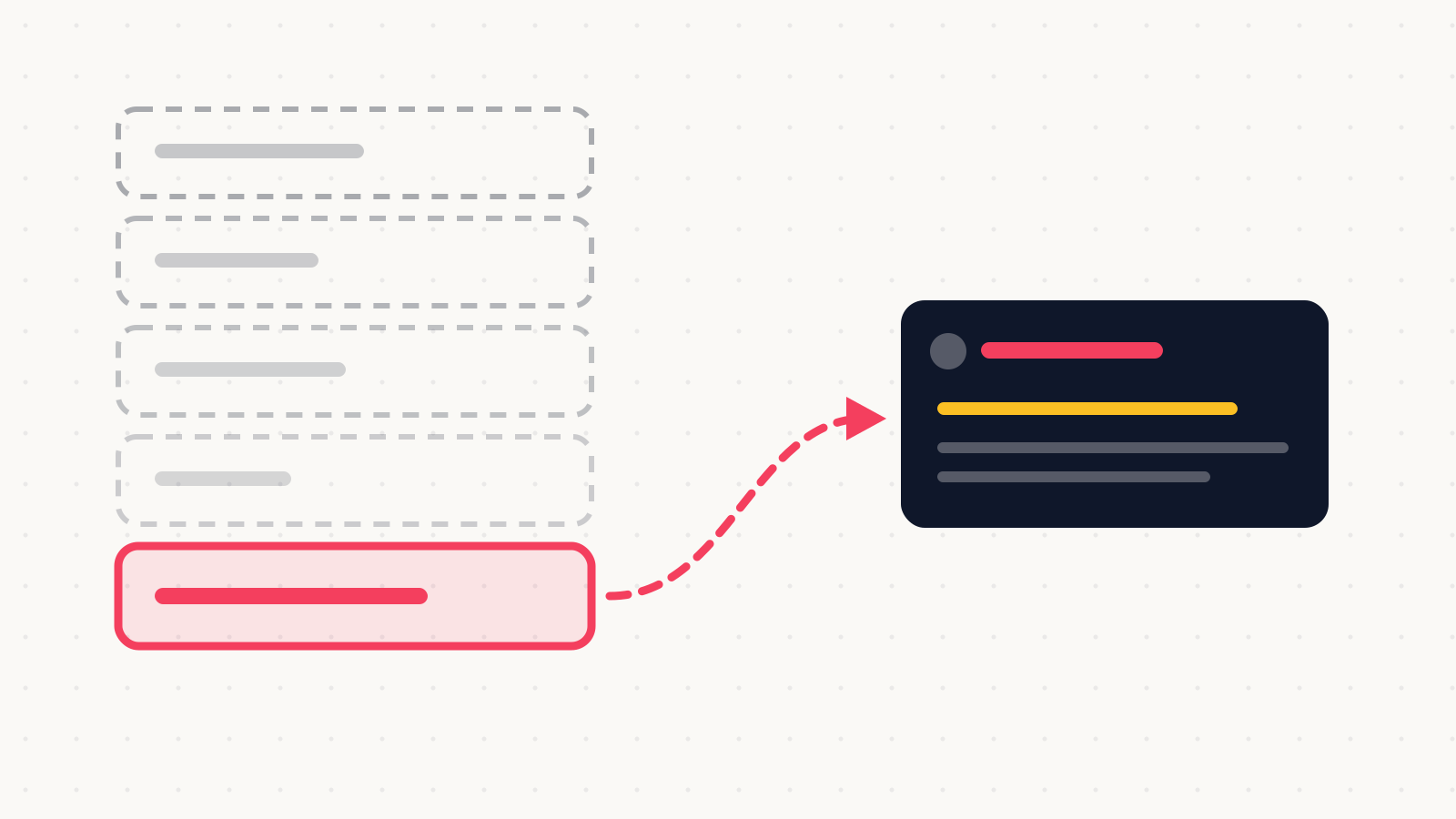
There is a Removals tool in Search Console, and it does exactly what it says rather than what people assume.
Google describes it as a way to temporarily block pages from Search results on sites that you own. Then the sentence that matters: a successful request lasts only about six months, and after that your information can appear on Google search results again.
It is a hide button with a timer, not a delete button. And nobody puts the expiry in a calendar, so the page returns two quarters later, on an ordinary Tuesday, with no announcement.
There is a second surprise in the same documentation. The tool will not keep your preferred version of a page, and could remove all versions of a URL, meaning both http and https and both www and non-www. If you were being surgical about one variant, it may not stay surgical.
What it explicitly does not do
Worth reading the list before you rely on it.
It does not stop Google crawling the page. It cannot remove anything from a site you do not own. It does not remove content from the internet, and it has no effect on other search engines at all. Every one of those is a thing people assume it handles.
The thing that actually works
Google states the permanent route plainly, and it is unglamorous.
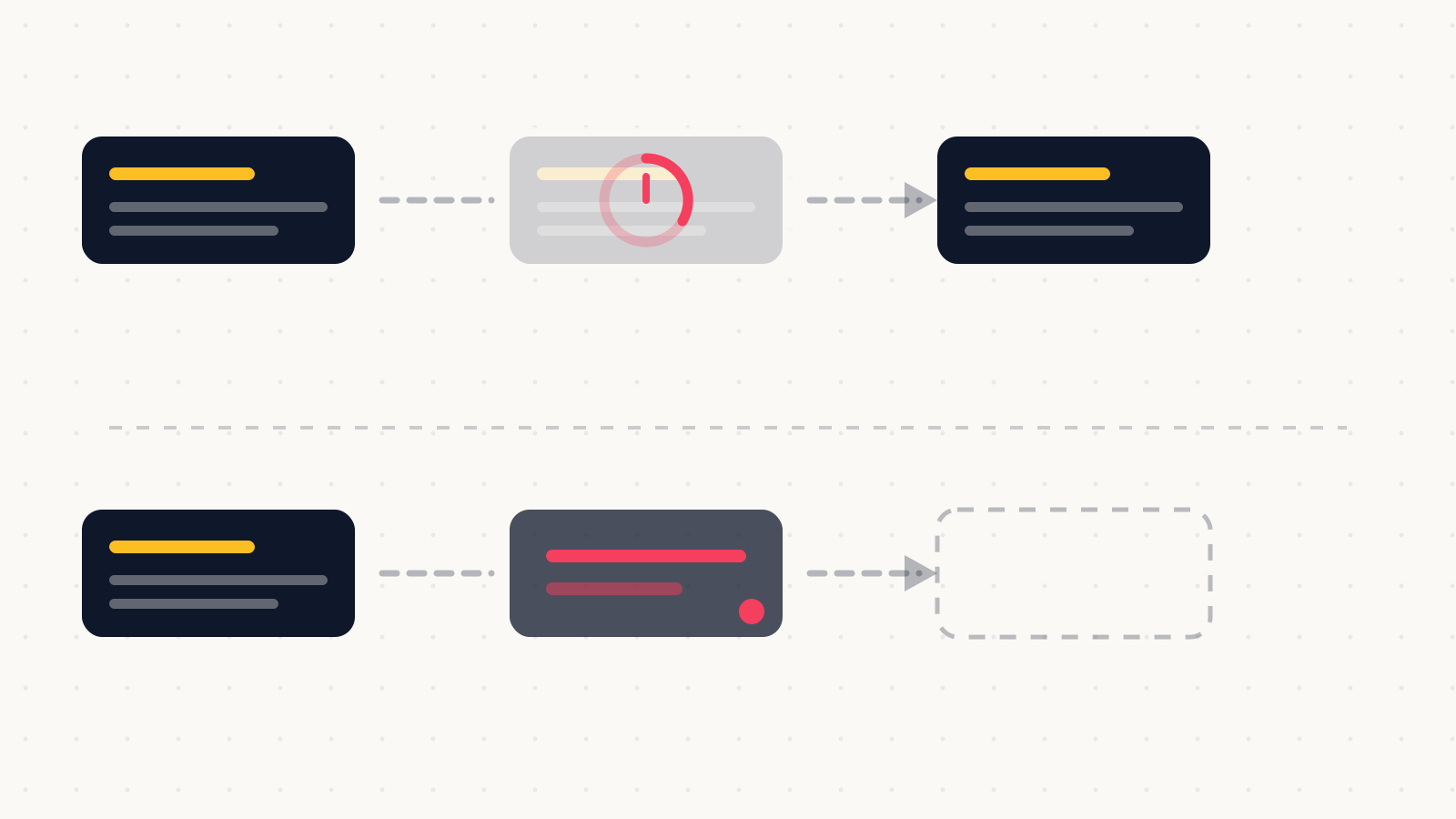
Remove or update the content, and make sure your web server returns either a 404 or a 410 for that address. That is the whole mechanism, and it is where most small business sites quietly fail, because deleting a page in a page builder does not always produce either of those. Plenty of setups serve an empty template with a perfectly healthy 200 response, which tells Google the page still exists and is simply blank.
If the content moved rather than died, the right answer is a redirect to the page that replaced it, which keeps the value rather than throwing it away. That is the same discipline that makes a domain change survivable.
When it is on somebody else's site
The old address on a directory. A stale listing with a number that now reaches a stranger.
There is a separate route for that. The Outdated Content tool exists for people who do not own the site, and it covers the case where Google Search shows information that is no longer present on the page. A successful request either removes the result or updates the snippet once Google recrawls.
Note the condition carefully, because it is the whole thing. The page itself has to have changed already. The tool reports a stale copy; it does not argue with a live page, so getting the directory to edit its entry comes first and this comes second. Anybody who has moved premises will recognize the order of operations.
The sequence that works
Use the temporary tool for the urgent one, then fix the real thing the same week rather than the same quarter.
The clock is running from the moment the request succeeds, and the only person who will notice it expiring is a customer. If a wrong price or a discontinued service is out there, a six-month reprieve is genuinely useful, and treating it as a resolution is how the problem comes back.
Making a server say the right thing about a page that no longer exists is ordinary build work, and it takes minutes once somebody looks. If old pages of yours keep turning up and you are not sure what your server is actually returning for them, book a strategy call. Checking takes minutes and the answer is usually 200.
John "Holliday" Mahlow
Founder, Cursive Media