Moving your business address on Google: what changes.
Distance from the searcher is a published ranking factor, and a relocation changes your distance to every customer at once. Some of what follows is correct, not broken.
John "Holliday" Mahlow
Founder, Cursive Media
- Read time
- 5 min read
- Written
A relocation generates a list, and the list is mostly furniture. Somewhere near the bottom, between the letterhead and the door sign, sits a line that says update the address online.
That line is doing more work than the removals van.
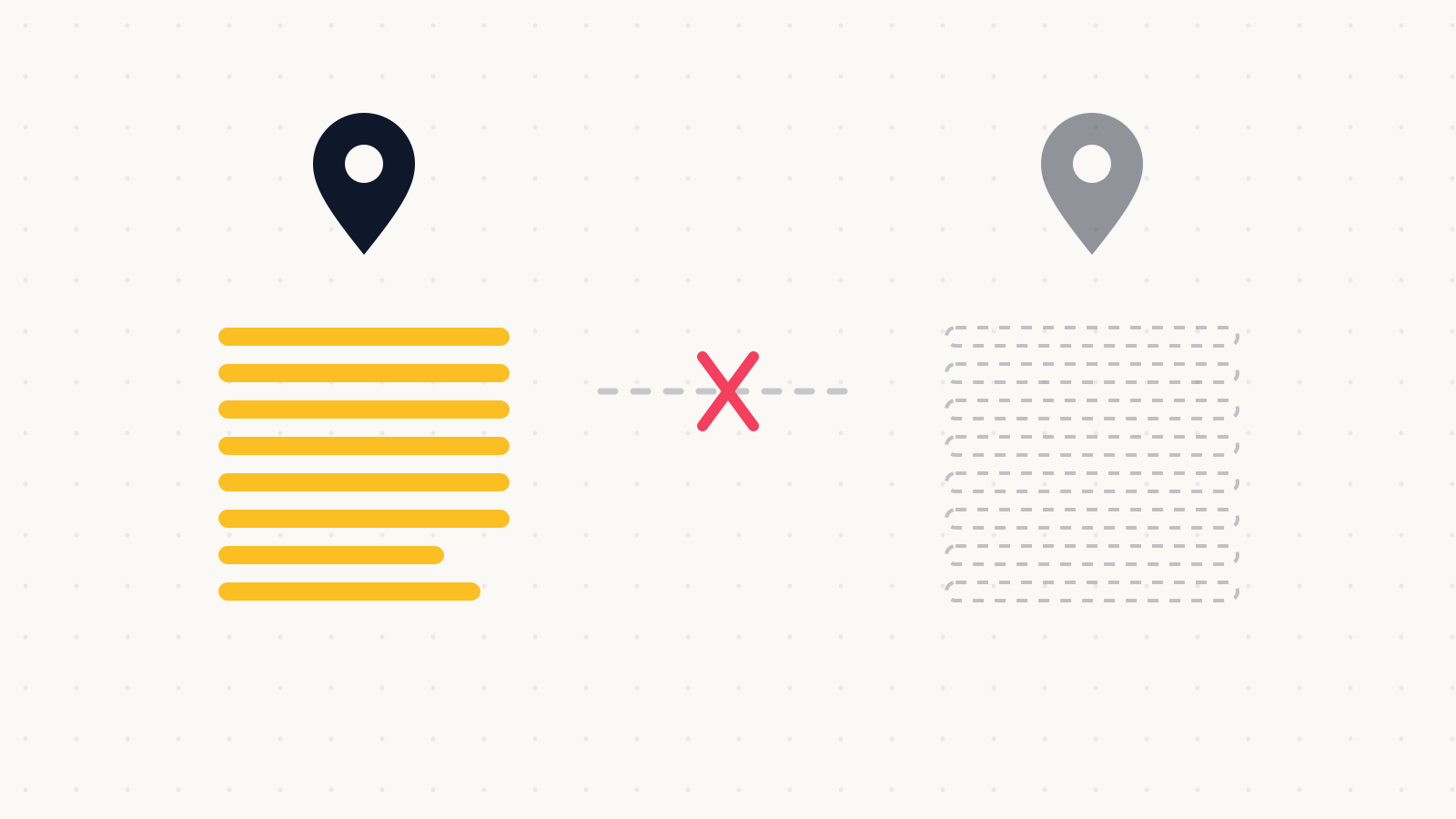
Do not start again
The instinct when the new unit is confirmed is to make a fresh profile for the new address. It feels tidy. New place, new listing. It is also the single most expensive thing you can do on the day of a move.
Google's guidelines are direct about it: do not create more than one page for each location of your business, either in a single account or multiple accounts. Beyond the rule, the profile you already have is holding every review you have ever earned, and those do not come with you. Edit the existing profile. The building changed, the business did not.
You just moved a published ranking factor
Google publishes three factors for local ranking, and distance from the searcher is one of them.
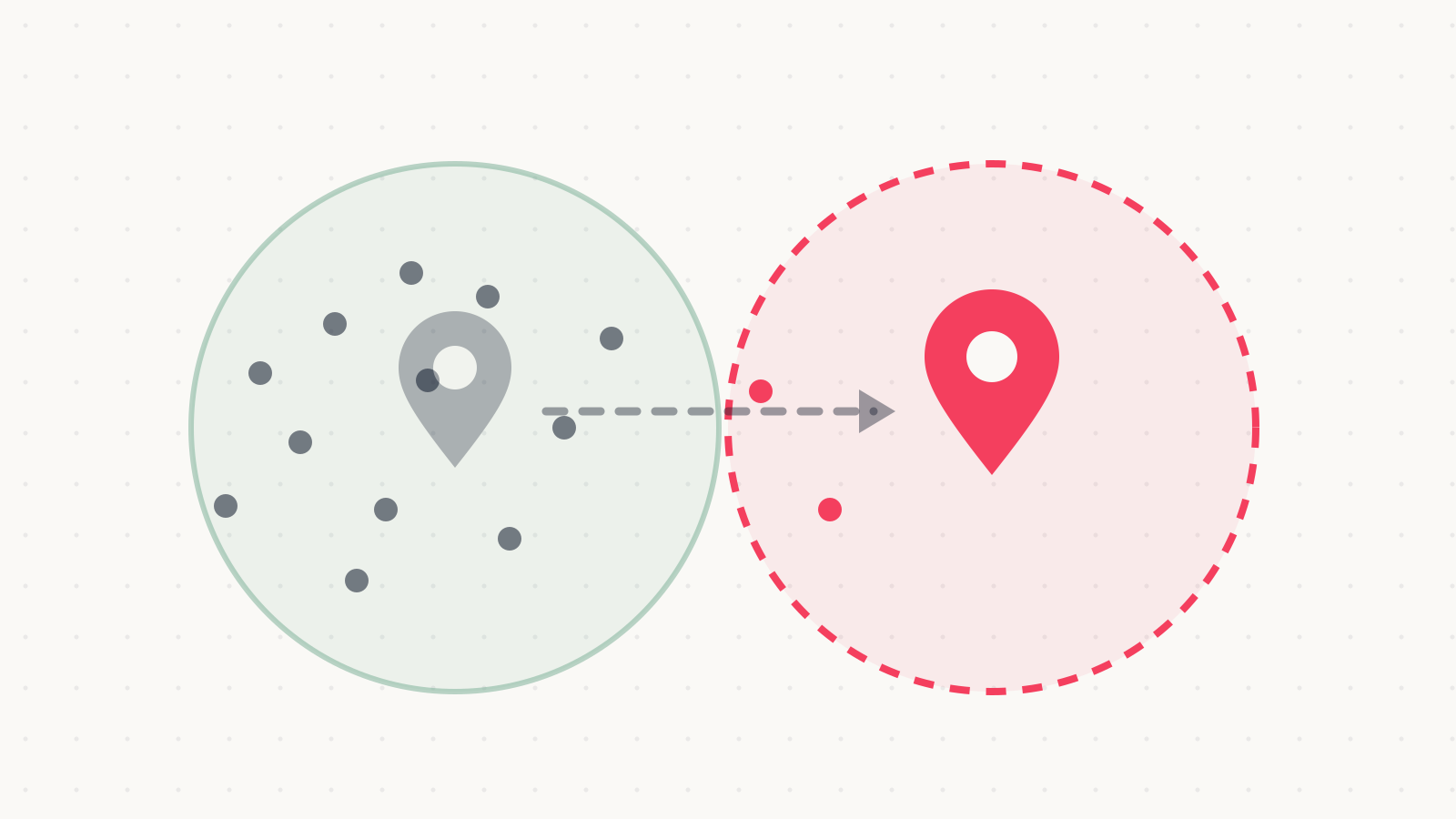
Almost nothing else you do in a year touches one of the three directly. A relocation touches distance, and it does so for every potential customer simultaneously, in whatever direction the new lease happened to point.
So here is the part nobody tells you before the boxes are packed. If you moved eight miles further from the suburb most of your work comes from, you will show up less often for searches in that suburb, and no amount of profile tidying will undo it, because nothing is broken. The map is describing where you now are. That is worth knowing in advance rather than discovering in October and paying somebody to investigate.
It cuts the other way too, and a move toward the density puts the same mechanism to work for you.
The address you are allowed to use
The awkward case is a business leaving a storefront rather than swapping one for another. The van becomes the business, the office becomes the kitchen table, and nobody wants to publish their home address.
The usual reach is for a mailbox or a virtual office, and both are ruled out explicitly. Google says PO boxes and mailboxes at remote locations are not acceptable, and that a rented physical mailing address you do not actually operate from is not eligible for a Business Profile at all. Co-working is allowed but conditional, and the conditions are real ones: clear signage, customers received there during business hours, and the desk staffed during those hours by your own people.
An address that fails those tests is not a shortcut with a small risk attached. It is the ground on which profiles get suspended, and the suspension arrives long after the decision, when nobody connects the two.
Or show no address at all
The honest option for a business that travels to customers is to stop displaying an address. Google's position is that you should only choose not to show your address if you are a service-area business, and when it is hidden the profile shows your service area instead.
People resist this because an address looks legitimate and a service area looks vague. It is the correct move anyway when it is true, and a profile that describes the business accurately is worth more than one that looks conventional.
The month in between
Changes to a profile usually appear in about ten minutes. Google also says that in some cases they can take up to thirty days.
Plan against the thirty rather than the ten. That window is the reason to make the edit as the move happens rather than two weeks after everything settles, and the reason to keep the old phone reachable through it, since somebody will call the number attached to the old entry.
Where else the old address lives
The profile is the visible one. The address is also sitting in your website footer, on your contact page, in every email signature, on the invoices, and on the quote template that already has to carry certain details for licensed trades in Texas.
None of those are urgent individually, which is exactly how one of them survives for three years. Do them in the same afternoon as the profile edit, while you still remember the full list.
Moving a profile without losing the reviews is part of the reputation work, and it is much cheaper before the lease is signed. If you have a move coming and want to know what it will do to where you show up, book a strategy call. It is a much better conversation before the lease is signed than after.
John "Holliday" Mahlow
Founder, Cursive Media