
Google Business Profile suspended: how to get it back.
A suspended Google Business Profile is fixable, but the appeal has a 60-minute evidence window most owners waste. Prepare first, appeal once, in this order.
John "Holliday" Mahlow
Founder, Cursive Media
The profile was there on Monday and gone on Tuesday. No warning email you can find, no explanation you can understand, and a business that has quietly dropped out of Maps and the local pack while the phone stays silent.
It is recoverable. What sinks most reinstatements is not the violation, it is the first hour of panic: appealing immediately with nothing attached, then appealing again, then building a fresh profile because the old one seems dead. Each of those makes the next step harder. Here is the order that works, and the deadline nobody warns you about.
First, establish which state you are actually in
Search your exact business name plus your city while signed out, then check Maps. Two things can be true, and they need different responses.
If the profile still appears publicly but you cannot edit it, Google has restricted your ability to change the listing while it reviews something. Customers can still find you. The urgency is real but the bleeding has not started.
If the profile is gone from Search and Maps entirely, you are invisible to every "near me" search in your service area, and every day costs you calls you will never know about. That is the version worth dropping everything for.
Every agency post on this topic calls these "soft" and "hard" suspensions. Worth knowing before you go quoting it at Google support: that vocabulary comes from the community, not from Google. The official documentation describes restrictions, appeals, and moderation decisions, and it never grades them soft or hard. The distinction is still useful for deciding how fast to move. It is just not a status you will find in your dashboard.
The 60-minute rule that decides most appeals
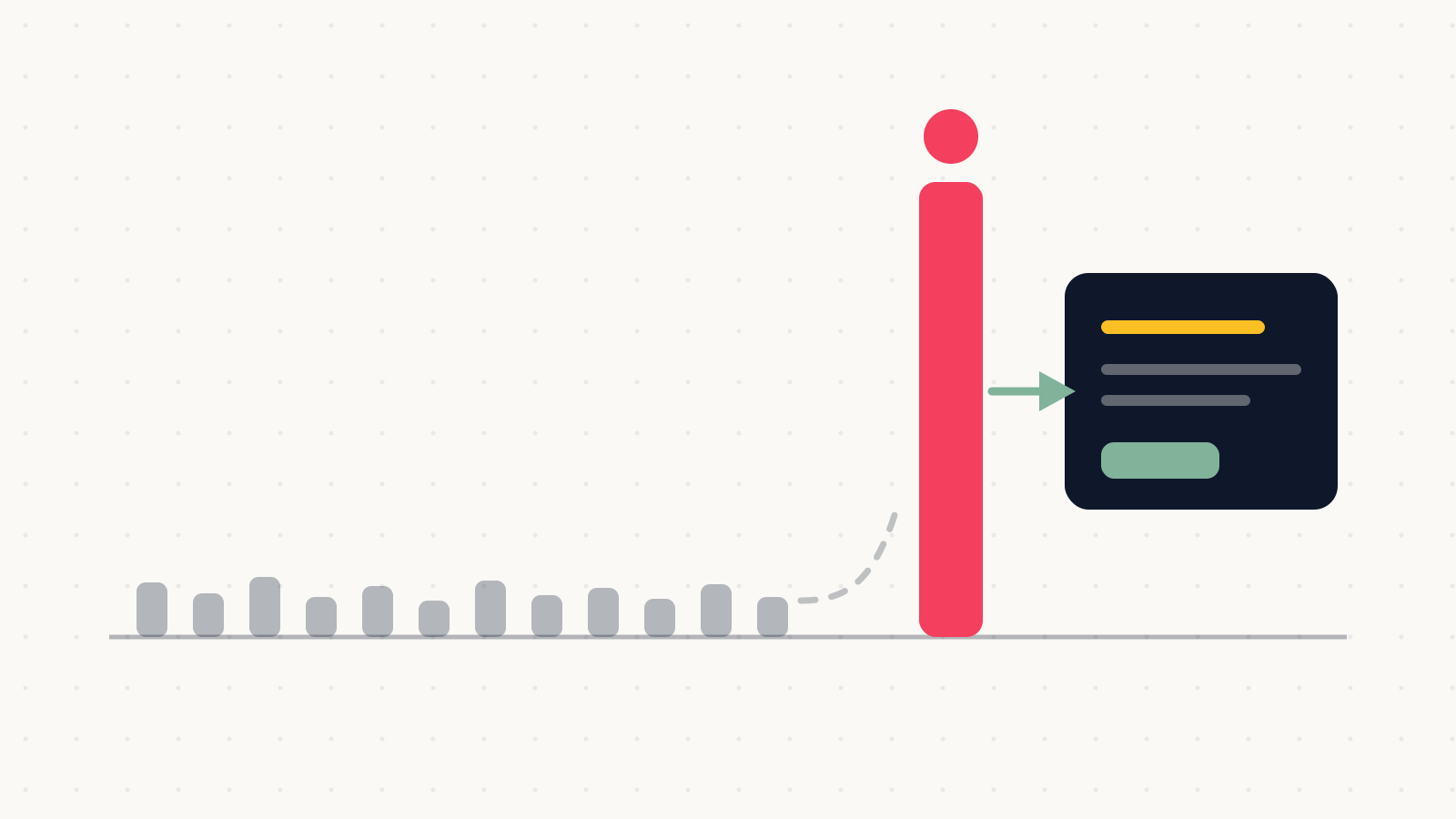
This is the part that costs people their reinstatement, and it sits in plain sight in Google's own documentation: once you open the evidence form, you have 60 minutes to submit it, or the evidence will not be attached to your appeal.
Read that again with the panic sequence in mind. An owner discovers the suspension, opens the appeals tool immediately, reaches the evidence step, and then starts hunting for a utility bill in a filing cabinet, or emails the bookkeeper who is at lunch. The window closes. The appeal goes in bare, gets judged on nothing, and comes back denied.
So do not open the form first. Build the pack first.
What Google actually accepts
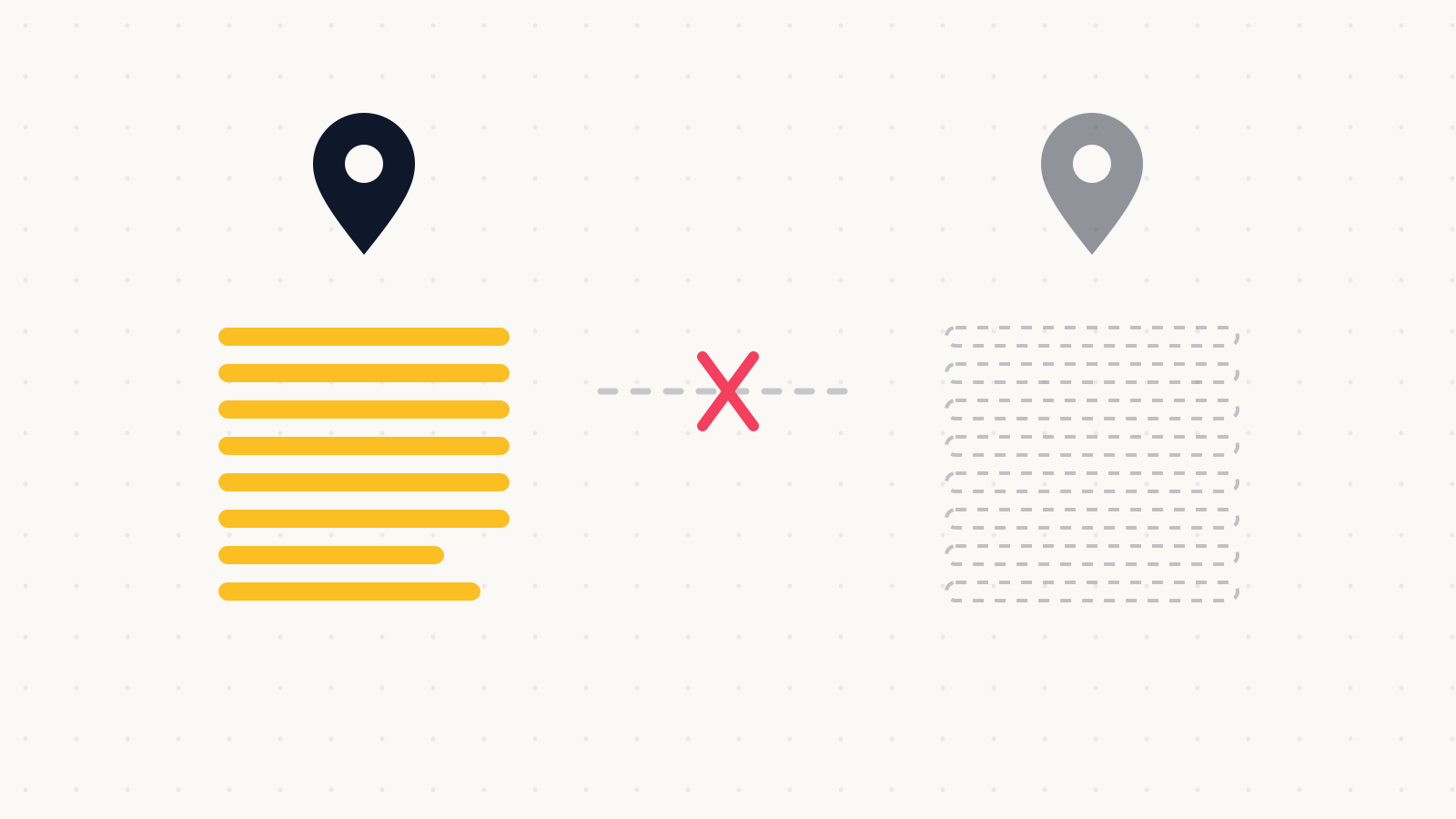
The documented list is short: official business registration, business licenses, tax certificates, and utility bills such as electricity, phone, water, or internet. The requirement that matters more than which document you pick is the matching rule. The business name and address on the document have to match the profile.
That is where most packs fall apart. The utility bill says "J. Mahlow" and the profile says "Cursive Media LLC". The registration lists the accountant's address from incorporation day and the profile lists the shop. The license carries a trading name nobody uses on the signage. Any of those mismatches hands the reviewer a reason to say no without ever considering your case.
Assemble it before you touch the appeals tool
Scan everything to PDF into one folder, on the machine you will appeal from, before you start. Two documents that match cleanly beat five that argue with each other. If your strongest document has a name mismatch you cannot fix today, include the paperwork that bridges the gap, such as the assumed-name filing or the lease in the trading name, rather than hoping nobody notices.
Photos of the storefront, signage, and branded vehicles are worth having in the folder too. They are not on Google's list of accepted documents, and they will not carry an appeal alone, but a reviewer deciding whether a real business operates at a real address is being asked a question that photos answer.
Fix the cause before you appeal, not after
An appeal that says "please reinstate me" against a profile still carrying the violation is a request to be denied twice. Audit these four before you submit, because they cause most of the suspensions that owners bring on themselves.
The name field
Google requires your real-world business name, the one on your signage and invoices. Taglines, store codes, phone numbers, URLs, all-caps words, and location keywords are all prohibited. "Katy Plumbing Co" is fine if that is genuinely the name. "Katy Plumbing Co | 24/7 Emergency Plumber Houston TX" is a violation, and it is the most common self-inflicted one, because it worked well enough for long enough that it started to feel like strategy.
Fix it and expect to lose ranking. That ranking was borrowed against a rule.
The address
P.O. boxes and virtual offices are not eligible. A coworking or office-suite address only counts if it is staffed during your stated business hours, with signage and customer access. If you rent a mailbox to look local, that is the suspension, and no appeal fixes it.
The service area
If you travel to customers, hide the address and set a service area, then keep it honest. Google's guidance is that service areas should not extend farther than about two hours of driving time from your base. The contractor covering "all of Southeast Texas" from one truck is describing an ambition rather than a service area.
Duplicates
One profile per location. Old listings from a previous owner, a franchise rollout, or an agency that created a second profile rather than requesting access to the first will all cause problems. Resolve the duplicate before appealing, not alongside it.
If the suspension followed an edit rather than an old sin, the trigger is usually the pace of the change: a new category, a new address, and a new name in the same afternoon reads as a hijacked listing. That risk is worth remembering the next time you reorganize a profile — make significant changes one at a time, days apart.
Three moves that make it worse
Submitting a second appeal while the first is pending. Google's documentation says not to submit multiple appeals for the same issue before you receive a decision. It reads like a queue-jumping trick and it is not; the extra submissions muddy the case.
Creating a replacement profile. Google explicitly says not to create a new Business Profile for the same business while your appeal is under review. The new one tends to become a duplicate violation on top of the original problem, and now you have two things to unwind.
Rewriting the whole listing the moment access returns. When a restricted profile becomes editable again, the instinct is to fix everything at once, which is the exact edit pattern that draws a second review. Change one thing, wait, change the next.
What the wait actually looks like
Google states that appeal reviews and decisions can take up to five business days, and the answer arrives by email. Reviews on the profile are not deleted by a suspension, and a reinstated profile generally comes back with its history, which is why rebuilding from scratch is a worse trade than it feels like on day two.
Plan the week around being invisible in Maps rather than around a refresh button. Push the phone number and booking link everywhere else you control, from your site to your email signature to the customers you already have, because none of that depends on the profile. If reviews stopped appearing before the suspension, that is a separate problem worth reading up on, and it sometimes shares a root cause.
On the services that charge a few hundred dollars for "guaranteed reinstatement": the form is free and you can submit it yourself, and no one can guarantee a Google moderation outcome. What a competent operator is genuinely selling is the diagnosis and the evidence pack, which is the part that is actually hard. Judge the offer on that basis and the price stops being mysterious.
Do it in this order
Confirm the state. Find the cause and fix it on the profile. Build the document pack and have it open. Then, and only then, start the appeal and submit the evidence inside the hour. One appeal, properly loaded, beats four sent in a panic.
If your profile is the reason the phone rings and it has been dark for a week, book a strategy call and we will look at the listing with you. Keeping it clean afterwards is the same work as ranking it in the first place, which is most of what our reputation practice does.
John "Holliday" Mahlow
Founder, Cursive Media