
How many pages should a small business website have?
The usual way the count gets inflated is a page for every surrounding town. Google describes that arrangement almost word for word in its spam policies.
John "Holliday" Mahlow
Founder, Cursive Media
- Read time
- 5 min read
- Written
It gets asked as though there is a number, and the person asking usually suspects theirs is too low.
There is no number. There is a way of counting, which produces one.
Count decisions, not pages
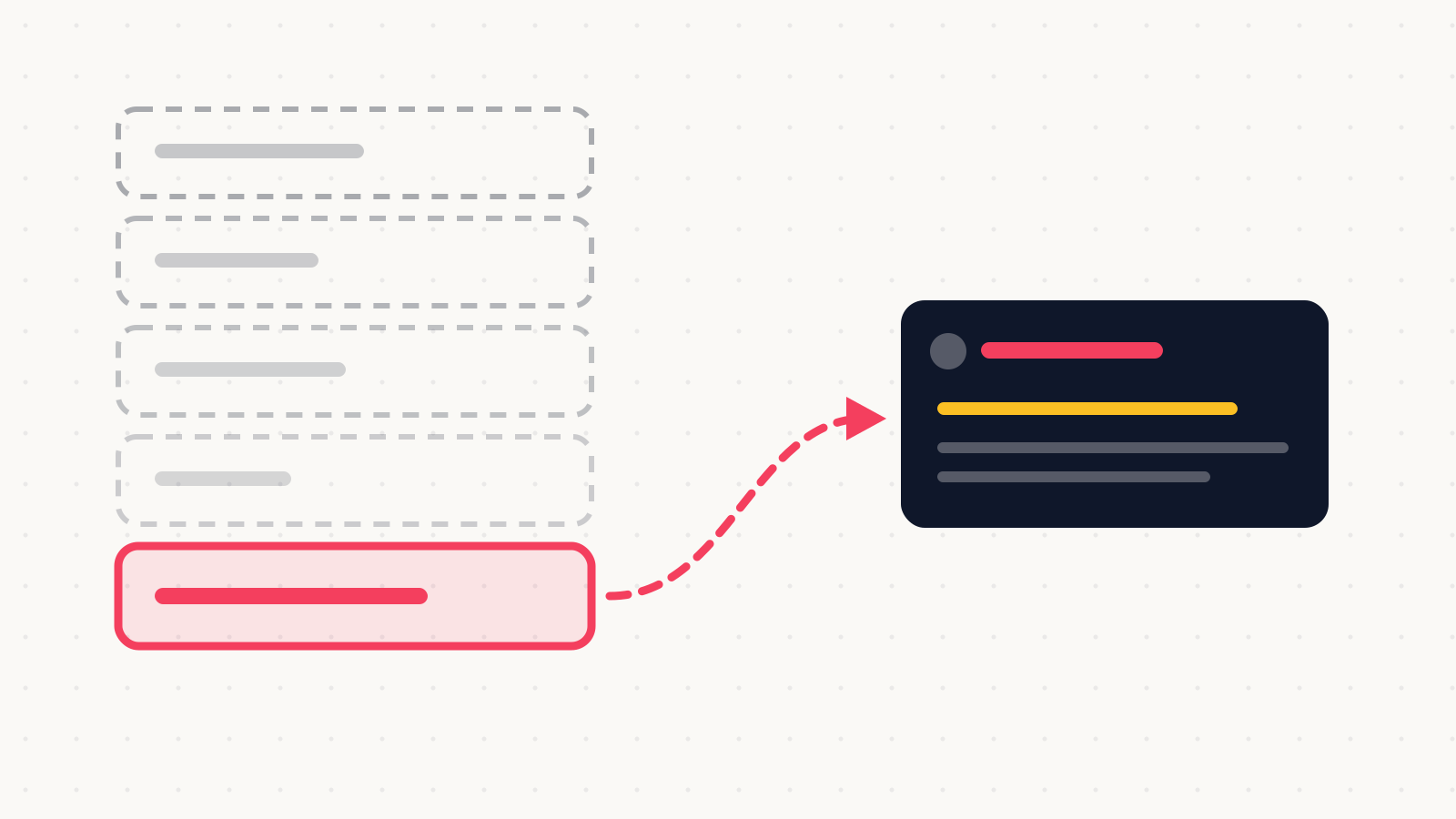
A page earns its place when somebody arrives at it having searched for that specific thing, and leaves having decided something.
So the count falls out of your business rather than out of a template. A company doing three types of work needs three pages that sell, plus a homepage that routes the people who arrive without a specific question, plus the page somebody reads while deciding whether to let you in the house, plus the practical ones nobody argues about. That is a small website, and for most local businesses it is the right size.
Adding a page that no search leads to and no decision needs does not make the site bigger in any sense that matters. It makes it longer.
Where the number gets inflated
The pitch is familiar. You serve twelve towns, so you should have twelve pages, one per town, each built to catch the searches for that place.
It sounds like coverage. Google's spam policies describe the arrangement directly, and the wording is worth reading in the original: doorway abuse is when sites or pages are created to rank for specific, similar search queries, and they lead users to intermediate pages that are not as useful as the final destination.
The examples are more specific still. Google lists having multiple domain names or pages targeted at specific regions or cities that funnel users to one page, and creating substantially similar pages that are closer to search results than a clearly defined, browseable hierarchy. It has a second policy for the volume version, scaled content abuse, which it defines as many pages generated for the primary purpose of manipulating search rankings and not helping users.
None of that is obscure. It is published in plain language, and it describes the thing being sold to small businesses as a location strategy.
The find-and-replace test
Here is how to tell which side of the line a page sits on, without reading any policy at all.
Could this page have been produced by taking another one and swapping the town name?
If yes, it is the thing the policy describes, whatever it was sold as. If no, you have a genuine page, and the reason it is genuine is that it contains things that are actually true of that place and not of the next one.
What makes a location page real
Difference that a customer would notice.
The jobs you have actually done there, named. What is different about the housing stock, which is a real thing in a city where one neighborhood is pier and beam and the next is slab. How long it takes you to get there and on which days you are usually in that direction, which matters more to somebody booking than any keyword in the heading. Permit or inspection quirks if the municipality has them.
If you cannot write four paragraphs of that about a town, you do not have a page about that town. You have a mailing list of place names, and publishing it is a decision with a policy attached.
Every page is a standing cost
The argument against volume is not only the policy one.
Each page is something that has to stay accurate. Your phone number is on it. Your address is on it, which is why a relocation turns into an afternoon of editing rather than a single change. Your prices and your service list are on it, along with whatever you said about turnaround times in 2021. Twelve town pages are twelve places for last year's number to survive, and nobody audits a page they never look at.
A smaller site that is entirely true beats a larger one that is mostly stale, and it is considerably cheaper to own.
Deciding how many pages a business actually needs is the first conversation in a build, and it usually shortens the quote. If somebody has quoted you for a site with a page per suburb, book a strategy call and bring the proposal. The question worth asking them is what would go on page nine that could not go on page eight.
John "Holliday" Mahlow
Founder, Cursive Media