Your GA4 bounce rate is measuring eleven seconds.
Engagement rate has a precise definition, and once you know it the number stops being mysterious and starts being narrow. Plus the retention setting worth changing today.
John "Holliday" Mahlow
Founder, Cursive Media
- Read time
- 5 min read
- Written
You opened Google Analytics because someone asked how the website is doing. There is a bounce rate of 61%, an engagement rate of 39%, and no way to tell whether either of those is good news.
The good news is that both numbers have an exact definition, and it is narrower than almost anyone assumes.
What counts as engaged
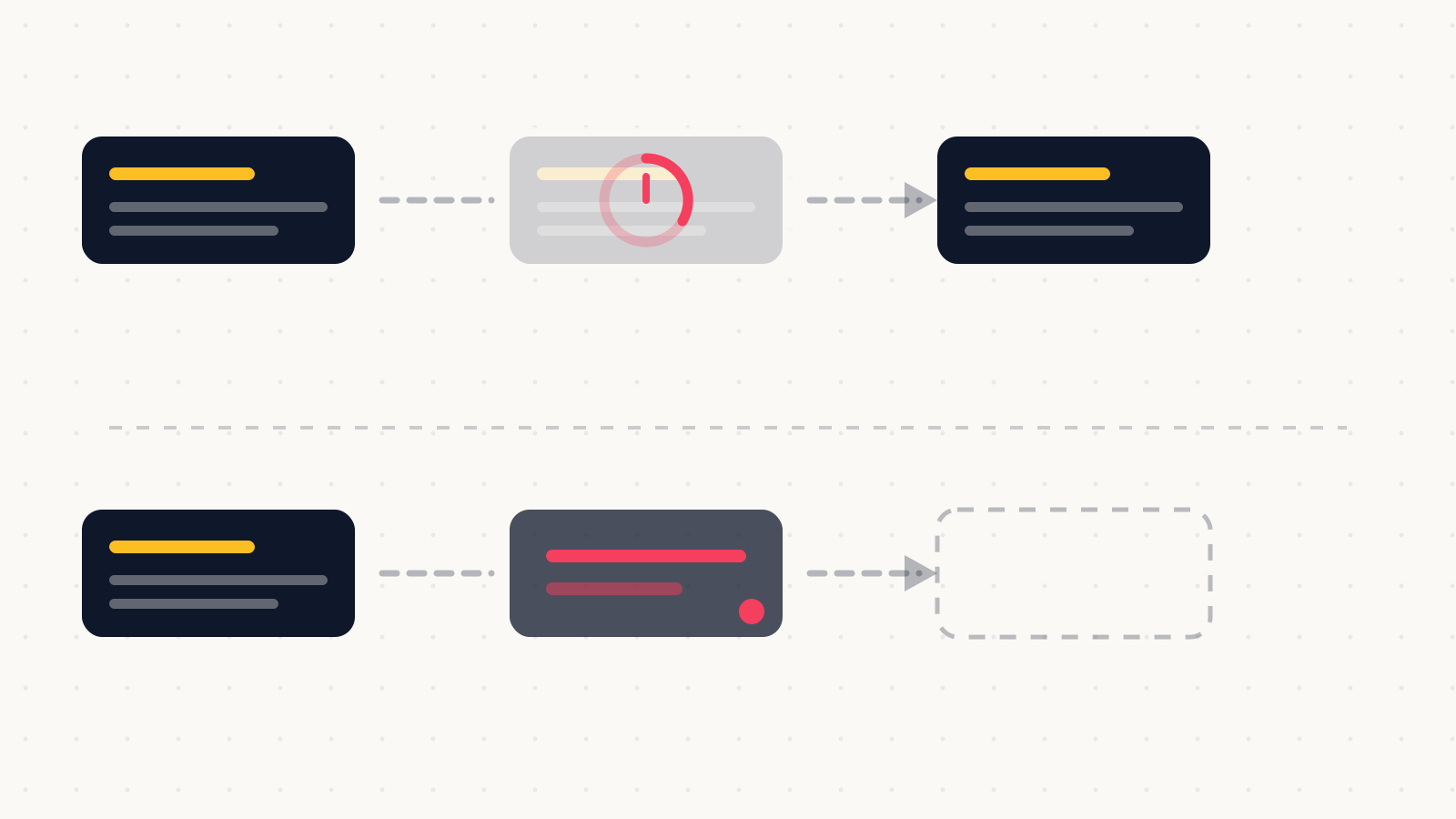
GA4 calls a session engaged if any one of three things is true. It lasted longer than ten seconds. It contained a key event. Or it had two or more page or screen views.
Engagement rate is the percentage of sessions that qualified. Bounce rate is the percentage that did not, which makes it the exact inverse rather than an independent measurement.
Sit with the ten seconds for a moment.
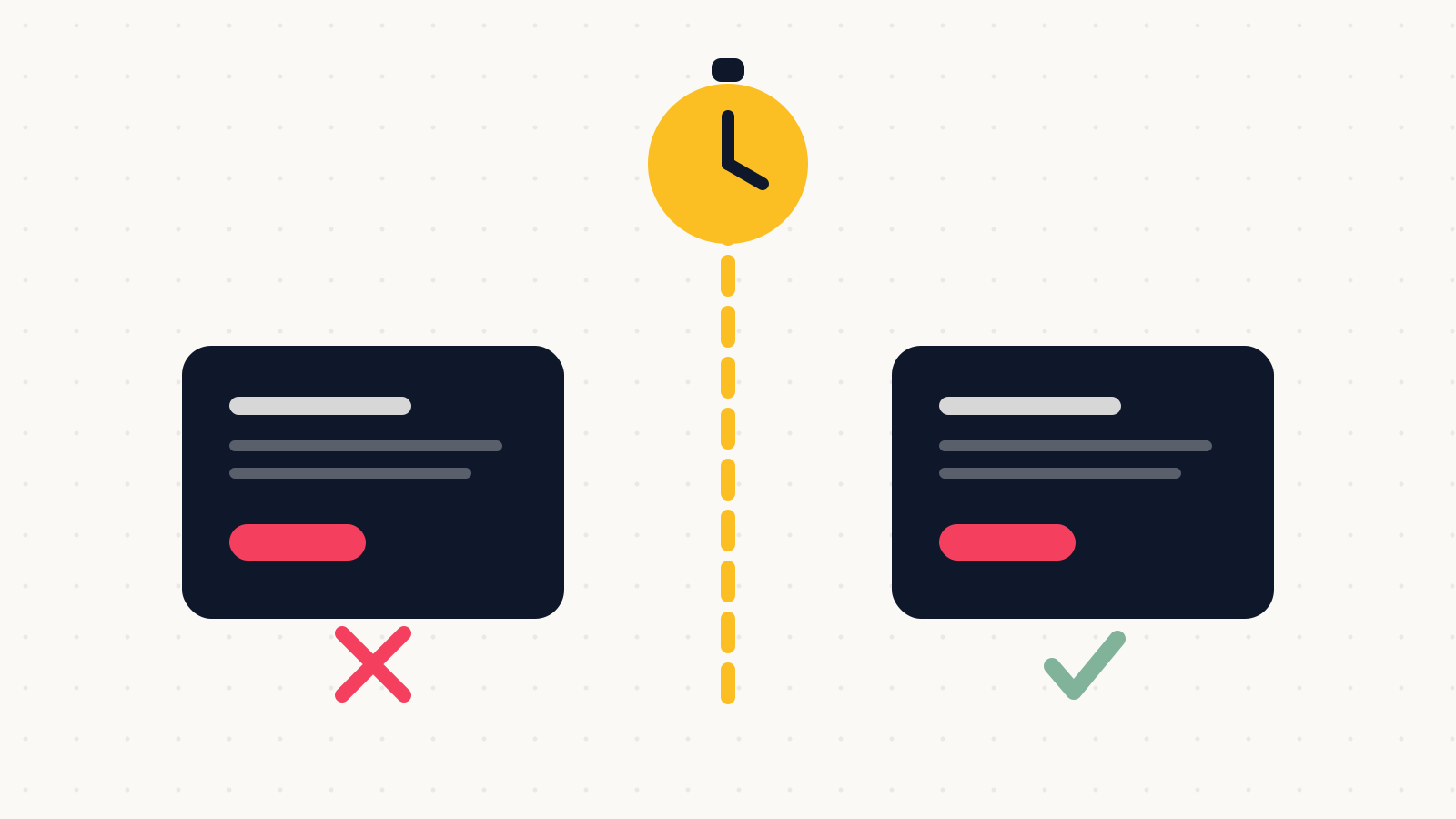
A visitor who lands on your services page, reads for eleven seconds, decides you are not for them and closes the tab has been counted as engaged. Somebody who lands, finds your phone number in eight seconds, closes the tab and calls you is a bounce. Your engagement rate is not measuring whether people found the site useful; it is measuring whether they stayed past a stopwatch.
That does not make it useless. It makes it a blunt instrument, and it explains why chasing the number rarely changes anything about your business.
The setting worth changing today
Standard GA4 properties give you two choices for how long user and event data is kept: two months or fourteen months. Plenty of accounts are sitting on the shorter one without anybody having chosen it.
Be precise about what that costs, because this gets exaggerated in both directions. Retention only affects explorations and funnel reports. Your standard aggregated reports are not touched by it, so you are not losing your traffic history.
What you lose is the ability to build a funnel or an exploration across a window longer than the setting allows, which is exactly the analysis anyone asks for when they finally get curious in month nine. Expired data is deleted monthly and does not come back.
Change it to fourteen months and move on. Google waits 24 hours before applying the change, which is deliberate so you can undo a mistake, and there is a separate option to reset the expiry each time a user returns if you want active visitors held longer.
What is actually worth looking at
For a local business with a modest site, most of GA4 is noise. Three things carry the signal.
How many people arrive from organic search, because that is the number your content and your local visibility are supposed to move. Which pages they land on, because that tells you what Google thinks you are for, and it is frequently not the page you would have guessed. And how many of them do the thing you care about, which requires you to have told GA4 what that thing is, since a website without a defined key event is measuring attention rather than outcomes.
A note on Direct traffic, offered as our own observation rather than as documentation. On small sites it is frequently inflated by bots and by sessions Google simply could not attribute to a source. It is the bucket everything unidentifiable falls into, which means it grows for reasons that have nothing to do with people typing your address into a browser. A local business with a few hundred visits a month and a large Direct column is usually looking at noise rather than loyalty. Be skeptical of that number before you celebrate it, and judge the organic column instead when you want to know whether the work is landing.
What it will never tell you
The phone. For a service business, the most valuable outcome usually happens off the website entirely, and analytics stops at the moment somebody picks up their handset.
That is why a site that looks mediocre in GA4 can be producing steady work, and why a rising engagement rate has never once answered the only question that matters, which is whether the phone rang more this month. The profile dashboard has the same blind spot, counting the tap on a call button rather than the conversation that followed, and neither tool knows what happened to the calls nobody answered.
Which is the honest framing for all of it. Analytics is good at telling you what happened on the website and blind to most of what happens because of it.
Analytics that answer a business question rather than a dashboard question are what we set up, usually in an afternoon. If you want the account set up so it reports on outcomes rather than sessions, and someone to tell you plainly which of your numbers are real, book a strategy call. It is a short piece of work and it makes every later conversation about marketing considerably less speculative.
John "Holliday" Mahlow
Founder, Cursive Media