Does a local service business need social media?
For most trades the customer appears at a moment of need, which is a timing problem social is badly shaped for. It has three real jobs, and none of them is finding you work.
John "Holliday" Mahlow
Founder, Cursive Media
- Read time
- 5 min read
- Written
Somebody has told you that you need to be posting. Possibly several somebodies, one of whom would like to be paid monthly for it.
The question worth answering first is not which platform. It is when your customer decides.
The timing problem
A water heater fails at ten past six on a Tuesday. Nobody responds to that by opening Instagram.
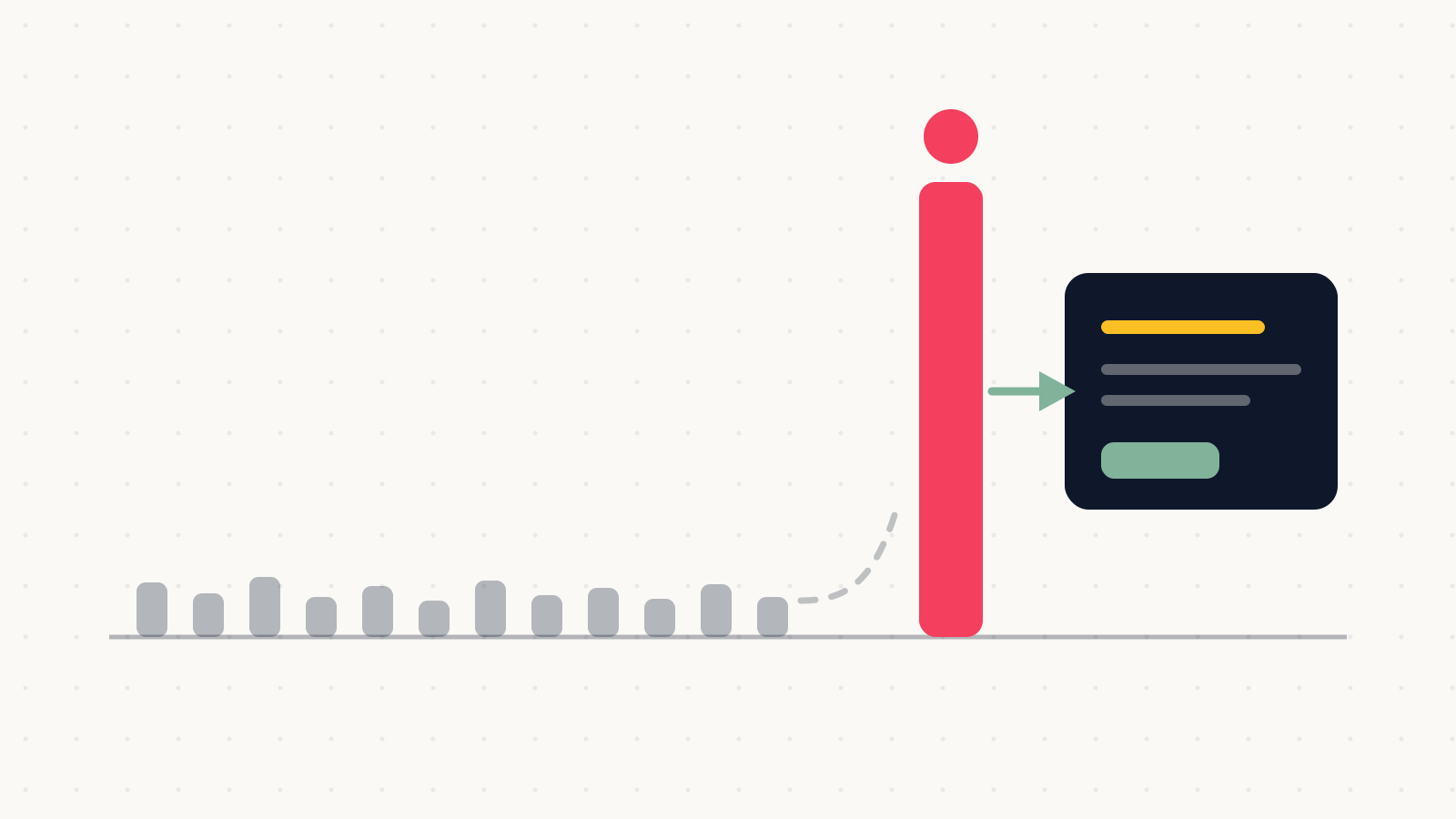
Social media asks you to build familiarity months before the need arrives, in the hope of being remembered at the moment it does. Search does the opposite. It puts you in front of somebody at the exact minute they have the problem and are willing to spend money on it.
For a trade where the customer appears suddenly and buys quickly, that difference decides where the effort belongs. It is not that social does not work. It is that it is solving a timing problem you do not have, at a cost you would notice.
What it is genuinely good at
Three things, and none of them is finding you work directly.
Proof, first. A run of photographs of jobs you actually finished is evidence you can point somebody at mid-conversation, and it is the one kind of content a competitor cannot lift from you because it is only true of your work.
Recruiting, second, and this is underrated. Trades hire through these channels now, and a page showing your crew and your standards does more for a hiring problem than any advert.
And neighborhood recommendation, which is a different animal from a feed. When somebody in a local group asks who to call, that is word of mouth happening in public, and the platforms shaped like that are worth a free page whatever you decide about the rest.
Google might be showing them already
Here is the part that changes the calculation even if you never post again.
You can add social links to your Business Profile under Edit profile, then Contact, then Social profiles. Google supports Facebook, Instagram, LinkedIn, Pinterest, TikTok, X and YouTube, one link per platform. What is less well known is that some Business Profiles may show social media links automatically if they meet certain requirements.
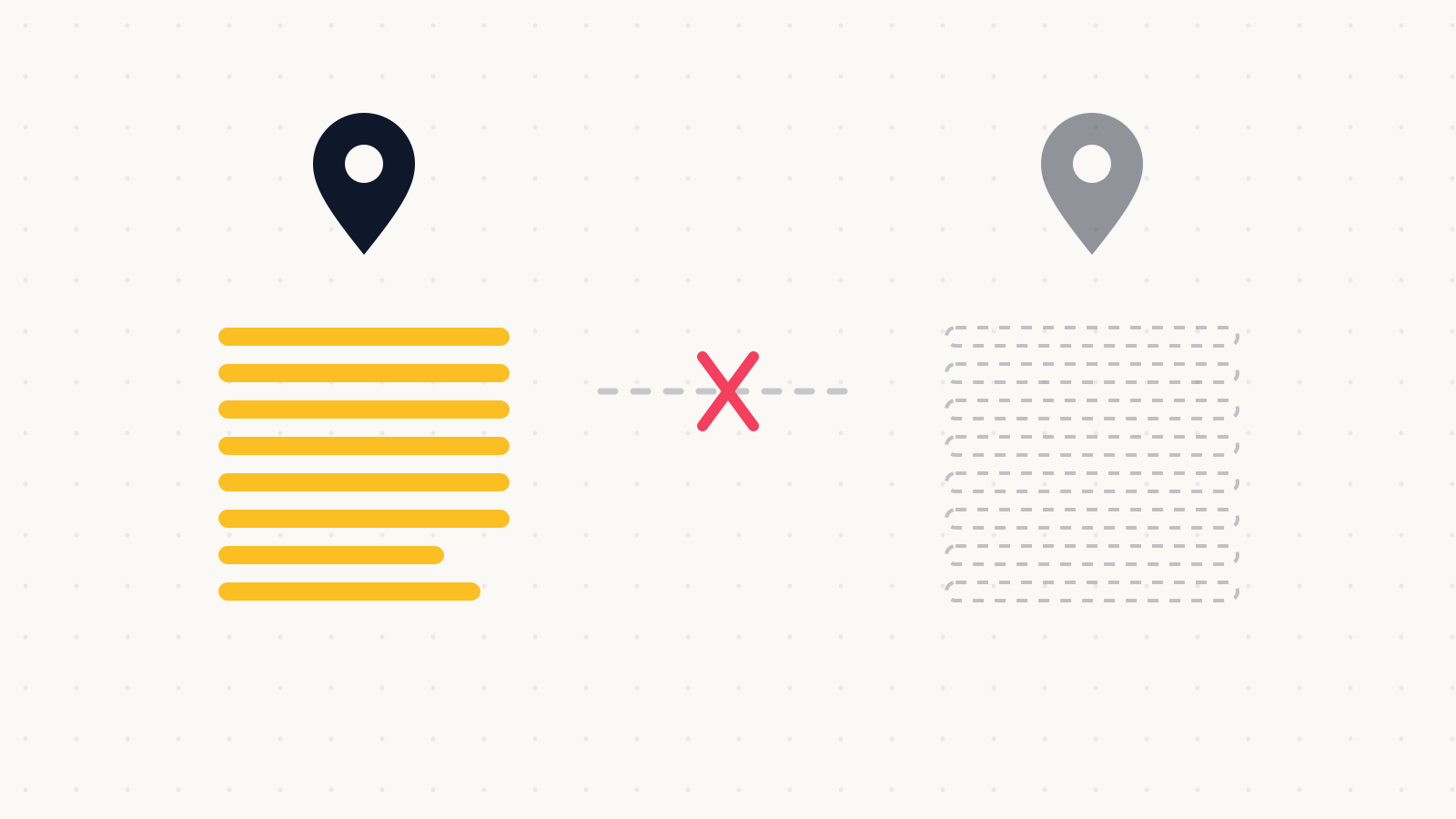
So the Facebook page somebody set up in 2019, last posted to during a different administration, may be displayed on the profile that produces most of your phone calls, without anybody at your business having put it there. Nobody made a decision. It simply met the requirements at some point and appeared. Automatically added links can be replaced with ones you choose, and removing them altogether means contacting support.
Worth looking at your own profile on a phone this afternoon to see what is currently attached to your name.
Dormant is worse than absent
An empty account is a neutral fact.
A stale one is a statement.
A page whose last post is eighteen months old tells a stranger something about how you keep things up, at the precise moment they are deciding whether you will turn up on Thursday. If you are not going to maintain it, the better move is to make it tidy and accurate rather than active, and to point it at the things that are working.
How to tell if it is working
Not by followers.
The only figure that settles this is the one you would have written a price for, which is a stricter test than most reporting uses and the reason a social report can look busy while the calendar does not. If a channel has produced nothing you would have quoted in six months, that is not a reason to post more. It is information.
The effort with better timing is search and the profile, which is where we would put it instead. If somebody is pitching you a posting schedule and you want to know whether it fits how your customers actually buy, book a strategy call. For a lot of trades the honest answer is one tidy page and the effort spent somewhere with better timing.
John "Holliday" Mahlow
Founder, Cursive Media