Which review platforms matter for a local business?
Some platforms host your reputation and some sell you leads. They get discussed as one category, and the difference decides how much attention each deserves.
John "Holliday" Mahlow
Founder, Cursive Media
- Read time
- 4 min read
- Written
Almost everything we have written about reviews is about Google, which is a defensible bias and an incomplete answer. The reasonable next question is whether anything else deserves your attention, and the honest response starts by separating two things that get called the same word.
Two products, one word
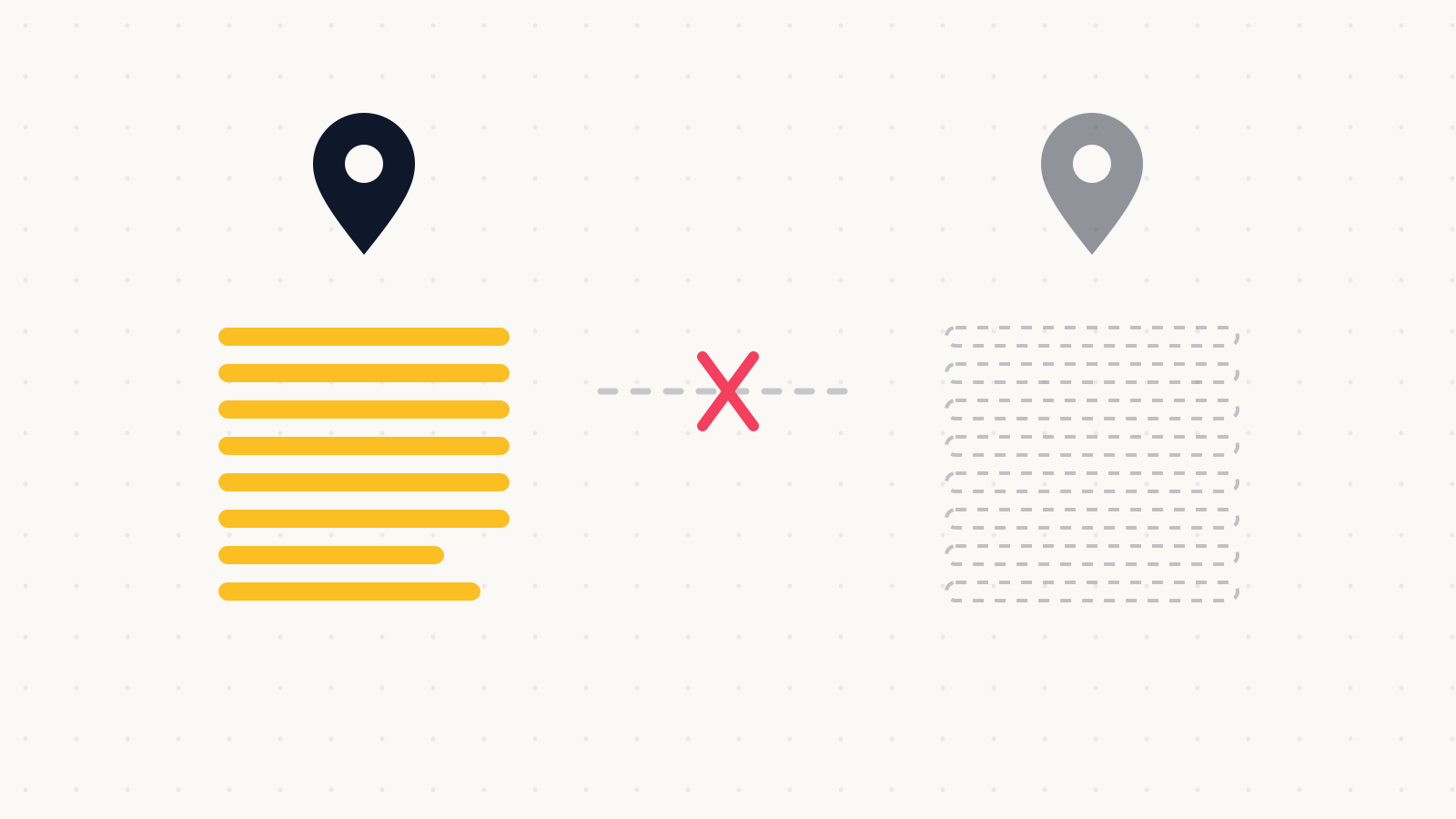
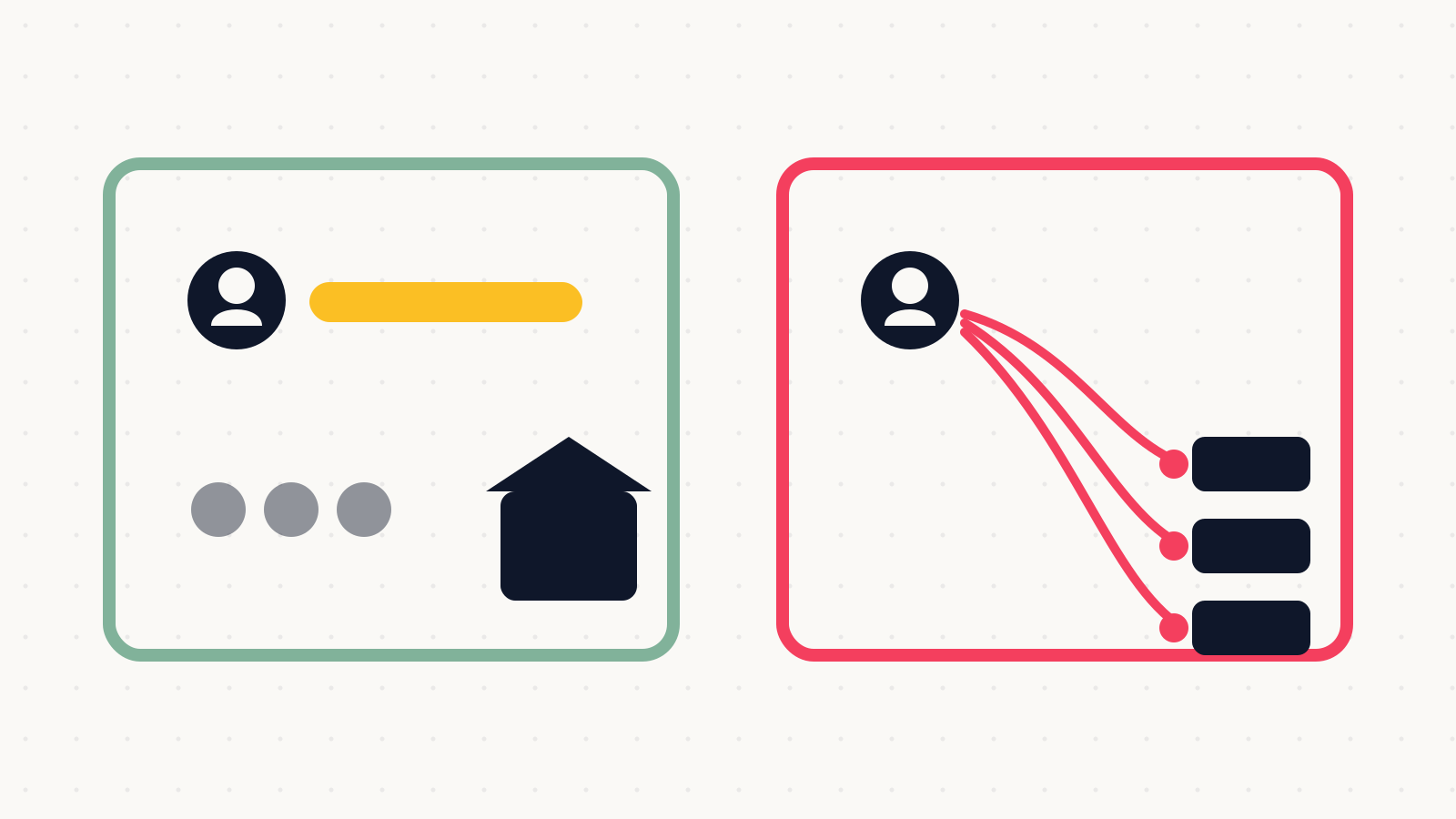
Some platforms host reputation. Customers write about you there and other customers read it, while the platform sits in the middle taking no money from the transaction.
Others sell leads. You pay to be introduced to somebody who wants work done, often per contact, sometimes against competitors receiving the same introduction.
Both get filed under review sites in most conversations, and the confusion costs money, because a business signs up to what it thinks is reputation work and finds it has bought advertising.
The test is simple enough to apply yourself. Does the platform charge you when somebody contacts you? If it does, judge it as an advertising channel with a cost per lead, exactly as you would judge Local Services Ads, and stop thinking of it as a reputation exercise.
Why Google stays first
Not out of loyalty. Because it is the surface a stranger sees when they search for what you do, before they have decided anything, and because the rating is doing the qualifying whether or not you participate.
A profile you neglect still appears. That asymmetry is what makes it the first call on your attention, and it is not true of most of the others.
Nextdoor, on its own terms
Nextdoor is the most interesting of the alternatives for a local service business, because it is shaped like word of mouth rather than like a directory.
A Business Page is free, and any business, service provider or non-profit falling within its policy is invited to create one. Neighbors can leave a recommendation, message you, and find your number, address, hours and website. Claiming and verifying the page gives you two free Business Posts a month, and you are allowed to ask for recommendations off-platform by sharing the page link in your emails, your social accounts and on your site.
Worth being clear about the evidence, though. The impressive figures you will read about recommendation influence and page views come from Nextdoor, about Nextdoor. That does not make them wrong, and it does mean the platform is the only party publishing them, which is true of every platform making its own case.
The practical argument does not need the statistics. If your customers are homeowners in defined neighborhoods and your work travels by recommendation, a free page in the place those recommendations already happen is an easy yes.
The ones that sell leads
We are not going to characterise any particular marketplace's pricing or sales practices here, because we have not verified them and they change.
What is worth saying is structural. When you pay per introduction, and the same introduction may go to several businesses, you are buying a race rather than a customer. That can be perfectly sensible when you have capacity to fill and the speed to win it, and it is a different decision from claiming a free page, with a different question attached: not "should we be on it" but "does the arithmetic work at the volume we can actually service".
Where to put the attention
One platform maintained properly beats five claimed and abandoned, and an abandoned profile is worse than none because it advertises neglect at the moment somebody is checking you out.
So finish Google first. Then add whichever second surface your customers actually use, which you can discover by asking the next five people who call how they found you, rather than by reading a listicle about the top ten review sites.
Getting Google finished before adding anything else is the order our reputation work runs in. If you are being pitched a platform and cannot tell which of the two products it is, book a strategy call and read us the offer. The charging model usually answers it in one sentence.
John "Holliday" Mahlow
Founder, Cursive Media