Why Google shows a different description for your site.
Snippets are built primarily from the page itself and assembled per search, so there is no single description to fix. What you can change is which sentences exist to be picked.
John "Holliday" Mahlow
Founder, Cursive Media
- Read time
- 5 min read
- Written
You wrote a description. Somebody was paid to write a description. What appears under your business in the results is a sentence from halfway down the page, and once, memorably, your opening hours.
Nothing has gone wrong. The tag was never an instruction.
Where the text actually comes from
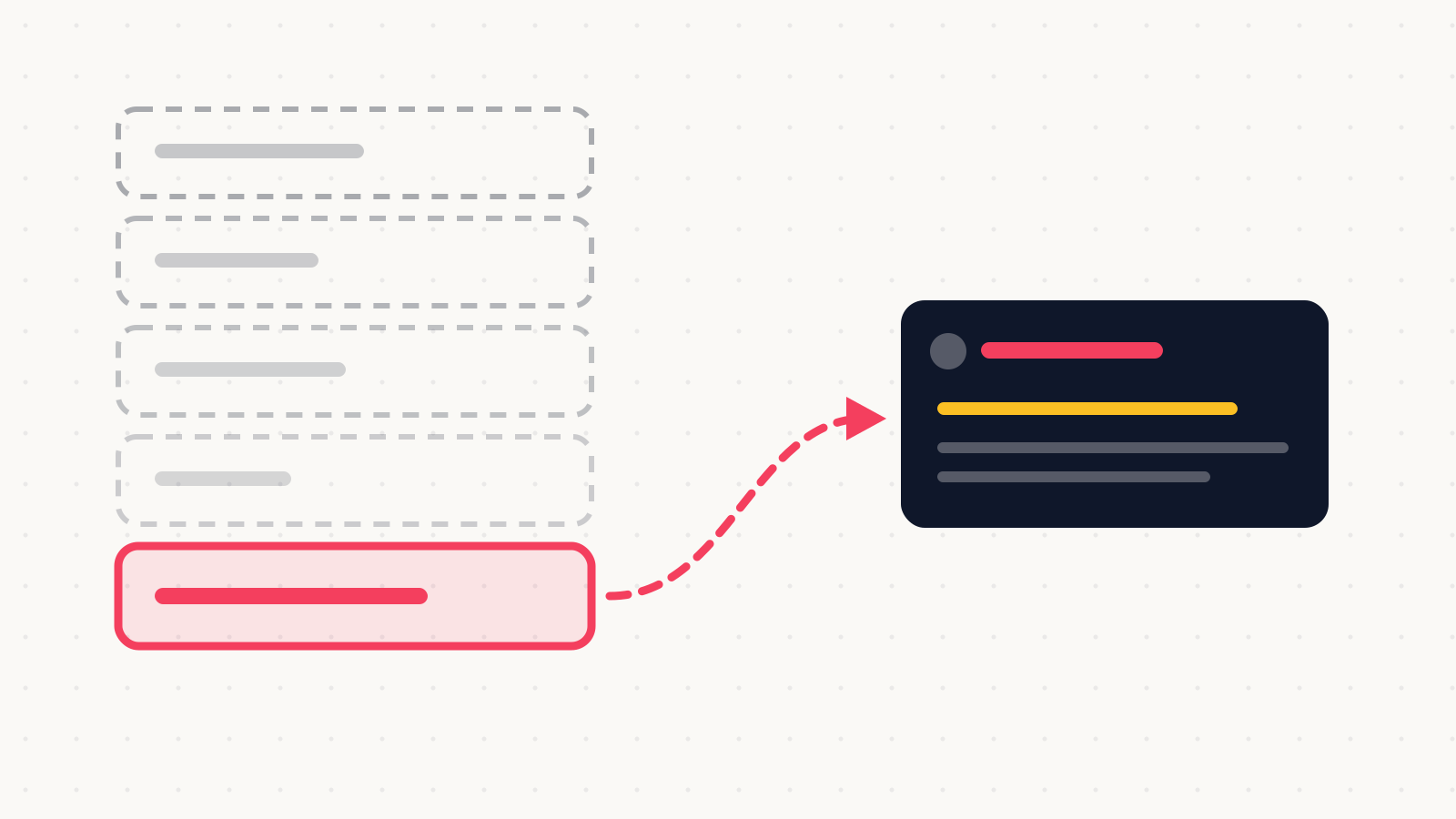
Google is direct about this. Snippets are primarily created from the page content itself, and it sometimes uses the meta description element if that might give users a more accurate description.
Read the order of those two clauses. The page is the source. Your description is a candidate that gets used when it describes the page better than other parts of the content do, which is a judgement Google makes rather than a setting you control.
There is no single description
This is the part that resolves most of the confusion, and almost nobody knows it.
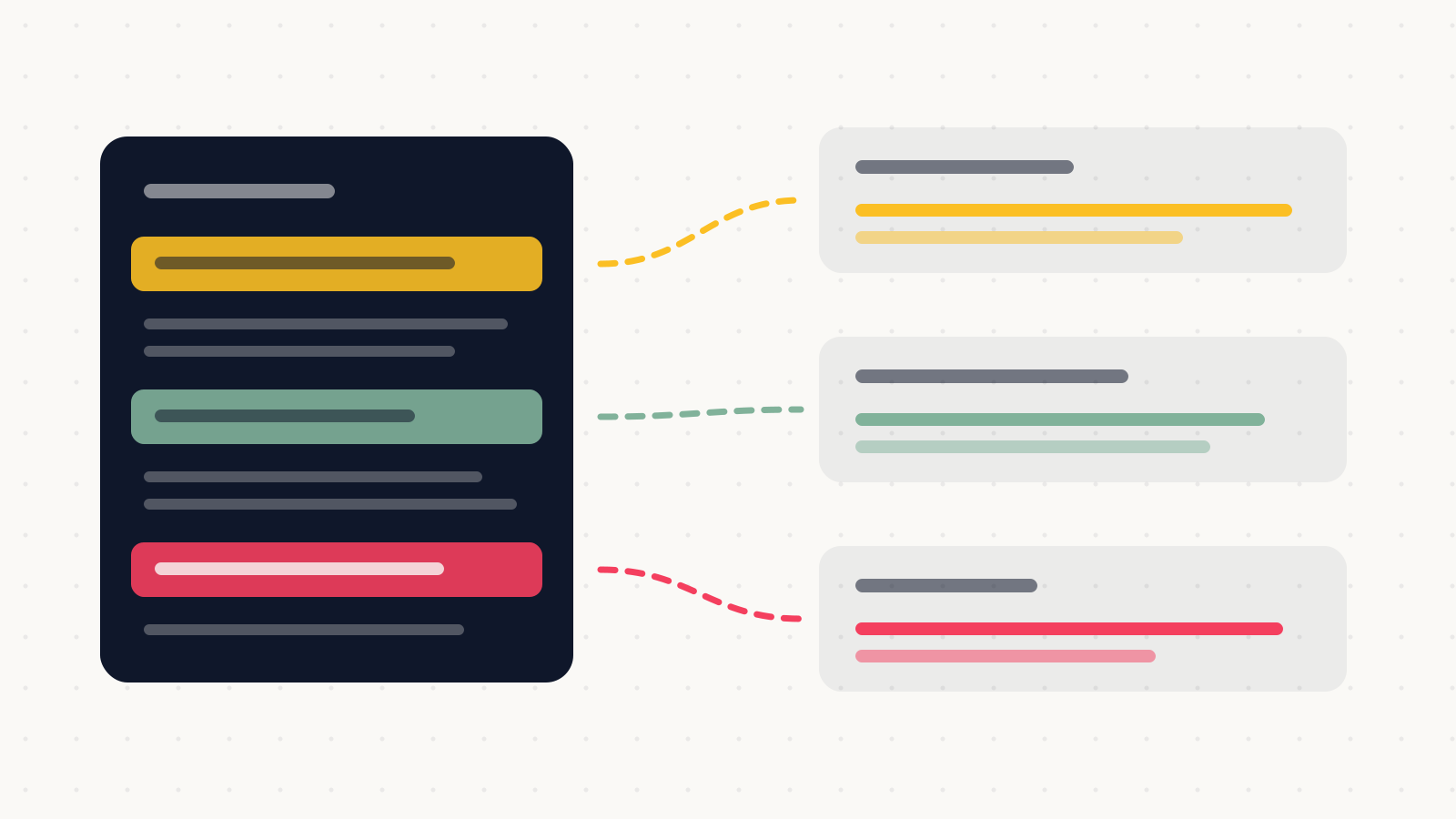
Snippets are designed to emphasize and preview the page content that best relates to a user's specific search, which means Google might show different snippets for different searches. The text under your site is not a property of your site. It is assembled for the person who typed the query.
So when somebody reports that the wrong description is showing, they usually searched their own business name and saw text chosen for that search. Somebody looking for a specific service is seeing something else entirely, and quite possibly something better.
When it is genuinely a problem
Not always, though sometimes yes.
If it keeps pulling a cookie notice, a navigation list, a line of boilerplate about a service you dropped in 2023, or a sentence that reads oddly out of context, then the snippet is doing its job on material that should not be there. The result looks careless to a stranger, and it is the first thing they see of you.
The fix is not a better tag
You cannot dictate the words. You can change which words are available to be chosen.
If Google keeps surfacing an awkward sentence, that sentence is on your page. Rewrite it, move it, or delete it. A page whose opening paragraphs plainly say what the thing is, who it is for and where you do it tends to produce good snippets across every query, because there is nothing better lying around for the algorithm to reach for. That is the same discipline as writing a service page that answers the question somebody arrived with, and it pays here as a side effect.
The controls, and why they usually are not what you want
There are three, and two of them are blunter than the problem.
The nosnippet tag stops a snippet appearing at all, which trades an imperfect description for no description. The max-snippet directive caps the length. The useful one is data-nosnippet, which marks a specific section of a page as ineligible, and that is the right tool when a particular block of text keeps getting chosen and should not be.
For most businesses none of these is the answer. Fixing the sentence is.
While we are here
Missing meta descriptions is a staple finding in the automated audit emails that arrive on a Tuesday.
Now you know what the tag actually does, you can price that finding correctly. It is worth writing them, because a good one is a candidate Google may prefer, and it is not the reason your phone is quiet. The test for any of those findings is whether the sentence could have been written without looking at your site, and that one always could.
Getting the sentences on the page right so the snippet has something good to choose is ordinary SEO work. If what appears under your business in the results is embarrassing rather than merely different, book a strategy call. It is almost always a paragraph on the page rather than anything in the code.
John "Holliday" Mahlow
Founder, Cursive Media