Why your Google rankings dropped: a diagnostic order.
Google documents five reasons traffic falls, and two of them cost nothing to check. One of them is that the drop never happened.
John "Holliday" Mahlow
Founder, Cursive Media
- Read time
- 5 min read
- Written
The chart in Search Console turned downward about two weeks ago, the phone has been quieter, and an email has arrived from somebody who noticed and has a recovery package ready.
Google documents what causes this. Five categories, and they are worth working through in a particular order, because two of them cost nothing to rule out and one of them means nothing happened at all.
First: check whether the drop is real
Google maintains a Data Anomalies page, and its own troubleshooting guidance tells you to check it to see whether anything applies to your site. It exists because Search Console occasionally has logging and reporting problems, and when it does, your chart shows a decline that never happened in the world.
Almost nobody looks. It takes thirty seconds and it is the only check that can end the investigation immediately.
Second: check whether it is you or the season
Google's guidance is direct that user behavior changes demand for particular queries, and it points to Trends for comparison. Search the terms that matter to you and look at the same window.
If the whole category dipped, you did not lose anything. Your share of a smaller pie is the same share.
This is the single most common false alarm in local business, because so much of it is seasonal in ways owners know intuitively but forget when looking at a graph. Roofing after storm season. Tax help in May. HVAC in a mild week. The chart looks like failure and it is just August.
Third: look at the reports that name the problem
If demand held and the anomalies page is clear, the next checks are in your own Search Console, and each one names its own cause rather than leaving you to guess.
For technical causes, Google says to look at the Crawl stats report and the Page indexing report for a corresponding spike in issues. The pattern to look for is a rise in problems that lines up with the fall in traffic. Site-wide causes look like server downtime; page-level ones look like a misplaced noindex rule, which is exactly the mistake that ships on launch day and goes unnoticed for a month.
For the more alarming causes there are dedicated reports. Malware or phishing shows in Security Issues, and Google notes those warnings themselves reduce traffic. Spam policy violations show in Manual Actions. Both are rare for an ordinary local business and both take one click to eliminate, which is the point of checking them early rather than theorising for a week.
Fourth: measure how far you actually moved
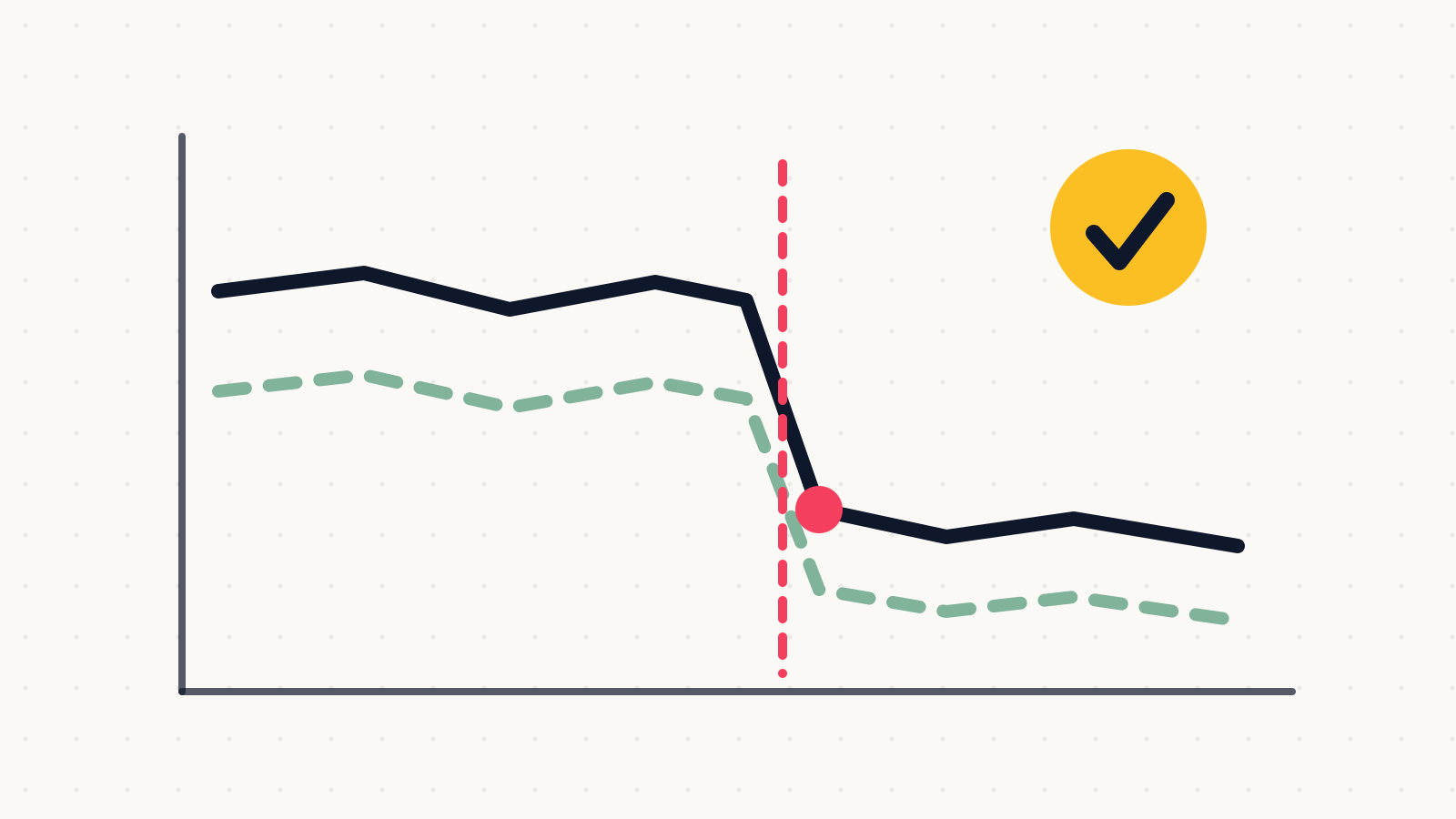
Here is the distinction that changes what you should do, and it comes straight from Google: it matters whether your pages slipped a little or fell off a cliff, because recovery strategies differ. Their own framing contrasts a page going from position 2 to position 4 with one going from 4 to 29.
The first is ordinary movement. Positions are not owned, competitors publish, results reshuffle, and a two-place slide on one query is noise you should not spend money on.
The second is a different animal. A page that falls twenty-five places has usually been reassessed rather than nudged, and that is where an algorithmic explanation becomes plausible and worth investigating properly. Use the 16-month view and filter by page, query and date range instead of reading the site-wide line, because a site-wide average hides the difference between everything sagging slightly and one important page collapsing.
What not to do in the first two weeks
Do not rewrite the site. The instinct to change everything at once destroys your ability to tell what worked, and if the cause was seasonal you will credit the rewrite for a recovery that was going to happen anyway.
Do not buy links, which is how a ranking problem becomes a manual action. Do not migrate platforms in a panic. And be careful with anyone who diagnoses an algorithm update before looking at your Search Console, because the update is the one explanation that cannot be checked, which is what makes it such a convenient thing to sell.
Working out whether something broke or nothing did is what the SEO work starts with, before anybody changes a page. If you have worked through the order and genuinely landed on the last box, book a strategy call and we will go through the data with you. Half the drops we look at resolve to something on this list that takes an afternoon, and it is worth knowing which half you are in before anybody quotes you for a recovery.
John "Holliday" Mahlow
Founder, Cursive Media