Online booking for field service: what breaks and why.
Booking tools model a fixed room and a fixed hour. A business that drives to customers breaks both, and the calendar it produces cannot actually be worked.
John "Holliday" Mahlow
Founder, Cursive Media
- Read time
- 4 min read
- Written
Almost every online booking tool was designed around a salon. There is a chair, it is in one place, and a cut takes forty-five minutes whoever sits in it.
A business that drives to customers breaks all three of those assumptions before lunch.
What the widget does not know
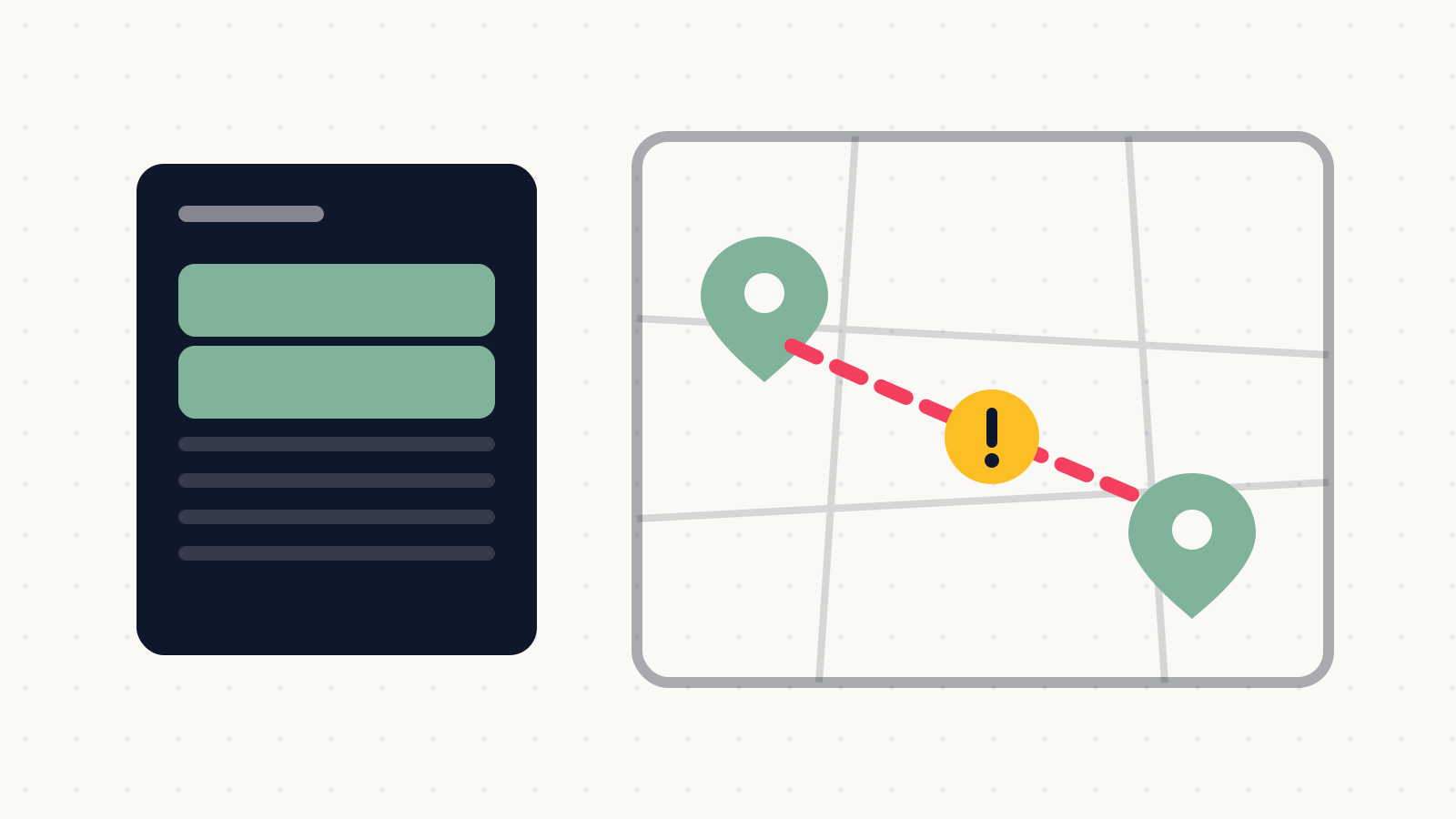
It does not know where the last job was. A nine o'clock in Katy and a ten o'clock in Pasadena are both offered as available, and both are true in the calendar and impossible in a truck.
It does not know that the job length is a range. A water heater replacement is two hours or most of a day depending on what is behind the wall, and the booking form wants one number before anybody has seen the wall.
And it assumes back-to-back is efficient. That holds for a chair. It does not hold for work that involves finding a parking space, and it certainly does not hold for a customer who wants ten minutes at the door about the neighbor's extension.
So you pick a failure
Businesses respond in one of two ways, and both cost something.
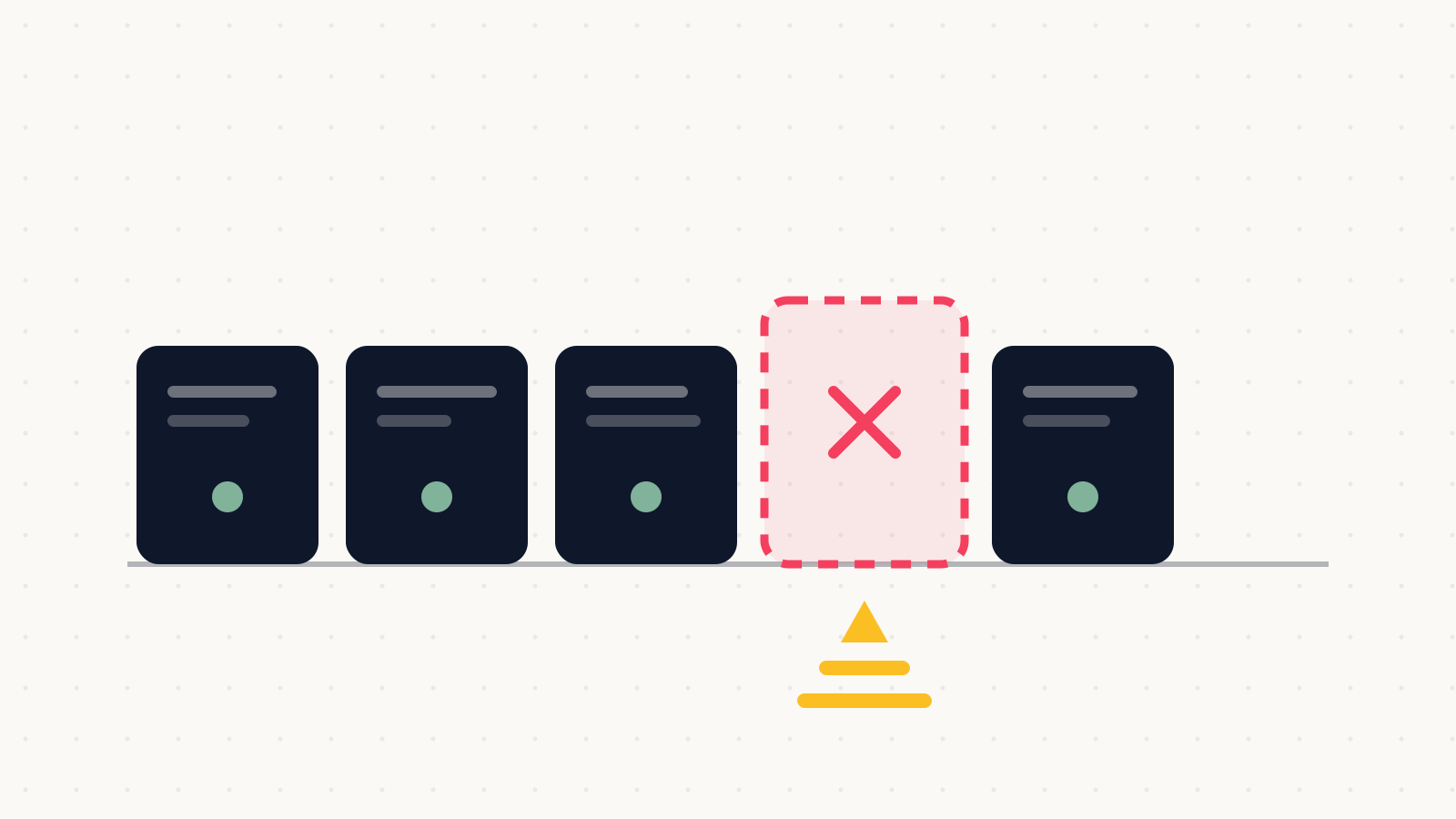
Over-block, and the calendar shows three slots a day when you could genuinely do five. You look busier than you are, customers who wanted Thursday go elsewhere, and nobody ever tells you that is what happened.
Under-block, and the day is theoretically full and practically late. Running behind is the failure that produces the review you spent a year of review requests trying to earn, because being late is the one thing a customer experiences as disrespect rather than misfortune.
Book a window, not a time
The fix most trades eventually arrive at is to stop selling minutes. Offer a morning or an afternoon rather than 9:30, and say plainly that you will confirm the closer time the day before.
Customers accept this readily, because it matches how they already think about tradespeople, and it hands you back the flexibility the fixed-slot model takes away. The one thing it requires is that you actually send the confirmation, which is a reminder-sequence job rather than a promise somebody has to remember.
Let geography be a constraint
The second fix is to schedule by area rather than only by hour. Cluster a day around a zone, cap how many jobs you accept outside it, and treat the far corner of your service area as something you visit on particular days rather than whenever a form allows it.
That is a business rule, not a software feature, and it survives whatever tool you use.
Request, or commit?
Here is the position most booking software will not take for you. Instant confirmation is not automatically the right choice for field work.
A request-and-confirm flow, where the customer picks a preferred window and you confirm within the hour, keeps the convenience of booking online while leaving room for the things software cannot see. It is slower on paper and it produces a schedule you can actually work.
Instant booking earns its place where the job is genuinely standard and the duration is genuinely predictable — annual servicing, inspections, anything with a scope you could describe before arriving. Those are real categories, they are worth switching on, and they are narrower than the software implies. The mistake is not offering instant booking. It is offering it for the jobs where nobody yet knows what the job is.
One practical note if you use the booking link on your Google profile: whichever route you choose, the destination has to work on a phone in one hand, since that is where the tap comes from.
Scheduling rules that match how a van actually moves are an automation problem rather than a software purchase. If your calendar looks full and your week does not, or the other way round, book a strategy call. The scheduling rules usually need fixing before any tool can help, and that is a conversation rather than a purchase.
John "Holliday" Mahlow
Founder, Cursive Media