Zapier MCP, explained: your AI can now run 9,000 apps. Should it?
Zapier MCP lets AI assistants like Claude and ChatGPT trigger real actions across 9,000+ apps. What it is, what each call actually costs, and when it beats building a normal Zap.
John "Holliday" Mahlow
Founder, Cursive Media
Zapier MCP connects AI assistants — Claude, ChatGPT, Cursor, most of the major ones — to the 9,000+ apps in Zapier’s catalog, so instead of just drafting the follow-up email, your AI can send it, log the contact in the CRM, and book the calendar slot. Zapier’s own tagline is the honest summary: your AI can talk; MCP makes it act.
Up front, in keeping with how we write about AI: we haven’t deployed Zapier MCP for a client yet. What follows is an explainer from the published product plus our lens as people who rebuild Zapier stacks for a living — including the cost math that the launch coverage mostly skipped.
What MCP actually is
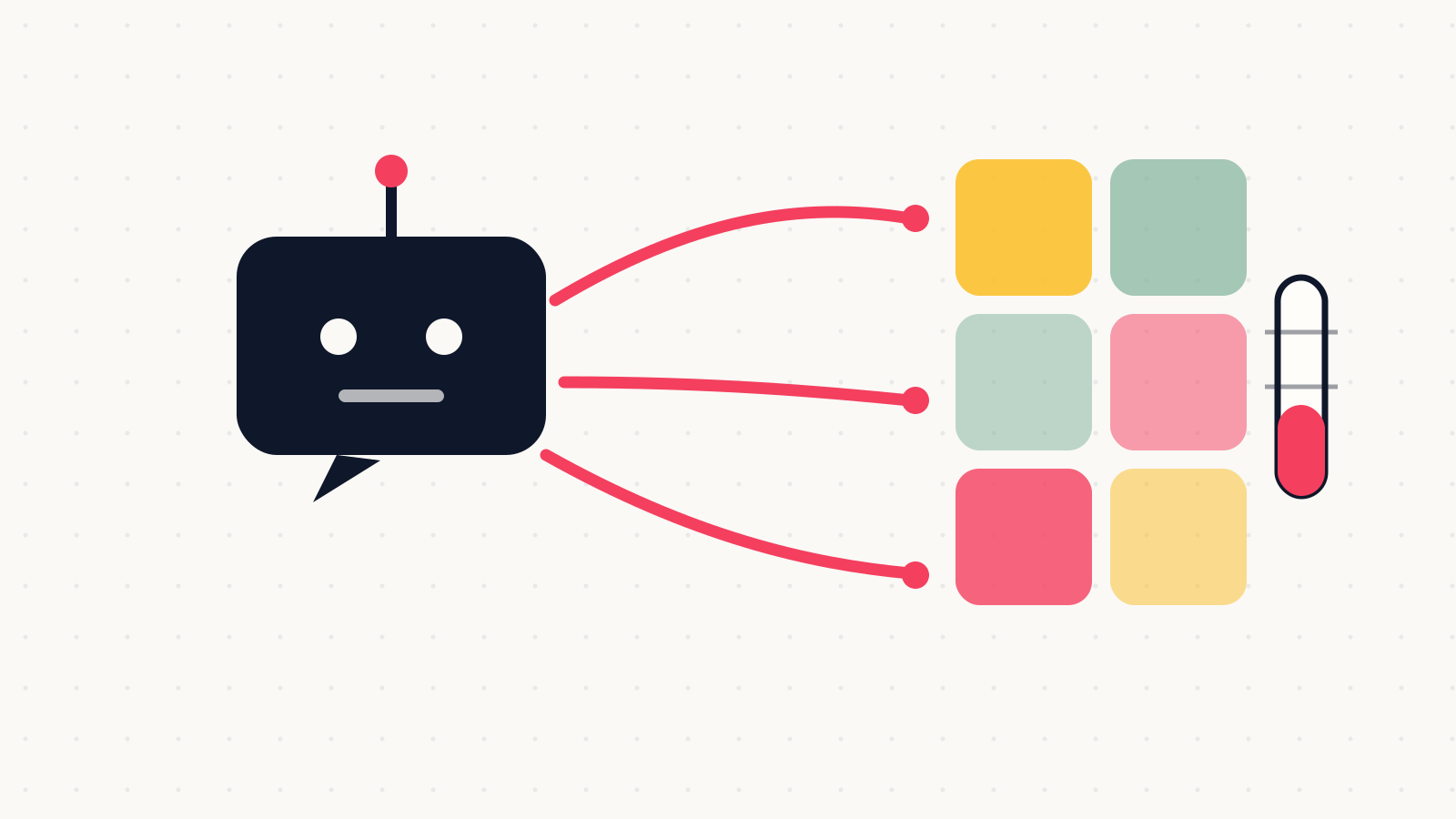
MCP — Model Context Protocol — is an open standard for handing AI assistants tools they can call. Anthropic open-sourced it; the industry adopted it. Zapier’s implementation is straightforwardly clever: rather than building one-off plugins per app, it exposes Zapier’s entire action catalog as MCP tools. Connect your AI client to your Zapier account once (their guided setup runs about five minutes), grant it specific apps and actions, and the assistant can execute those actions from a plain-language request — with an approval log so you can see what it did.
The permission model is the part to take seriously. "Control which apps and actions your AI can access" isn’t a feature bullet, it’s the whole safety story: an assistant that can send email as you and write to your CRM deserves the narrowest grant you can give it, widened only as it earns trust.
The cost math nobody leads with
MCP is included in existing Zapier plans — no separate product to buy. The catch is the meter: each MCP tool call consumes two tasks from your plan’s quota, the same pool your Zaps drain. We’ve written at length about how per-task pricing taxes your growth; MCP extends that meter to conversations. An AI session that checks your calendar, adds a contact, and sends two emails just spent eight tasks — and on the free plan’s 100 tasks a month, an enthusiastic assistant burns the month in a weekend.
That doesn’t make it a bad deal. It makes it a metered deal, and metered deals reward knowing your volume before you commit workflows to them.
Where it genuinely shines — and where a Zap still wins
MCP’s sweet spot is the irregular, judgment-shaped task: "find the thread with the roofing quote, draft a reply, and put a follow-up on my calendar." That’s not a workflow — it’s a one-off with three tools in it, exactly what an assistant with hands is for. The moment a task becomes regular and predictable — every new lead gets a text, every invoice gets logged — you want a boring, deterministic Zap or a platform workflow, not an AI improvising the steps each time. Deterministic automation is cheaper per run, doesn’t hallucinate, and fails loudly instead of creatively.
What about the rest of "Zapier AI"?
MCP is one piece of Zapier’s broader AI push — AI-drafted Zaps, AI steps inside workflows (summarize this, extract that), agent-style features that string actions together. The same lens applies to all of it: AI inside a workflow step is often genuinely useful; AI as the workflow adds a meter and a maybe to something that used to be free and certain. And every AI step is more tasks on the same bill, which is how a clever automation stack quietly becomes the biggest line item after payroll.
Give AI the judgment calls. Give the meter as few of them as possible.
Should you set it up?
If you’re already paying for Zapier and you live in Claude or ChatGPT all day: probably, narrowly scoped — it’s five minutes, and the one-off-task pattern is real. If you’re volume-sensitive or your needs are regular rather than improvised, the answer is the same one we give about Zapier generally versus the alternatives: match the tool to the shape of the work, and put the high-volume stuff where there’s no meter.
And if you’d rather someone map that for you — which workflows belong in deterministic automation, where an AI assistant actually earns its tasks, and what AI is worth wiring into your stack at all — that’s literally the AI integration conversation. Book a strategy call; DIY tools are user-friendly, but they don’t sit down and learn your business first. We do.
John "Holliday" Mahlow
Founder, Cursive Media