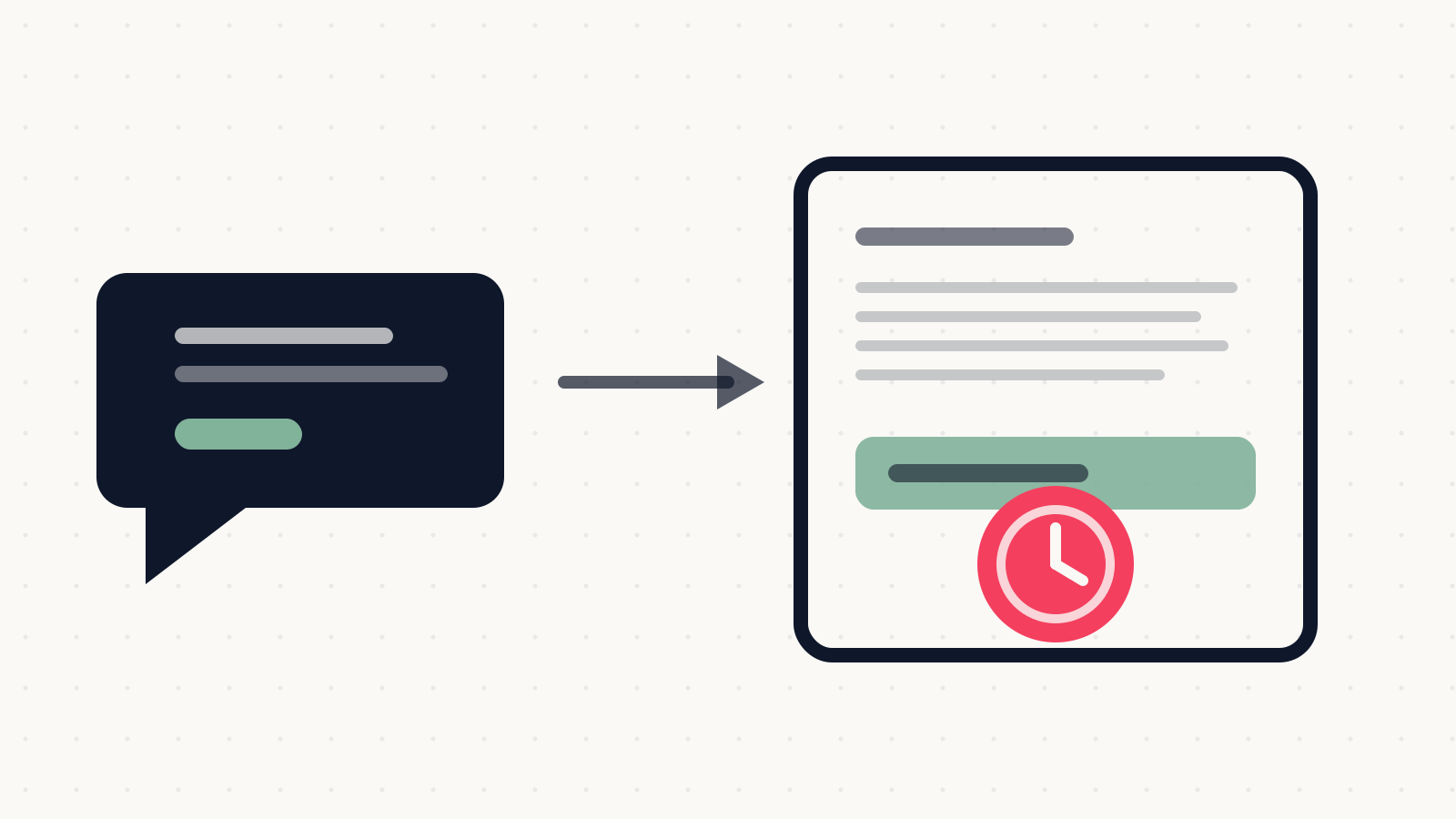

Your quote is read cold, days later, next to two others.
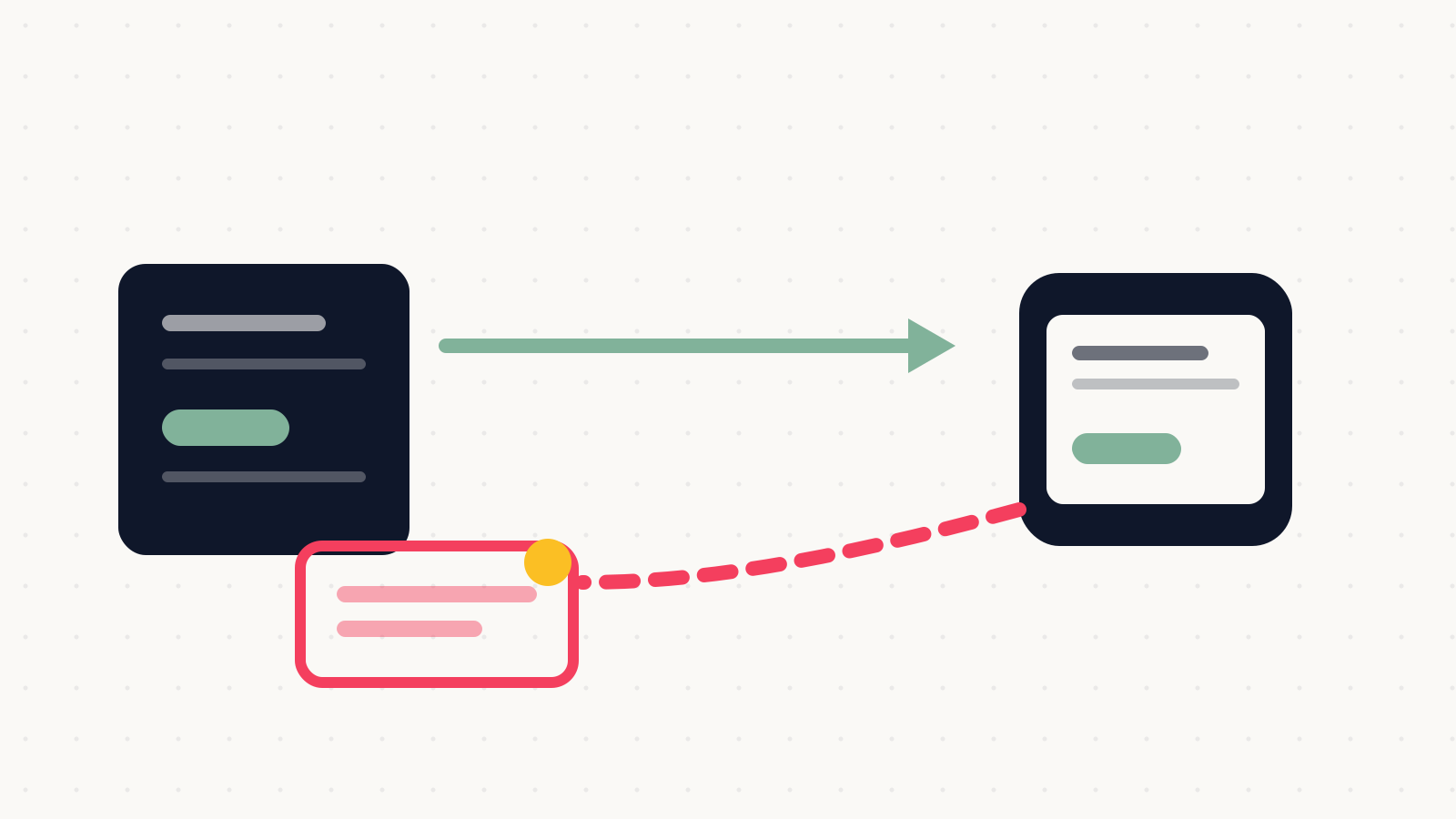
A single number cannot be checked, so it gets compared on price alone. The document that wins is the one a stranger can verify without ringing you.
John "Holliday" Mahlow
Founder, Cursive Media
Most estimates go out as a figure in the body of an email, written by somebody who has just come off a roof and wants the evening back.
Who is actually reading it
Not the person you met. Or not only them.
The quote is opened three days later, at a kitchen table, alongside two other quotes, frequently by a second person who was not there when you looked at the job and has no memory of what you said about the pipework. Everything persuasive you did on the visit has evaporated by then. The document is on its own.
A number cannot be checked
This is the whole problem with the one-line quote. Faced with three figures and no way to tell what separates them, a reader does the only comparison available, which is the arithmetic one.
An itemised quote does not win because it is cheaper. It wins because it can be verified. When somebody can see that your price includes the permit and the disposal and the second visit to fit the part, and the cheaper quote does not mention any of those, the gap stops looking like a saving and starts looking like a question.
The section nobody writes
What is not included.
Almost every dispute in service work traces back to an assumption that lived in one head. The customer thought the old unit would be taken away. You thought that was obvious. Neither of you wrote it down, and the argument happens in a driveway with a van already loaded.
A short exclusions list reads as honesty rather than as hedging, and it is the cheapest insurance available to a small business. It also does quiet sales work, because it shows a reader that you have thought about the job carefully enough to know its edges.
What happens if you find something
The other question every homeowner has and few ask out loud: what if it turns out to be worse than you thought?
Answer it in the document. State what happens if additional work is discovered, that you will stop and quote it before proceeding, and roughly what that costs to assess. Fear of the open-ended bill kills more jobs than price does, and a paragraph removes it.
The details Texas may require on it
Worth checking against your own trade, because at least one of them puts requirements on this exact document. Texas electrical contractors must carry their name, address, telephone number and licence number, along with TDLR contact information, on all proposals, invoices and written contracts.
That is the electrical rule specifically, and other trades sit with other regulators, so confirm yours. The point that generalises is that the quote template is a compliance surface as well as a sales one, and it usually gets rebuilt around a logo without anybody checking what the old version was carrying.
Options, if you offer them
Three tiers can be genuinely useful or quietly manipulative, and the difference is whether the options describe different scopes or the same scope at different prices.
Real options let somebody choose how much of the problem to solve this year, which is the decision they are actually making. Naming the smallest honest version is the same move that rescues a stalled quote, and it is better placed in the document than in a chase email a fortnight later.
If your quotes go out as a number and you are losing work you should be winning, book a strategy call. Rebuilding the template is an afternoon, and it is the piece of sales collateral most small businesses have never once looked at as a document.
John "Holliday" Mahlow
Founder, Cursive Media