What happens when customers reply to automated texts.
Most businesses design the outbound message carefully and never design the return path. The replies land somewhere, and somewhere is usually nowhere.
John "Holliday" Mahlow
Founder, Cursive Media
- Read time
- 4 min read
- Written
Reminder sequences, review requests, follow-ups on a quote. Businesses spend real thought on what those messages say and almost none on what happens when somebody answers one.
People do answer. A text is a conversation to the person receiving it, whatever it was to the system that sent it.
The three places a reply disappears
The first is a number that cannot receive. Some setups send from something that only sends, so the reply bounces or vanishes and the customer concludes you ignored them.
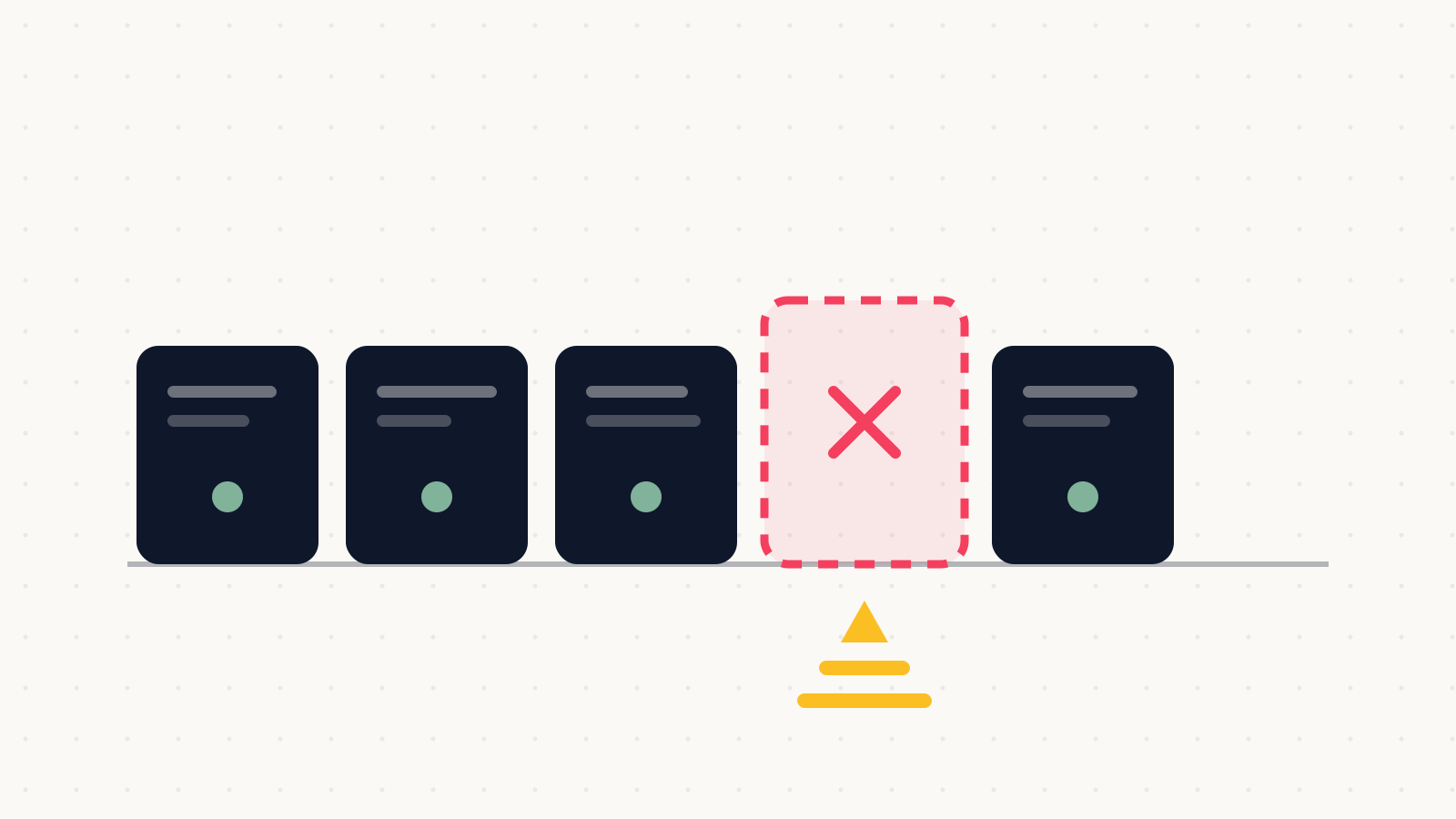
The second is an inbox inside the marketing platform. The reply arrives correctly, lands in a conversations view, and sits there because nobody on the team has that tab open during a working day. This is the most common version and the hardest to notice, because everything is technically working.
The third is a shared mailbox that used to be checked by somebody who has since changed roles. That one is indistinguishable from the second until you go looking.
The opt-out that does not use the magic word
Here is the case worth designing for deliberately, because it sits in a gap between two different things your platform does.
Automatic opt-out runs on a keyword list. STOP is the familiar one, and the recognized set extends to a handful of others like UNSUBSCRIBE, CANCEL, END and QUIT. Type one of those and the system acts on it without a human involved.
The obligation, though, attaches to consent being revoked, not to the spelling. The policy language is about a recipient revoking previously provided consent, after which one final confirming message is permitted and anything further is prohibited.
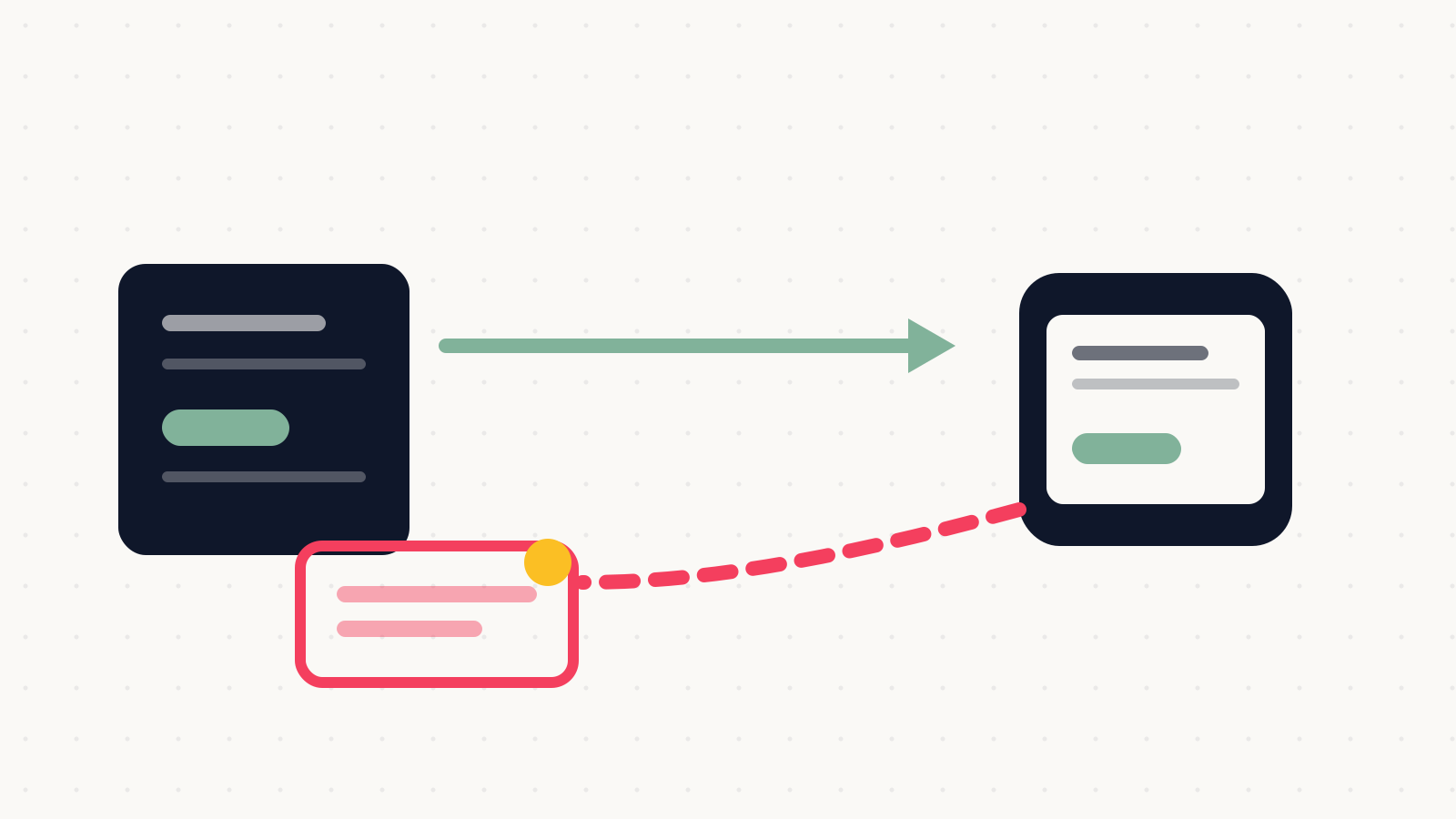
So consider the customer who replies "please stop texting me", or "take me off this list", or something considerably less polite at eleven at night. In ordinary English that person has revoked. In keyword terms they may have done nothing at all, and if the reply is sitting in an unread inbox, your sequence carries on for another two weeks.
Whether that gap creates legal exposure is a question for a lawyer. Whether it creates an angry customer is not really in doubt.
The reply that was a sale
The mirror image is the one that costs money quietly. A reminder goes out and the customer replies asking whether you can come Thursday instead. A review request goes out and somebody answers with a problem you could have fixed. A quote follow-up gets a one-word "how soon?".
Every one of those is a person raising their hand at the exact moment they were thinking about you, which is the most expensive moment in the whole relationship to be unavailable. What makes it worse than a missed call is that nothing about it registers as a loss. A missed call at least leaves a number in a log that somebody might scroll past that evening. A reply that sits unread in a platform inbox leaves no trace anywhere the business looks, so the inquiry is never counted, never followed up, and never appears in any report as the thing that did not happen. It simply becomes a customer who went quiet, filed mentally under people who were not that interested.
Design the return path
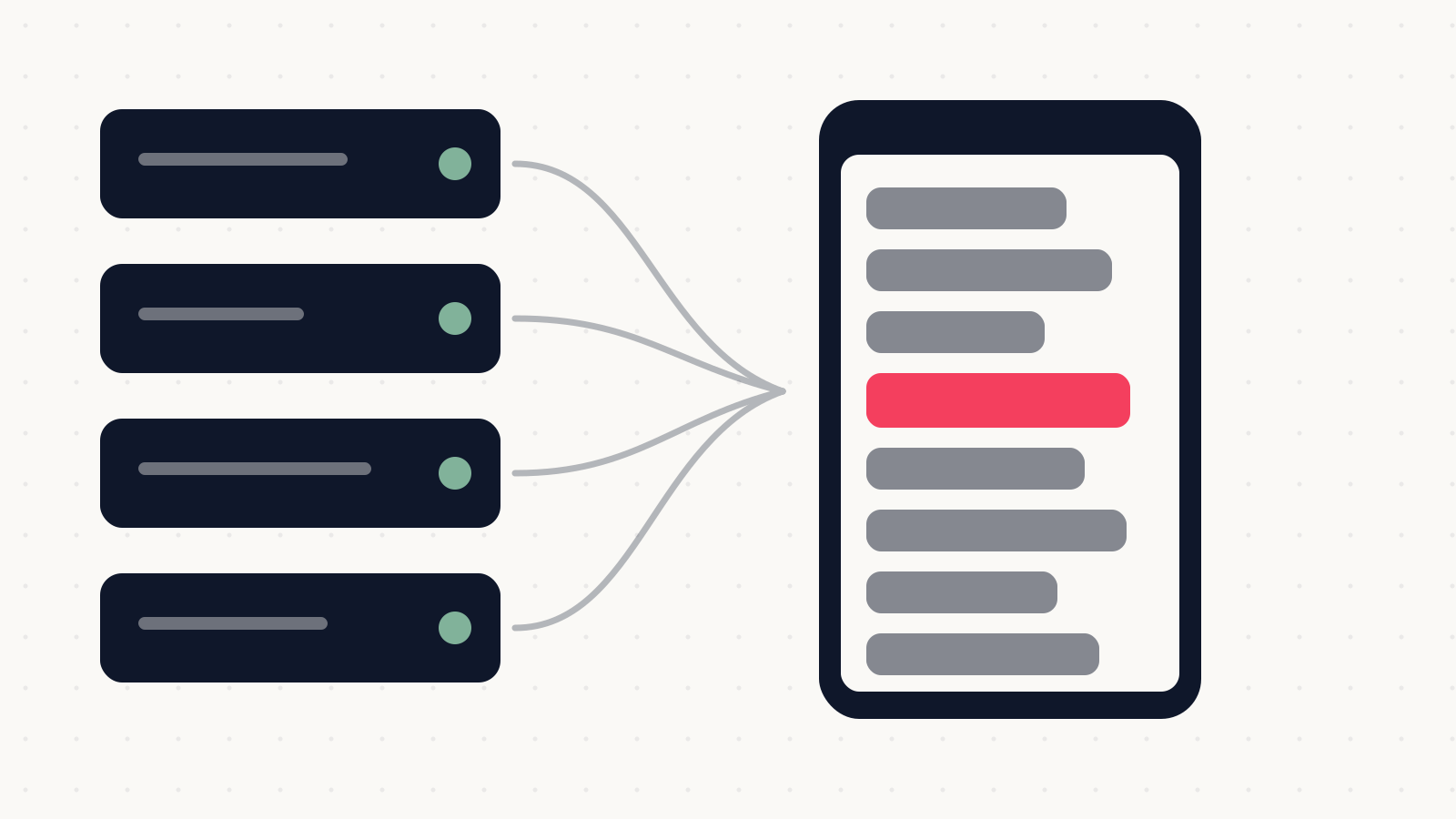
Route replies to where humans already are rather than to a place they would have to remember to visit. For most small businesses that means the phone somebody already holds, not a tab in a platform they open on Mondays.
Then set an alert on the absence rather than on the event, because a notification that fires on every reply gets muted within a week. What you want is somebody being told when a reply has gone unanswered for an hour, which is a different and much quieter signal.
And decide in advance who owns replies during a job.
Automations run at nine in the morning, while the people who could answer them are under a house.
Test it the way a customer would
Send yourself the sequence from a number nobody at the business recognizes, then reply to it three times: once with a question, once with STOP, and once with a sentence asking to be left alone.
Watch where each one lands and how long it takes anybody to notice. Ten minutes of that tells you more than any dashboard, and it is the same habit that catches a broken contact form before a quarter of inquiries have gone missing.
Handing a conversation to a human at the right moment is the automation work most sequences skip. If you are running sequences and genuinely do not know where the replies go, book a strategy call. Finding out takes one test, and it is usually the cheapest fix available to a business that already has the traffic.
John "Holliday" Mahlow
Founder, Cursive Media