
Texas has an AI law. The disclosure rule you were warned about is not yours.
TRAIGA took effect in January with real civil penalties. The requirement to tell people they are talking to AI is written for government agencies, not your business.
John "Holliday" Mahlow
Founder, Cursive Media
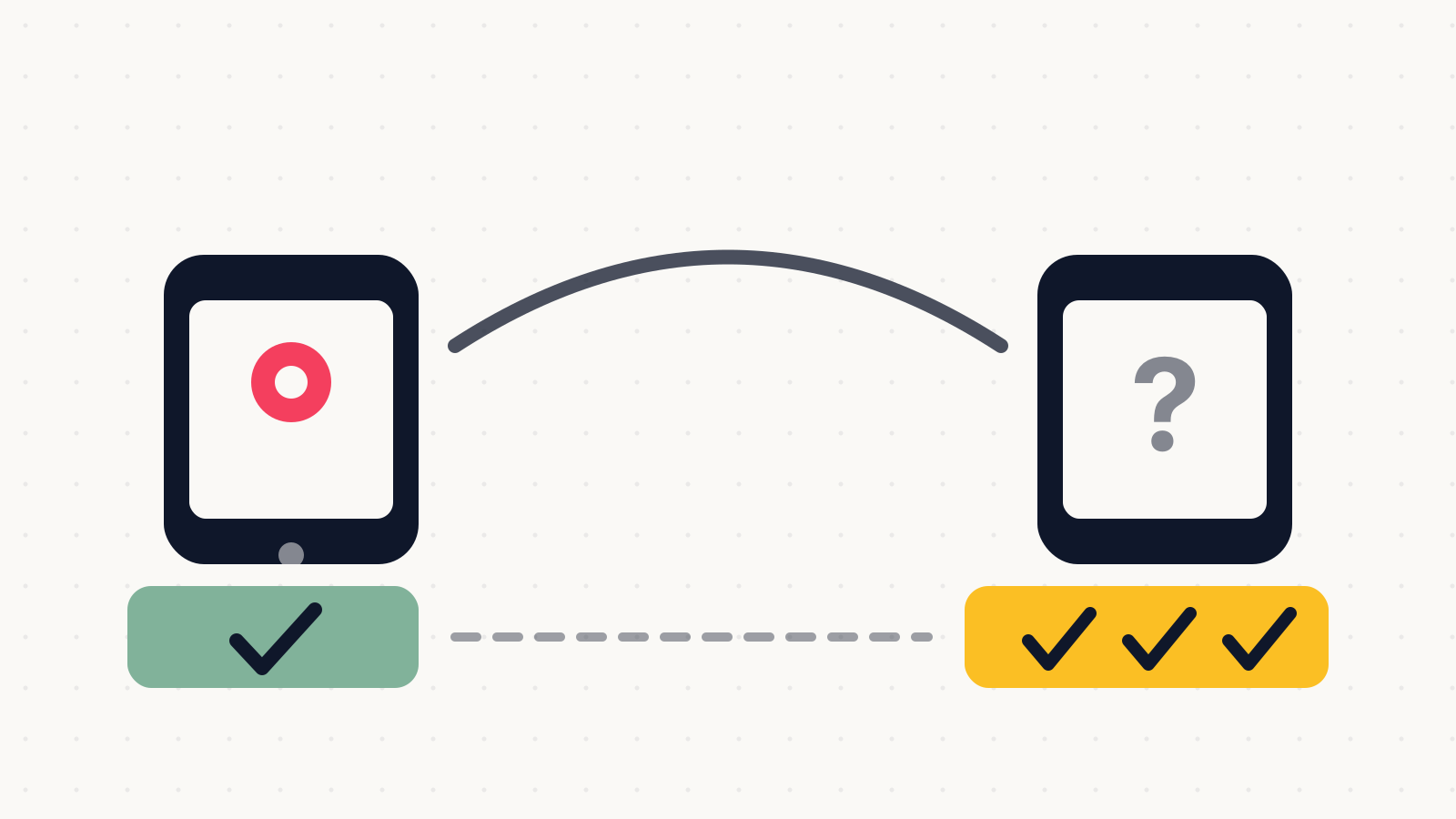
If you run an AI receptionist or a chatbot, somebody has probably told you that Texas now requires you to announce it to every caller, and that the penalties are severe.
Half of that is right. Nothing here is legal advice, and how any of it applies to your business is a question for a lawyer.
The law is real and it is in force
House Bill 149, the Texas Responsible Artificial Intelligence Governance Act, took effect on 1 January 2026. Its caption is unambiguous about the teeth: regulation of the use of artificial intelligence systems in this state, providing civil penalties.
It also reaches private businesses. The Act applies to entities that promote, advertise, conduct business, produce products or services, or develop or deploy AI systems in Texas, which is a wide net and includes the local company running a chatbot it did not build.
Who the disclosure duty actually falls on
Here is the sentence the warnings are built on, quoted as it stands: a governmental agency that makes available an artificial intelligence system intended to interact with consumers shall disclose to each consumer, before or at the time of interaction, that the consumer is interacting with an artificial intelligence system.
A governmental agency.
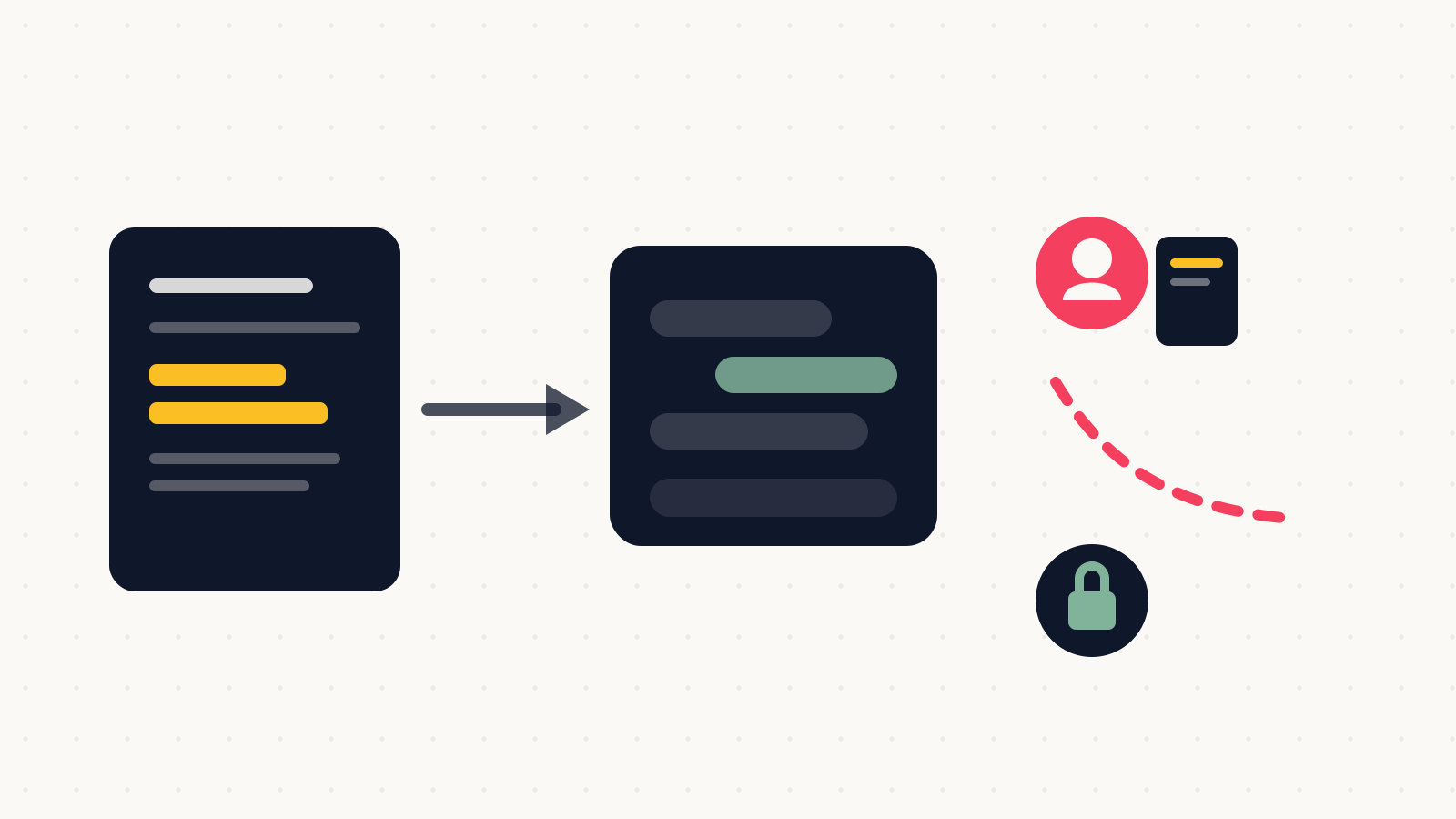
That duty is written for the state and its agencies rather than for a plumbing company with an answering bot. Some other provisions are government-only as well, including the prohibitions on social scoring and on biometric identification pulled from internet sources without consent.
So the specific claim, that Texas law obliges your business to announce its AI to callers, does not survive reading the provision it comes from.
What does apply to a private business
Being outside one clause is not being outside the Act, and the prohibitions that reach further are worth knowing even though most are far from ordinary commercial use.
They cover developing or deploying AI to manipulate behaviour into self-harm, violence or crime; to infringe constitutional rights; to discriminate unlawfully; or to produce child exploitation material or sexual deepfakes.
The common thread is intent. These are not accident provisions, and the discrimination clause makes that unusually explicit by requiring intent and stating that disparate impact alone is insufficient to prove a violation. That is a narrow standard, and it is narrower than the one most compliance marketing implies.
The numbers, and the sixty days
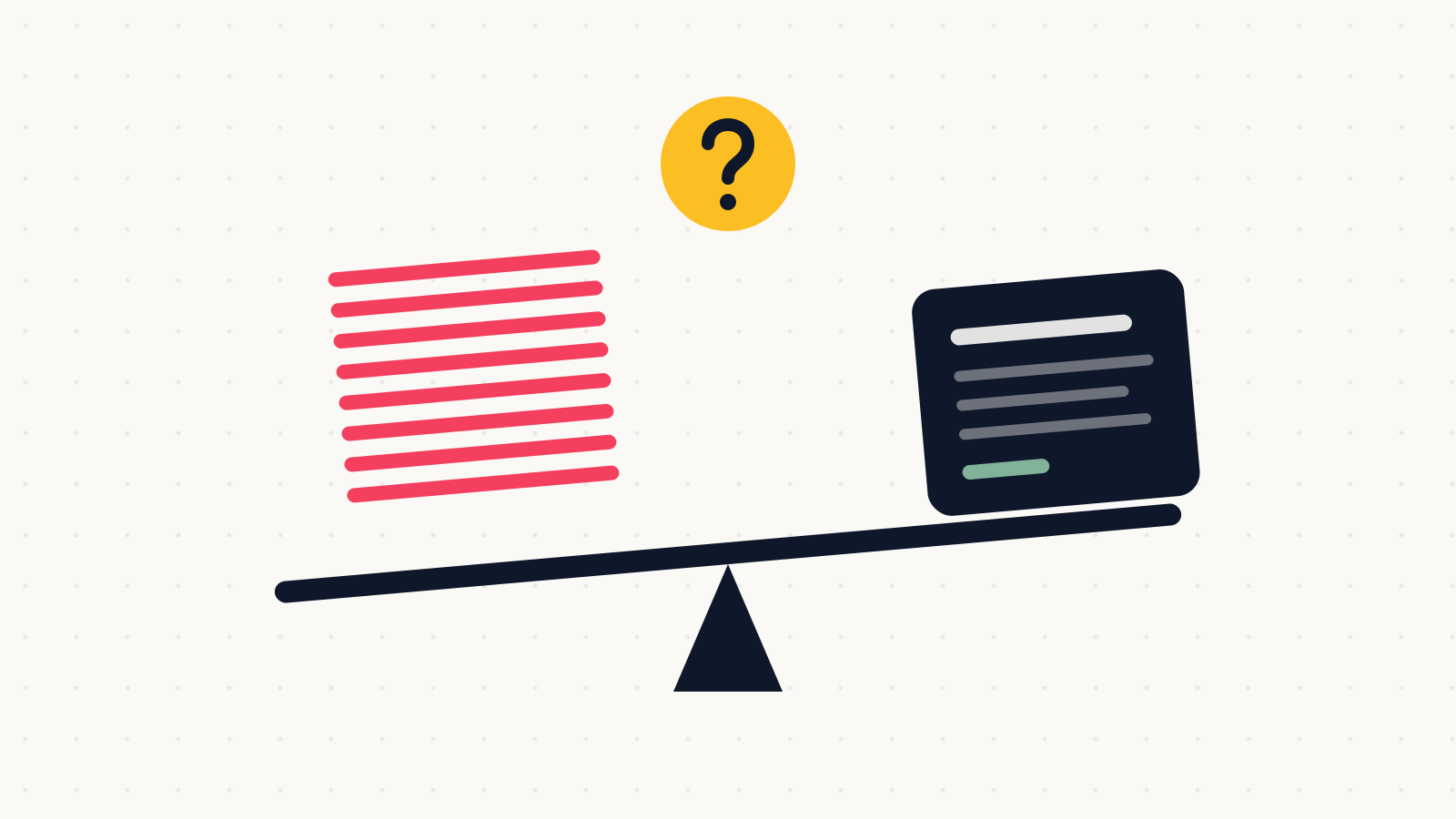
Civil penalties run from $10,000 to $12,000 for a curable violation, and from $80,000 to $200,000 for an uncurable one, with continuing violations charged between $2,000 and $40,000 a day.
There is a 60-day cure period before enforcement, which is the detail that turns those figures from a threat into a process. There is also a regulatory sandbox allowing limited testing for up to 36 months, and no small business exemption written into the Act.
Disclose anyway
Correcting the legal claim is not an argument for silence, and we would say the same thing if the statute did not exist.
Tell people when they are talking to a machine. It is the position we have taken on automated reminder texts and on AI answering the phone, and the reasoning has nothing to do with Texas. Customers work it out anyway, usually about four seconds in, and the ones who feel they were tricked are the ones who tell other people about it.
The difference is why you are doing it. A disclosure made because a vendor frightened you into it tends to arrive as a legalistic sentence bolted to the front of an interaction, written to satisfy a clause rather than a person, and it reads exactly like what it is. A disclosure made because you would rather be straight with people ends up as one plain line at the start of the call, delivered once, in the same voice as everything after it. Customers barely register the second version and remember the first, which is the opposite of what the compliance framing predicts. That is usually the tell that a rule has been followed rather than understood.
If somebody has sold you a compliance package on the strength of that disclosure rule, book a strategy call and bring the email. And if you think you may genuinely sit inside one of the prohibitions above, that conversation belongs with an attorney rather than with us.
John "Holliday" Mahlow
Founder, Cursive Media