AI call recording and consent: what Texas businesses should know.
Texas allows recording with one party’s consent. California requires everyone’s. A phone number does not tell you which of those you are standing in.
John "Holliday" Mahlow
Founder, Cursive Media
- Read time
- 4 min read
- Written
An AI receptionist answers the phone, takes the details, and writes you a summary. A call-quality tool transcribes what your team said. Both of those are recording, and in most businesses nobody sat down and decided to become a company that records its customers.
This is criminal-statute territory in places, so treat what follows as background rather than advice, and take the actual question to a lawyer.
Where Texas sits
Texas is a one-party consent state, and the statute frames it as an affirmative defense. A person not acting under color of law may intercept a communication if that person is a party to it, or if one of the parties has given prior consent, unless the interception is for the purpose of committing an unlawful act.
For a business recording its own calls, that is a comfortable position. You are a party to the conversation.
Why that is not the end of it
States differ, and some require everybody to agree. California is the clearest example: its statute reaches a person who, intentionally and without the consent of all parties to a confidential communication, uses a recording device to record it.
Now put that next to how phones actually work.
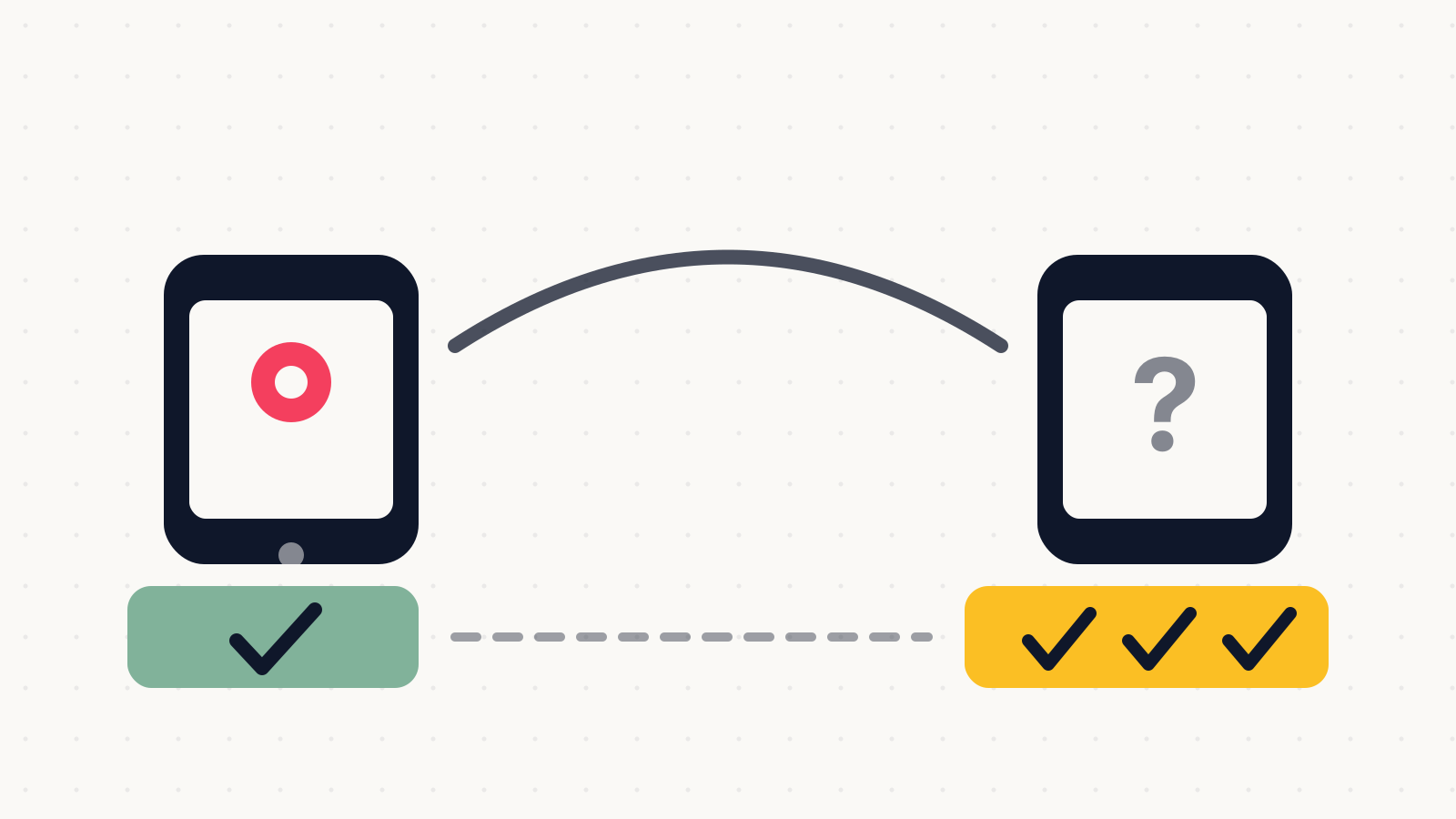
A cell number tells you where somebody bought a SIM card years ago, not where they are standing when they call you. The 713 number ringing your office might be a customer sitting in Houston, or the same customer visiting their daughter in San Diego, and nothing on your screen distinguishes the two. Businesses that only ever serve their own city still take calls from people who are somewhere else that week.
Two states verified here, and there are forty-eight more with their own rules that this post has not checked. That is precisely the point: the answer is not one answer.
The part that is specific to AI
Traditional call recording was a deliberate purchase. Somebody bought a system, switched it on, and knew it was running.
AI tooling arrives differently. Recording is a by-product of the feature you actually wanted, which was the summary, the transcript, the sentiment score, or the receptionist that never sleeps. The recording happens because it has to, not because anybody chose it, and that changes what the business knows about its own behavior.
Three questions worth being able to answer. Whether the tool records at all, or only transcribes and discards. Where the audio and the transcript are stored, and for how long. And who can listen, which is a tier-and-account question rather than a feature question.
If nobody at the business can answer those, the honest position is that you do not currently know what you are doing with your customers' voices.
The announcement exists for a reason
Everybody has heard the line about calls being recorded for quality and training, and it is easy to read as corporate throat-clearing.
It is doing real work. An announcement at the start of a call gives the other party the information they need and the option to hang up, which is the cleanest way to make the consent question stop being interesting. It costs one sentence.
If you run an AI receptionist, that sentence sits naturally next to the one telling people they are speaking to an automated system, which we argue for on its own merits regardless of what any statute requires.
What to check this week
Call your own business, on a line that goes to whatever answers it now, and listen to the first ten seconds. Then find the retention setting in whichever tool is doing the recording, and find out whether anybody chose the number that is in it.
Deciding what an assistant records, discloses and stores is part of how we put AI into a business, and it is a decision worth making before launch rather than after. If you are deploying an AI receptionist and want the recording and disclosure questions settled before it goes live rather than after, book a strategy call. We can tell you what the tool does; whether your particular call pattern needs more than a one-party rule is a question for your attorney.
John "Holliday" Mahlow
Founder, Cursive Media