
Your testimonials page is the least believable thing on your website.
The stars you are hoping for in search are explicitly unavailable for reviews you control, widgets included. The reason that rule exists is the same reason the page underperforms.
John "Holliday" Mahlow
Founder, Cursive Media
- Read time
- 5 min read
- Written
Five quotes, all positive, most of them signed with a first name and an initial. Every small business website has this page, and almost nobody visits it.
The page is not the problem. The reason it was built usually is.
The stars are not coming
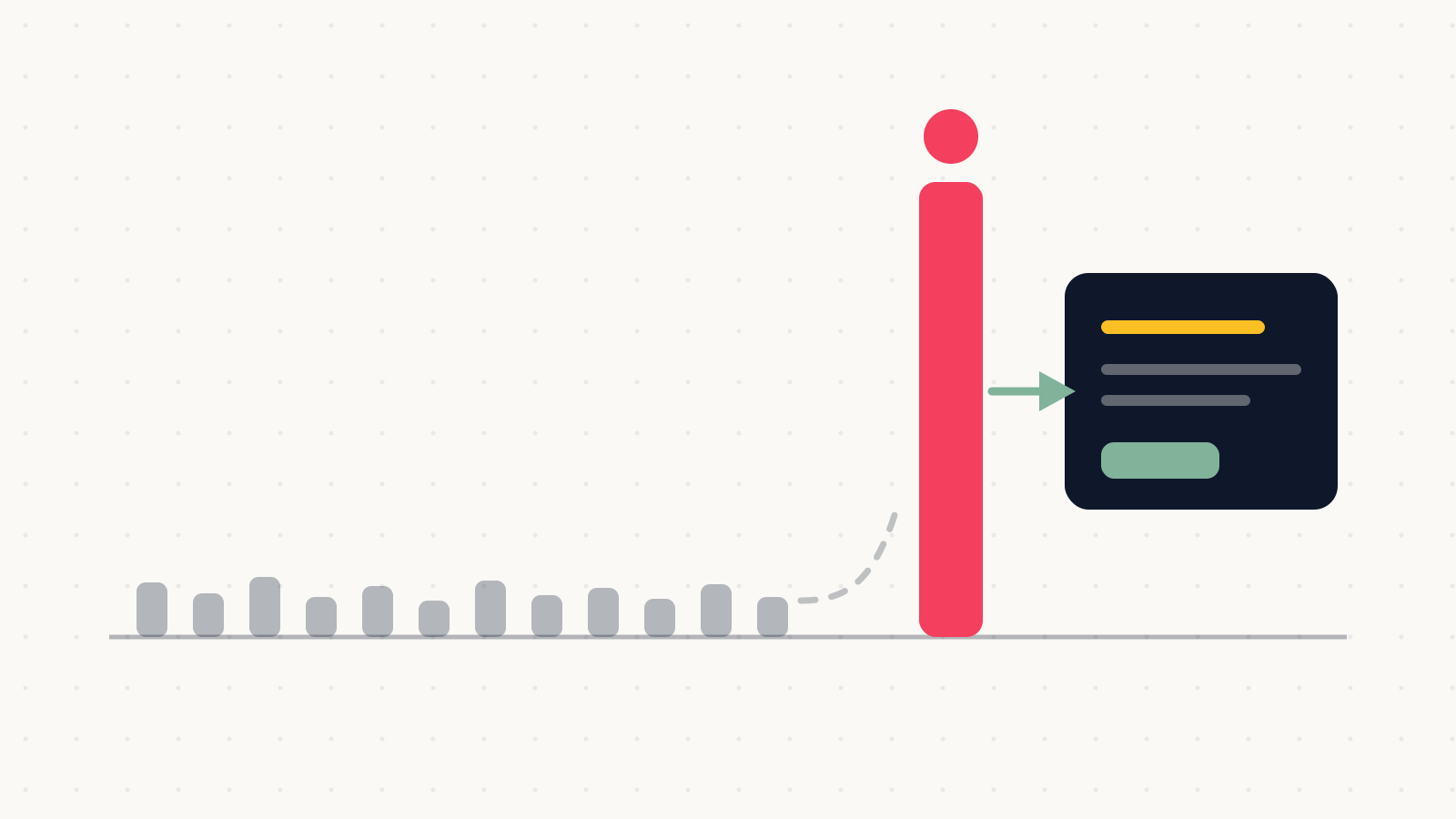
A great deal of this gets installed in the hope of one specific outcome: gold stars appearing under the site in search results.
Google's documentation rules it out in a single sentence. If the entity being reviewed controls the reviews about itself, its pages using LocalBusiness or any other Organization structured data are ineligible for the star review feature.
And the obvious workaround is already closed. The rule applies whether the reviews sit in your structured data directly or arrive through an embedded third-party widget, so the plugin that promises rich snippets is promising something the policy does not permit in that position. There is a related line worth reading alongside it: ratings must be sourced directly from users, and Google says not to rely on human editors to create, curate or compile ratings information for local businesses.
The rule is not arbitrary
It is tempting to read that as Google being awkward. It is closer to Google noticing something true about how people read.
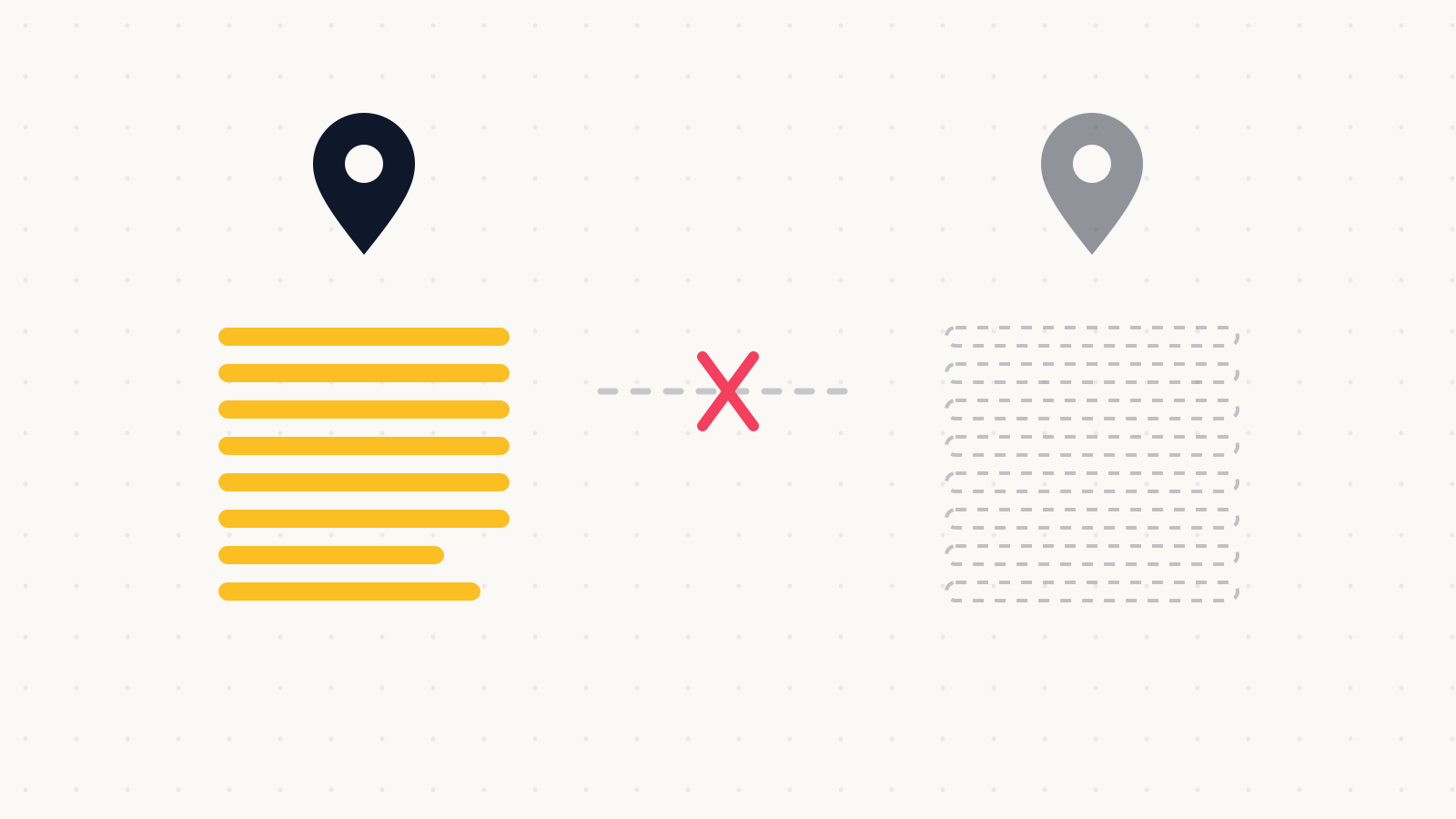
A review is persuasive because the reader believes you could not have chosen it. That is the entire mechanism. Strip that away and the words are identical while the meaning has gone, which is why a wall of praise on a company's own site is discounted almost instantly by the person reading it, and why nobody has ever been convinced by a page they knew was curated.
Selecting your five best quotes is exactly the act that makes the five quotes stop working.
What actually survives the discount
Detail the business would not have invented.
A testimonial that says great service and highly recommend has told the reader nothing they did not assume you would publish. One that says the first company canceled twice, these people came out on a Saturday, and the bill matched the quote is doing something different, because it contains information. It names an alternative and a specific behavior, neither of which a business writing its own praise would think to include. It also happens to answer the question the reader actually had.
The useful ones tend to include something faintly unflattering. A job that took longer than expected and how that was handled reads as true in a way that no superlative manages.
Point at what you do not control
The stronger move for a local business is to send people to the reviews you demonstrably did not pick.
Your Google reviews carry weight precisely because the bad ones are sitting there too, in public, next to the good ones. That is the asymmetry that makes the rating do so much of the work before anybody reaches your site, and linking to it is more persuasive than reprinting selections from it. A visitor who clicks through and finds ninety reviews with a scattering of complaints and your replies underneath has learned more than any testimonials page could tell them.
Which makes asking for reviews properly the higher-value activity by some distance. It feeds the thing that works rather than the thing that looks like it should.
Where to put the ones you keep
Not on a page called Testimonials.
Proof works next to a decision, which means the quote from somebody who had the exact problem belongs on the page about that problem, where a reader is deciding whether you handle it. A dedicated page is a filing decision rather than a persuasion one, and it moves your best evidence away from the moment it was needed.
Proof that works sits next to the decision, which is a build question, and the reviews behind it are the reputation work. If your site has a testimonials page and you are not sure it is earning its space, book a strategy call. Usually the fix is not writing better quotes. It is moving three of them and deleting the rest.
John "Holliday" Mahlow
Founder, Cursive Media