
Search terms vs keywords: where Google Ads budget leaks.
Your keywords expand to close variants automatically. Google documents that your negative keywords do not. The matching leans one way, and it is not yours.
John "Holliday" Mahlow
Founder, Cursive Media
- Read time
- 5 min read
- Written
You bought water heater repair. The invoice at the end of the month covers considerably more subjects than that.
Most people running a small ads account have never seen the list of what they actually paid for.
Two words that sound like one thing
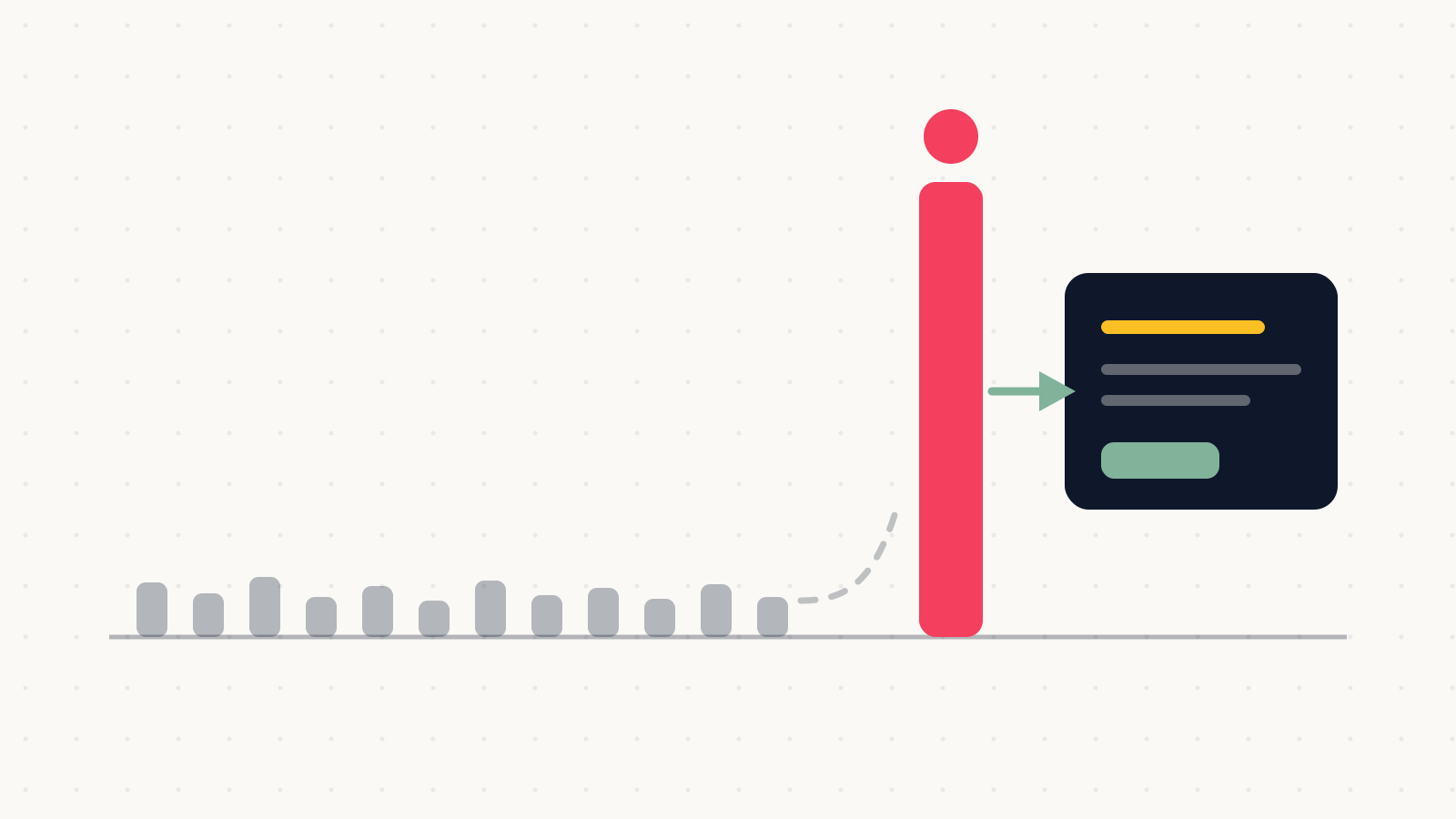
Google keeps them separate on purpose. A keyword is a word or set of words an advertiser adds to an ad group. A search term is a word or set of words a person enters when searching.
You control the first list. You are billed on the second. Everything worth knowing about a small ads account lives in the distance between them.
The report that shows the gap
There is a search terms report, and it does exactly what the name suggests: it shows the searches that triggered your ads and how those searches performed.
Opening it for the first time is usually an unpleasant twenty minutes. It is also the only honest document in the account, and if somebody is running ads on your behalf and has never sent it to you, that is a reasonable thing to ask about before you ask about anything else.
The matching is not symmetrical
Here is the part that surprises people who assumed the controls worked in both directions.
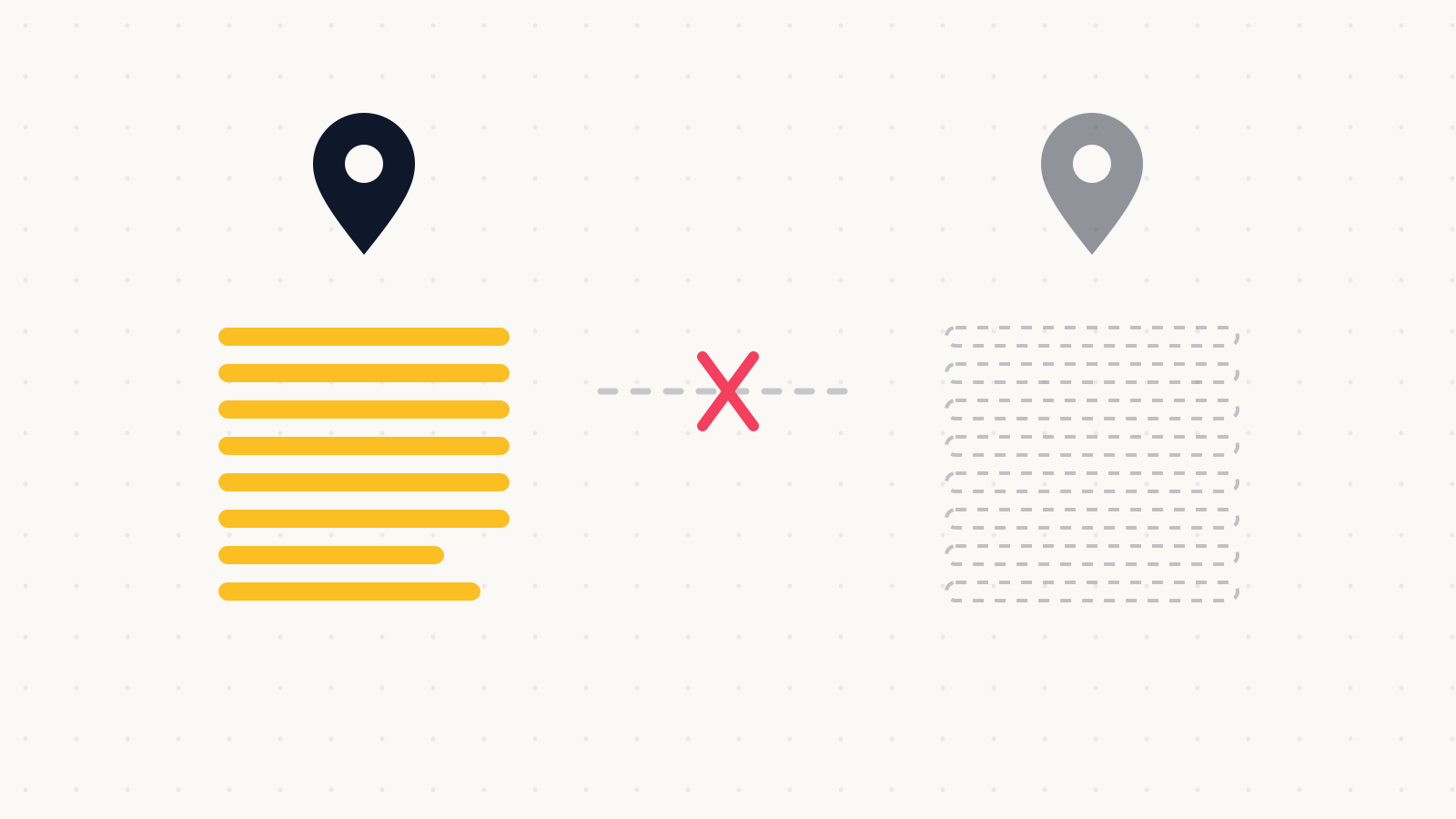
Your positive keywords expand. Google matches close variants and related searches to them, which is the entire mechanism by which you end up paying for phrasings you never typed. Your negative keywords do not expand. Google's documentation states it plainly: negative keywords will not match to close variants or other expansions, and you will need to add synonyms and singular or plural versions yourself if you want those excluded.
Read that as a design decision and it explains the shape of every wasted dollar. The system reaches outward on the side that costs you money and sits still on the side that saves it. Blocking one word does not block its plural, and it does not block the way somebody else would phrase the same idea.
There is a second trap inside the defaults. Broad match is the default for negatives, and with it your ad is withheld only when the search contains all of your negative terms, in any order. A two-word negative is therefore narrower than it looks, because a search containing just one of those words sails straight through.
And you cannot see all of it
The report has a documented gap of its own.
Google omits search terms that do not have enough query activity, on data privacy grounds. So a portion of what you paid for never appears in the place you would go to block it, which is worth knowing before anybody promises you a fully cleaned account. You are tidying the visible part.
What to do about it
Read the report on a schedule, not once at setup. It is the only place the truth lives, and it changes as the auction does.
Then block by intent rather than by individual word. The categories that drain a trades account are consistent: people looking for a job rather than a service, people wanting to do it themselves, people who added free or cheap or DIY, students and researchers, and searches for the adjacent trade you do not actually do. Group them, and remember you have to spell out the plurals and the synonyms yourself, because nothing else will.
The larger question underneath
If nobody has opened that report in six months, the account is not being managed. It is being paid for.
That is worth establishing before you argue about bids or budgets, in the same way that checking your own numbers before an agency call changes what kind of conversation you get to have. It is also worth asking whether Search is the right product for you at all, since the alternative charges per lead rather than per click and puts none of this on you.
Reading that report monthly is part of how we run paid search, and it is usually the fastest money an account gets back. If you are running ads and cannot remember the last time you saw what they matched, book a strategy call and we will pull the report together. It is usually the fastest money any account gets back.
John "Holliday" Mahlow
Founder, Cursive Media