Temporarily closed vs special hours on Google: which to use.
Special hours and Temporarily closed are not interchangeable. One is an availability note; the other can push you behind open competitors in search results.
John "Holliday" Mahlow
Founder, Cursive Media
It is August on the Gulf Coast, which means a number of local businesses are going to close for a stretch this season without much warning. Others will shut for a renovation, a family emergency, or two weeks in a quieter month.
The Google decision gets made in about fifteen seconds by somebody with larger problems, and it has consequences that outlast the closure.
The seven-day line
Google draws a specific boundary between its two controls, and it is worth knowing before you need it.
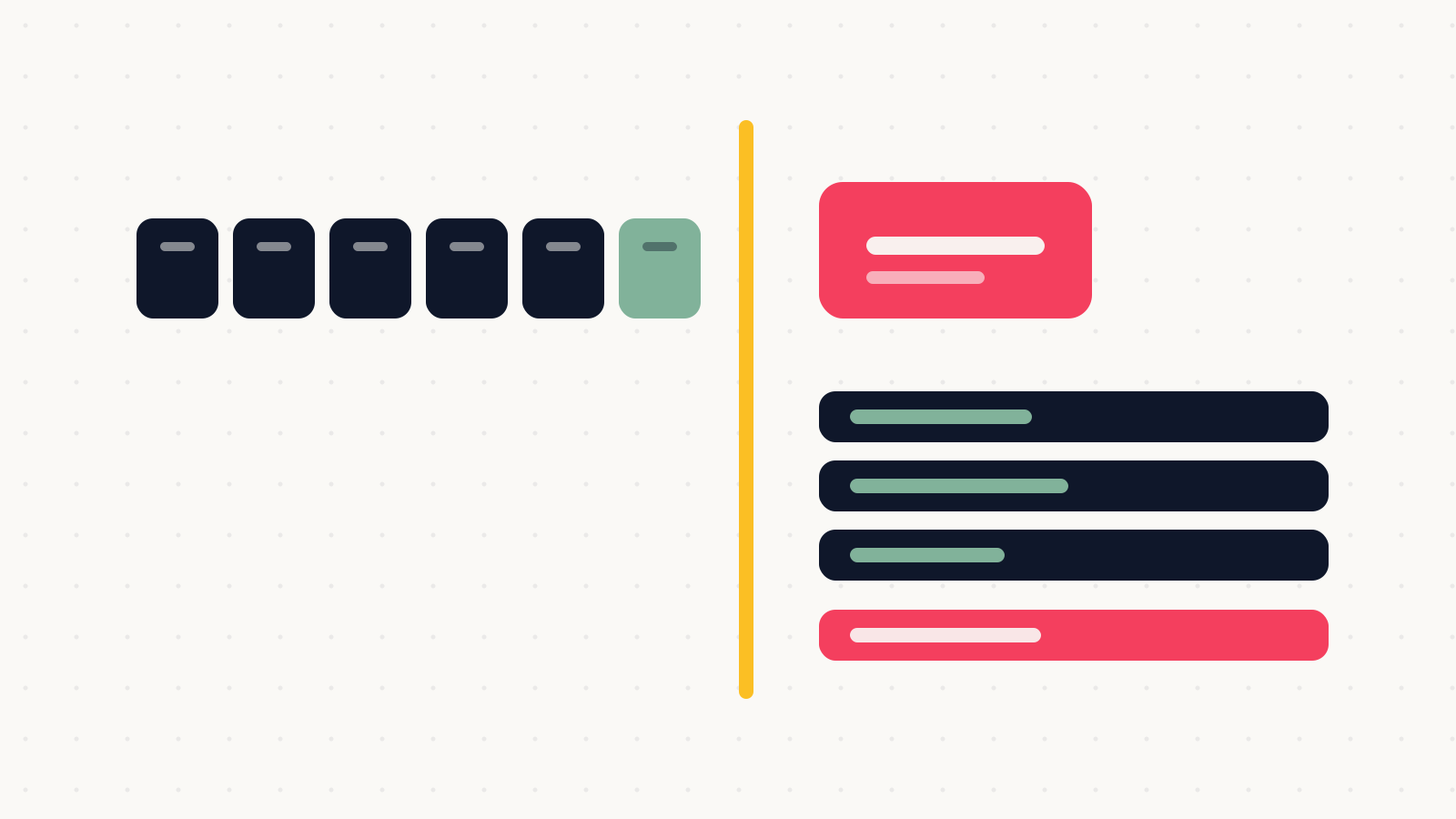
Seven days or less: use Special hours. More than seven days, an off-season, or an indefinite closure: use Temporarily closed. Special hours themselves cap at six consecutive days, which is the same line viewed from the other direction.
That distinction is not cosmetic, and the reason is in the next section.
Temporarily closed is a visibility decision
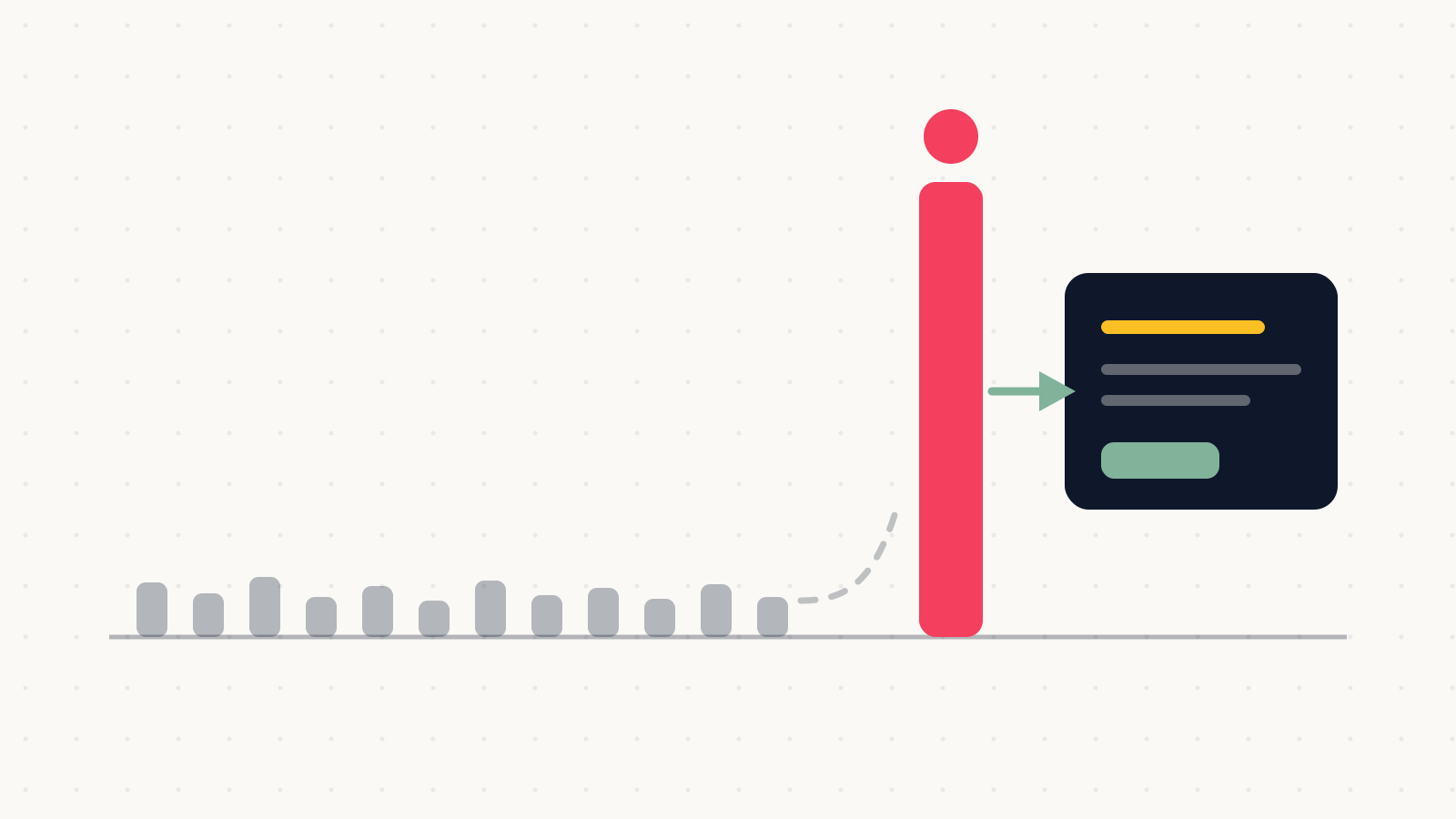
This is the part almost nobody knows. In Google's own words, for broad queries, temporarily-closed businesses can rank after open businesses. It notes the effect depends on your category, the type of query, and how many comparable businesses are also closed.
Read that in the context of a regional weather event, when every plumber in your county might be marked closed at once and the searches are as broad as they ever get.
It does not mean you should lie about being open. A business that cannot answer the phone gains nothing from appearing available, and a customer who drives to a locked door writes a review about it. It does mean the setting has a cost, which is a good argument for using Special hours when the closure genuinely fits inside them, and for reopening promptly rather than whenever somebody remembers.
The one to never touch by accident
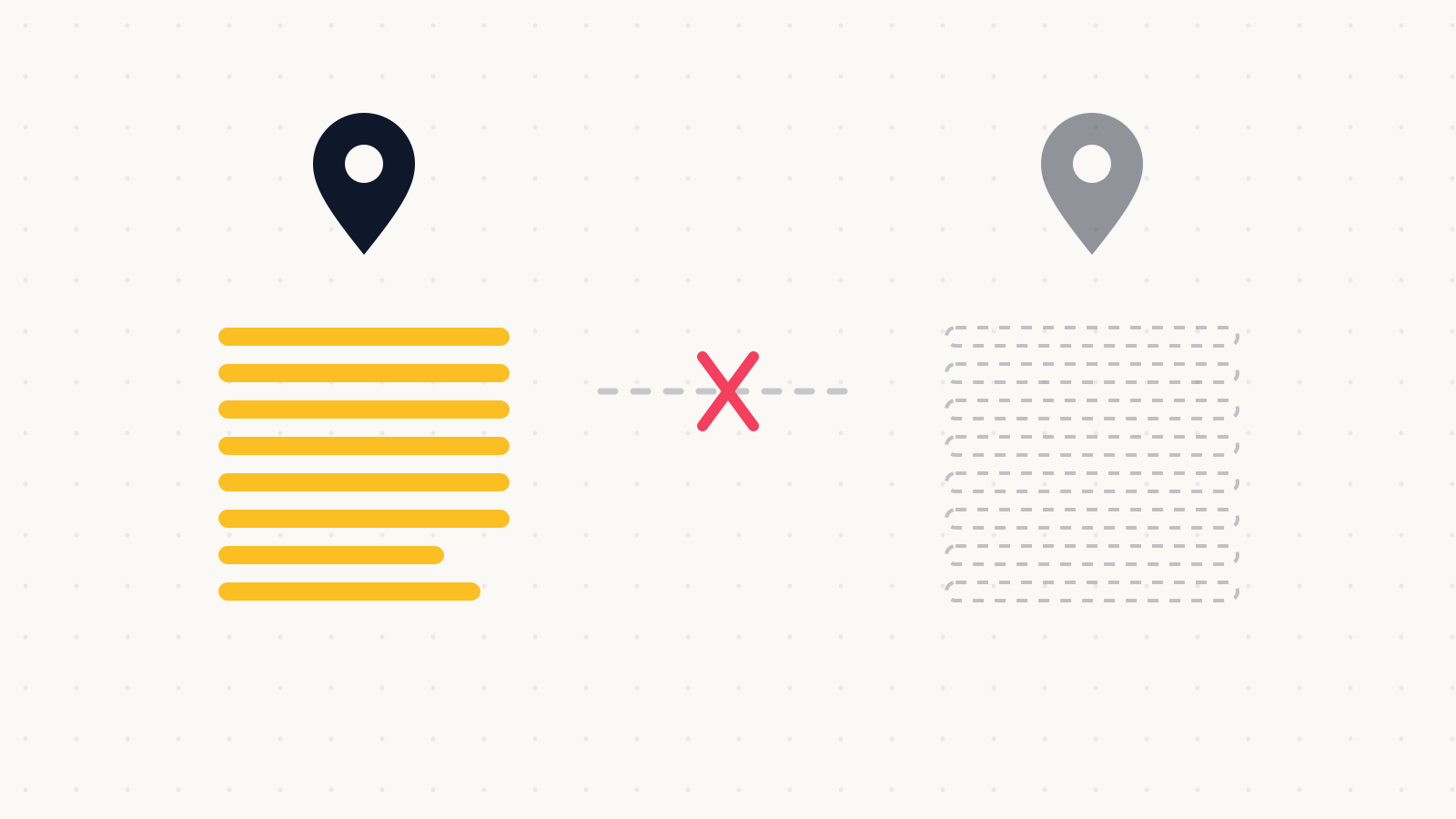
Permanently closed is for a business that will not reopen. Google notes that a profile marked this way may still appear on Search and Maps for people searching for it by name, which is worse than it sounds: the listing survives, wearing a label that tells every customer you are gone.
The good news is that it is reversible, and Google documents reopening a business that has been mistakenly marked permanently closed. The bad news is the discovery time. Nobody finds this quickly, because the owner is not searching for their own business by name every week, and the customers who see it do not ring up to mention that Google says you have shut down. They simply call somebody else, and the first sign anything is wrong is a quiet month you end up blaming on the market.
Which is a reason to look at your own listing occasionally, the same way you would tap your own Book button to see where it goes.
Decide it before the week you need it
The practical problem with closure settings is that they get changed under pressure by whoever has the login, assuming somebody has the login at all, which is its own recurring problem.
So agree the rule now, while it is calm. Under a week, special hours with the dates set. Over a week or open-ended, temporarily closed. Nobody touches permanently closed without the owner saying so out loud.
While you are in there, set the holiday hours for the rest of the year. Google suggests confirming hours for official holidays even when they are unchanged, and it is the kind of small accuracy that stops somebody driving over on a day you were shut.
Reopening is part of the plan
Coming back deserves the same attention as closing. When you update hours or reopen, Google shows visitors a message confirming the recent update and generates a post recording the change, which means reopening is itself a signal to the people checking whether you are trading again.
Do it the morning you actually reopen rather than two weeks later. The profile is doing the answering while your phone is quiet, and a listing that still says closed is turning away the customers you spent the shutdown worrying about.
Hours that are true every week of the year are part of running a profile properly, which is mostly small things done on time. If you want the closure plan written down and the profile set up properly before the season gets interesting, book a strategy call. It takes one conversation, and the alternative is making the decision at eleven at night on a phone with one bar of signal.
John "Holliday" Mahlow
Founder, Cursive Media