
Trustpilot vs Google reviews: for a local business, it isn’t close.
For a local business, Google wins and it isn’t close. Where customers look, what each platform costs, and the one case where Trustpilot earns its fee.
Founder, Cursive Media
- Read time
- 5 min read
- Updated
Short answer first: if you're a local business (customers drive to you, or you drive to them), Google reviews win, and it isn't close. Trustpilot earns its keep in a different fight: e-commerce and online services selling to strangers who will never see your storefront. The rest of this post is the reasoning, so you can check it against your own business.
They answer different questions
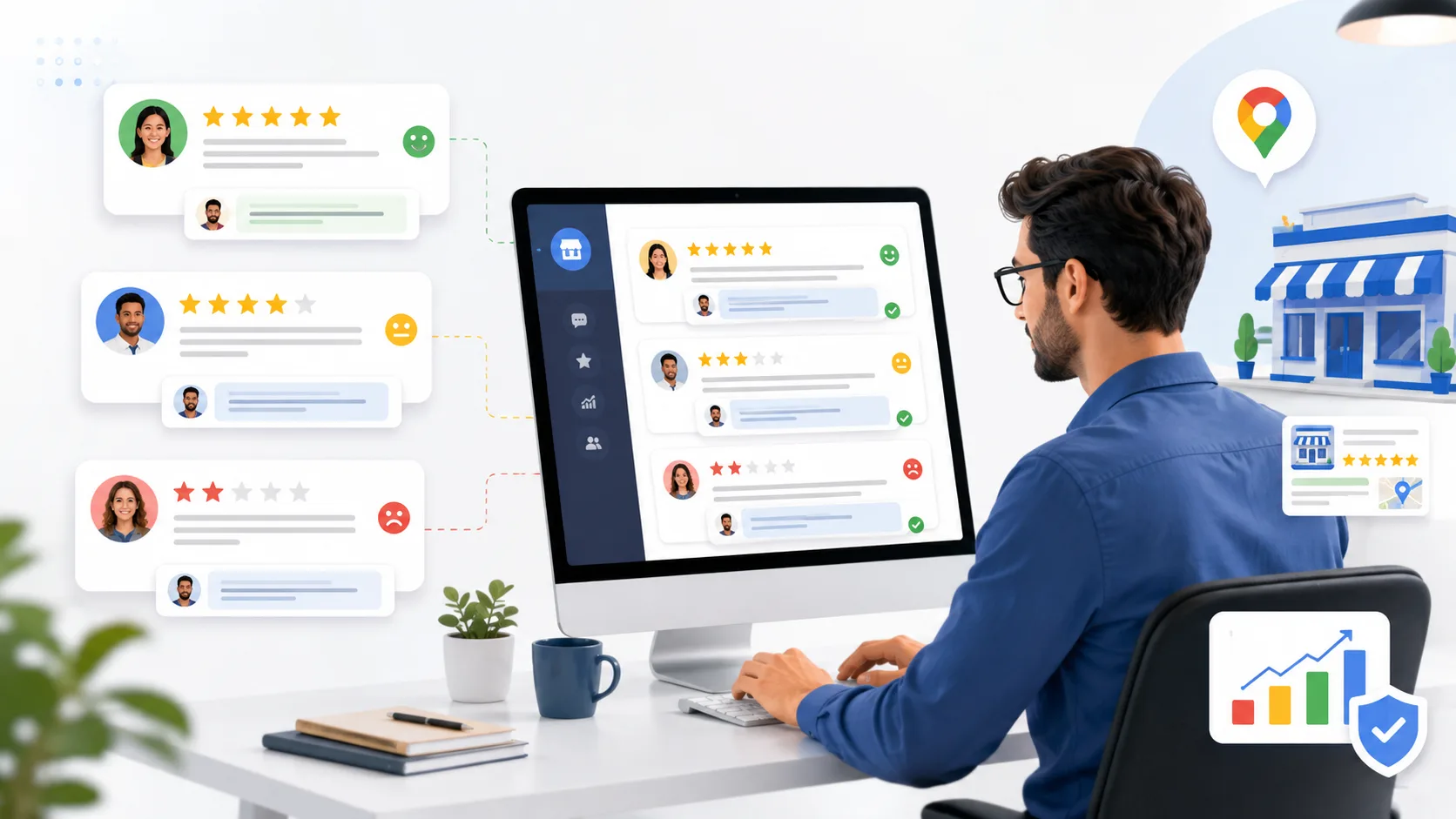
Google reviews live on your Business Profile, attached to the map and to the search results your name already surfaces. Trustpilot is a standalone review site: businesses invite customers to review them there, then display the score on their own website with TrustBox widgets, mostly as a trust badge for cold traffic.
Local buyers don't check Trustpilot. They check the map.
Someone choosing a plumber compares three pins and their stars; that map-pack moment is your real first impression. Someone about to give a credit card to a website they've never heard of googles "is this site legit," and that's the moment Trustpilot was built for.
What each costs
Google's review plumbing is free with a verified Business Profile: the direct review link and QR code, reading and replying, the whole loop. Anything past that is review software, and most of it sells the same five features. Trustpilot has a free plan capped at 50 review invitations a month at the time of writing; reported paid plans start around $99 a month, run to several hundred, and are quoted through sales with annual commitments. For a local business, that's a real subscription for reviews your customers won't look for.
Where Trustpilot genuinely earns it
Ship products nationwide, sell a SaaS, or run any business where the buyer's question is "will these strangers take my money and vanish," and an independent review profile carries weight your own website can't. The widget on a checkout page reassures cold traffic, and a managed invitation flow builds the score. That's a legitimate tool for a specific job. It just isn't the local-business job.
The trap: splitting your ask
Review requests are a scarce resource; most happy customers will act on one ask, once. Send half your customers to Trustpilot and half to Google and you end up with two mediocre profiles instead of one strong one. A local business should point every ask at Google until the profile is undeniably healthy, via the steady-drip system, and let any second platform wait.
The verdict, then: local business, Google, every time, and for free. Online business selling to strangers, Trustpilot is worth a look once Google is handled. If your Google profile is the one that matters and it's thin, that's the system we build. Book a strategy call and we'll start with where your last twenty customers actually found you.
Founder, Cursive Media